



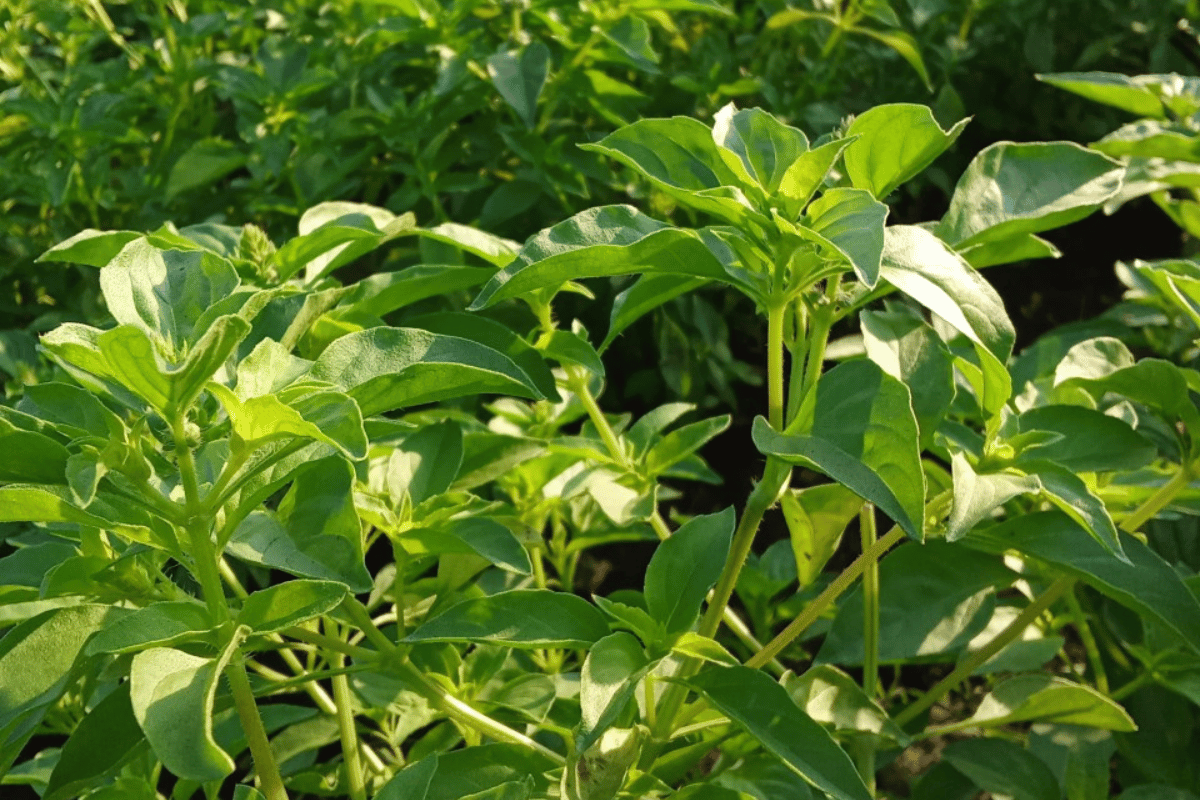
Lemon basil (Ocimum africanum) and its culinary and agricultural importance
Lemon basil (Ocimum africanum Lour.) is one of the species within the genus Ocimum and belongs to the family Lamiaceae. It is a perennial herb native to Asia. Lemon basil is widely used in the chemical, pharmaceutical, and food industries due to its essential oil content.
Most of the essential oil components found in lemon basil are citral, geranial, neral, and linalool compounds, which give it a powerful lemon aroma and flavor (1).
In the food industry, both the leaves and seeds of lemon basil can be utilized. In Southeast Asia, specifically, lemon basil leaves are processed to create dishes with unique tastes and aromas, such as soups, stir-fries, and curries. Fresh lemon basil leaves can also be consumed directly as a salad. The aromatic lemon basil leaves can be combined with other spices, such as garlic, pepper, lemongrass, and ginger, to be used as a seasoning for fish and meat dishes. Besides leaves, lemon basil seeds can also be utilized for beverages. Dried seeds are soaked in warm water, then strained and mixed into juices, tea, or fresh drinks.
Propagation and phenology
The genus Ocimum is widely distributed in tropical regions of Africa, America, and Asia, with a total of 30 species. The lemon basil species is a natural hybrid derived from Ocimum basilicum. (O. africanum L.) is formed from hybridization between Ocimum americanum L. and Ocimum basilicum L., and was first documented by Loureiro (2).
Lemon basil plants are propagated generatively through seeds and vegetatively through stem cuttings. Most commercial lemon basil cultivation is grown from seeds. The seeds used come from selected genotypes that have undergone a rigorous selection process.
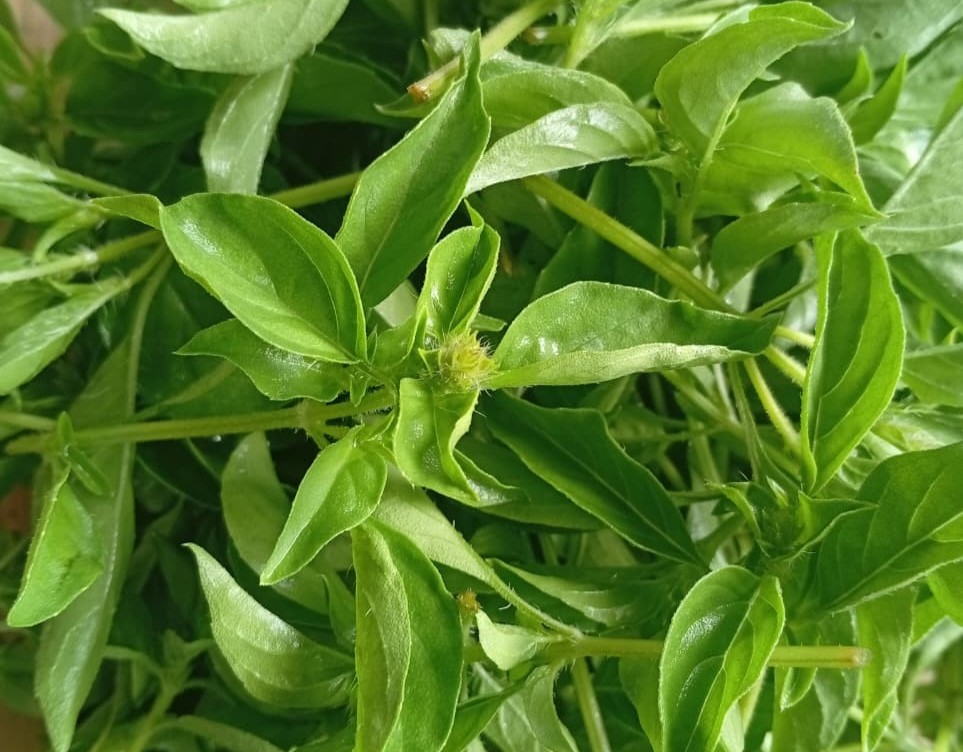
The growth of lemon basil consists of two phases: vegetative and generative phases. Lemon basil plants enter the generative phase approximately 7 weeks after planting (3). The generative phase is characterized by the appearance of flowers at the tip of each leaf branch.
The growing environment is a determining factor in lemon basil growth. Because lemon basil is native to tropical African regions, environmental conditions with warm climate, adequate sunlight, and low rainfall are ideal for lemon basil. Regions with winter seasons and low temperatures cause the plant to grow stunted during the vegetative phase. Leaves can be the main indicator of plants to show their response to environmental conditions. In environments with humid temperatures, lemon basil plants can still grow, but experience deterioration in plant appearance, such as smaller leaf sizes.
Cultivation management
Commercial lemon basil cultivation is relatively easy and has low costs, as the plant is highly adaptable. Of course, attention must still be paid to the ecology and genotype of the plant to be cultivated, as these two factors can affect plant characteristics and production yield (4).
Lemon basil can grow very well in tropical regions with warm climate. In Southeast Asian countries with a tropical climate, specifically, cultivation can be conducted throughout the dry and rainy seasons. It can be planted as a monoculture or a polyculture. If you want to plant it year-round, you can implement a crop rotation system, because lemon basil is an annual plant. Commercial lemon basil planting can be done in greenhouses or in open fields.
The guidelines written below are directed more toward lemon basil cultivation in open fields in regions with a tropical climate.
Land preparation
The implementation of lemon basil cultivation begins with land preparation, which can be done with or without tilling on all soil types.
When tilling, soil inversion, weed clearing, and bed formation are required. Beds are made with a width of 40 cm (~16 in), and the length adjusted to land conditions, with a spacing between beds of 80 cm (~31 in).
Apply a layer of compost on top of the bed as a base fertilizer with a thickness of up to 8 cm (~3 in) or more, and mix with the soil using a hoe or digging fork. The selection of static compost type to be applied in lemon basil production fields has a good effect on vegetative plant growth and essential oil content production (4).
Seed nursery
A seed nursery is conducted in a greenhouse located near the planting field to facilitate access during planting. The use of leaf compost media is highly recommended for a seed nursery.
Place the compost media into seed trays for easier transplanting later. Next, selecting quality seeds is the basic key in lemon basil cultivation. Choose certified seeds or, if possible, use seeds that you have selected yourself. Sow the seeds into the nursery holes made in the seed trays. Next, maintaining the moisture of the nursery media is very important during the seed germination process. Ensure seeds germinate well until true leaves grow, after which they are transplanted into the open field.
Planting and plant maintenance
Lemon basil seedlings ready for planting are usually more than 20 days old in the nursery. Plant roots that appear like nets, forming strong interlacing, and the number of leavesis more than 3 leaves indicate that seedlings are ready for transplanting.
Planting is done with a spacing of 30–50 cm (≈12–20 in) between plants in rows. This spacing is ideal for lemon basil growth up to 4 months of age, as mature plants have wide canopies and need more space for abundant leaf production.
During the vegetative phase, weeding must be carried out to prevent hindering growth rate ,and nutrient absorption becomes more optimal. When the plant reaches 4 weeks after planting, pruning of the main branch can be done to accelerate branch growth.
To produce fresh leaves from lemon basil, pruning the flowers is necessary. When the generative phase arrives, begin pruning flowers every 2 days. Flower pruning is done so that plants can live longer and leaf growth remains abundant. Allowed flowers will dominate, so lemon basil leaves are not productive and the plant will age quickly and die.
Irrigation and nutrient application
Lemon basil planting during the dry season requires proper irrigation techniques. Several irrigation techniques can be applied according to land conditions. Furrow irrigation can be done twice a week, and drip irrigation technique is highly recommended for time and labor efficiency.
Chemical fertilization in the soil can begin when the plant enters the harvest period, approximately 5 weeks of age. The application of 4 grams (~0.14 oz) of NPK fertilizer per plant is sufficient to help plants produce leaves well until the end of the harvest period. Fertilization can be done repeatedly every 2 weeks. Avoid using fertilizer as a foliar spray on leaves to prevent direct exposure to chemical substances, thereby maintaining the quality and efficacy of lemon basil leaves. Lemon basil planted during the rainy season must pay attention to land drainage systems well to avoid waterlogging during high rainfall intensity. Planting land that is frequently waterlogged can impact plant growth, especially branches and leaves. Plants become more stunted, and branch growth stops because nutrient absorption by plants is hindered.
Leaf size decreases and leaf shoot production decreases, affecting production results. Land that is always waterlogged can lower soil pH and trigger nutrient deficiency. Plants can directly express nutrient deficiencies that occur through leaves, so this can also affect production quality.
Pests and diseases
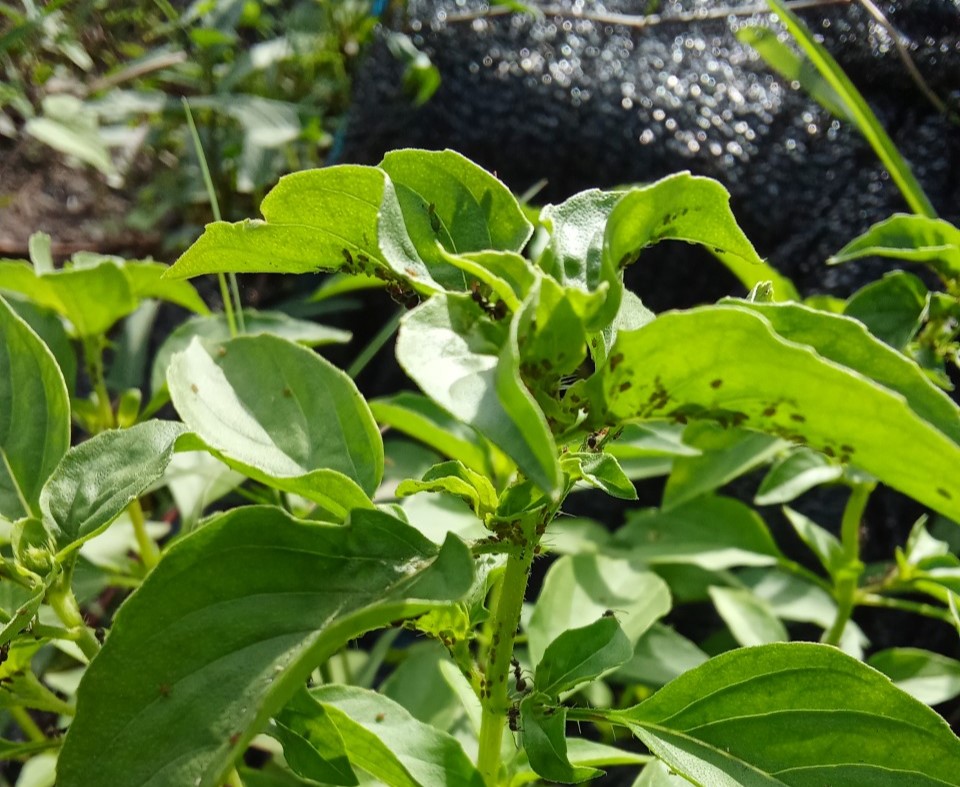
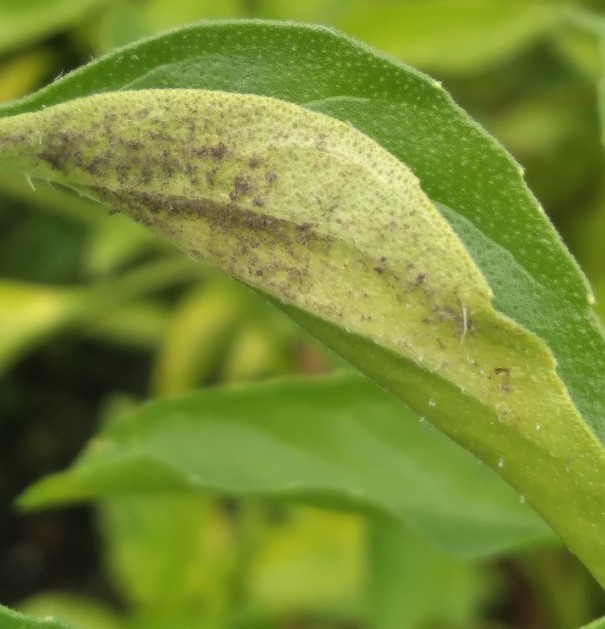
In tropical climate regions, the seasonal transition approaching the rainy season is the most favorable time for pests to arrive in cultivation fields. The rainy season is an environmental condition favorable for diseases to attack lemon basil plants. A good drainage system is key to keeping soil from becoming damp, so diseases beginning from roots, stems to leaves can be minimized.
Common pests and diseases include:
- Aphids (Aphis spp.)
- Whiteflies (Bemisia tabaci)
- Root rot (Pythium spp.)
- Downy mildew (Peronospora belbahrii)
Control management is very necessary without applying chemical pesticides directly to plants. Avoid spraying chemical substances directly on plants to maintain production quality and the efficacy contained in lemon basil leaves. Regular monitoring is the best option, making it easier to implement control before pests and diseases spread widely throughout the production field.
Harvest and post-harvest
The initial harvest of lemon basil leaves can be done when the plant approaches the end of the vegetative phase, approximately 5 weeks after planting. Harvesting is done by cutting the leaves from the shoot tips. Lemon basil plant leaves can be harvested repeatedly throughout the plant's lifetime with subsequent harvest intervals done 3 times per week. Lemon basil leaves have the characteristic of being easily damaged after harvesting, thus requiring proper processing to maintain the nutrients and efficacy contained (6).
Post-harvest treatment must be applied to maintain quality. After harvesting:
- Wash leaves gently with clean water.
- Store them in closed plastic containers to maintain freshness.
- Keep them at room temperature (~25 °C / 77 °F), as refrigeration may cause faster decomposition compared to room storage.
Marketing lemon basil leaves
Commercially, lemon basil has excellent market potential. Leaves can be sold fresh or dried. Freshly harvested leaves can be distributed directly to traditional markets or, with effective marketing management, to supermarkets for higher profits.
Selling directly to restaurants and hotels offers additional opportunities, as lemon basil is often used in daily food preparation. Drying lemon basil leaves is also a profitable option for large-scale or export-oriented trade, especially for use in the tea and spice industries.
Disclaimer
Before applying any fertilizers, pesticides, or chemical substances, always consult a certified agronomist or local agricultural advisor. Every field has unique soil, climate, and management conditions that affect crop response. The numbers and recommendations provided here are general guidelines and should be adapted to local environments and specific farm conditions.
References
- Cakmaci, R., and Milton, A.H. 2019. Effect of innoculation with plant-growth promoting rizhobacteria on development root system of lemon basil (Ocimum x citriodorus Vis.). 2 st International Conference on Food, Agricultur ad Animal Sciences (329-336). Antalya-Turkey. (J-4)
- Kalita, M., and Devi, N. 2023. Lemon Basil (Ocimum africanum Lour.) a new distribution record from Nort East India with notes on its identity. Plant Sciences Today, x(x): 1-6.
- Khater, E., Bahnasawy, A., Abass, W., et al. 2021. Production of basil (Ocimum bacilicum L.) under different soilless cultures. Scientific Report, 1-14.
- Patel, R.P., Singh, R., Rao, B.R.R., et al. 2016. Differential response of genotipe x environment on phenology, essential oil yield and quality of natural aroma chemicals of five Ocimum species. Industrial Crops and Products, 87: 2010-217.
- Khalid, K.A., Hendawy, S.F., and El-Gezawy, E. 2006. Ocimum bacilicum L. production under organic farming. Research Journal of Agriculture and Biological Sciecnes, 2(1): 25-32.
- Mbegbu, N.N., Nwajinka, C.O., and Amaefule, D.O. 2021. Thin layer drying models and characteristics of scent leaves (Ocimum gratissimum) and lemon basil leave (Ocimum africanum). Heliyon, (2).