


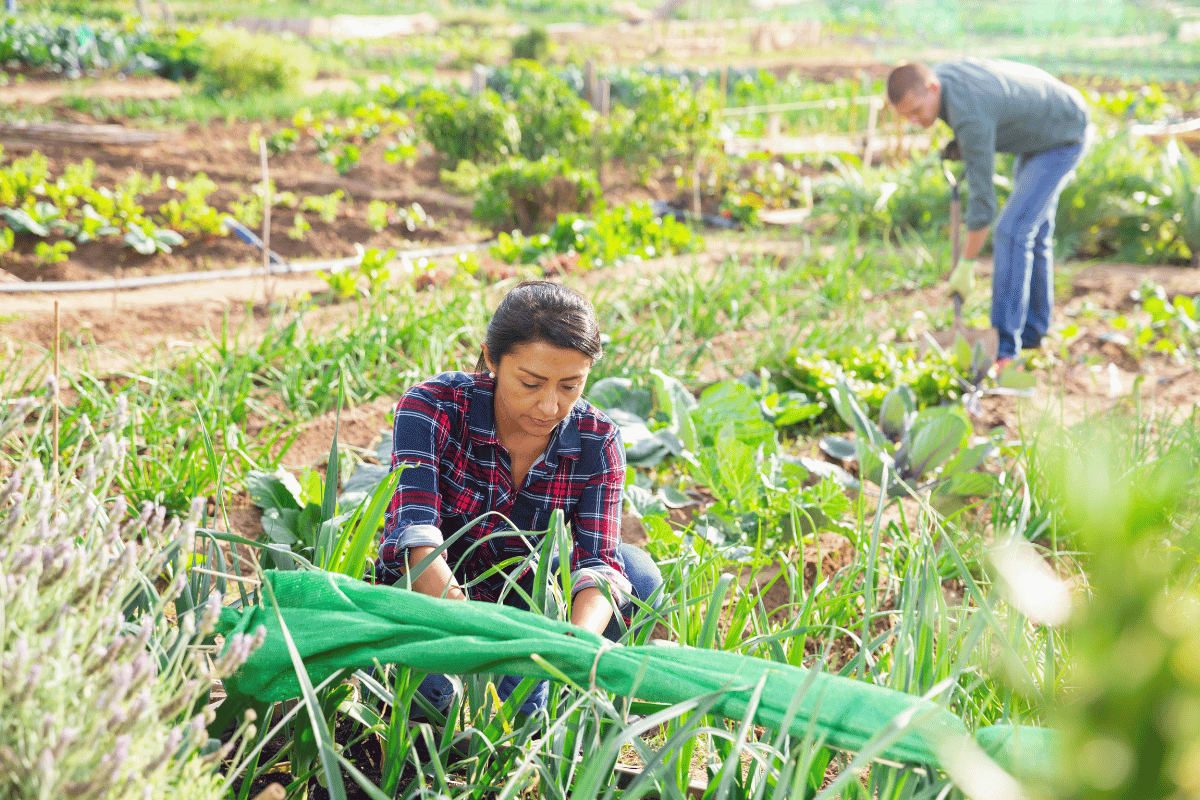
Crop nutrition is the process of evaluating, supplying, and monitoring the nutrients a crop needs for proper growth and development. It means giving the right nutrients, in the right amounts, at the right time, and through the right application method to support the crop. Just as people need balanced meals to stay healthy, crops need a balanced supply of nutrients to reach their full potential.
The basis of crop nutrition
Soil is the main medium through which crops obtain nutrients. When fertiliser is applied to the soil, it dissolves in soil moisture and becomes available for the plant to take up through its roots. Healthy soils with good structure, moisture, and biological activity allow nutrients to move easily to the plant and be absorbed efficiently.
Types of fertiliser
There are two main types of fertiliser, synthetic and organic.
Synthetic fertilisers are produced through industrial chemical processes to supply specific plant nutrients in a concentrated, readily available form for a quick crop response. Within this category are straight fertilizers, which contain only one primary macronutrient such as nitrogen, phosphorus, or potassium, NPK fertilizers, which contain more than one primary macronutrient, and fortified NPK fertilizers, which contain primary macronutrients together with either secondary macronutrients or micronutrients, or both.
Organic fertilisers are derived from plant or animal residues that decompose naturally to release nutrients to the crop, while also improving soil structure, moisture-retention capacity, and biological activity.
Forms of fertiliser
Fertilisers come in two main forms. Granular fertilisers are placed into the soil, where they dissolve slowly and supply nutrients through the roots. Liquid or foliar fertilisers are applied by spraying, through irrigation pipes (fertigation), or by dipping, for the quick correction of nutrient deficiencies.
The crop growth stages
Understanding the growth stages helps you know when and how to feed a crop for maximum productivity.
Seed stage
At this stage the seed is alive but inactive. Inside it is an embryo, a young plant, with stored food to support early growth. The seed is waiting for the right conditions of water, warmth, and oxygen, so there is no visible growth yet. The focus here should be on using certified, locally suitable seed varieties, storing seed properly to maintain viability, and preparing the land well to create a favourable growing environment.
Planting
Planting is the placement of seeds, seedlings, or other propagating material into the soil at the correct depth, spacing, and time, under appropriate soil conditions, to support proper germination, establishment, and growth. It sets the foundation for the entire crop cycle and directly influences plant population, root development, and overall yield potential.
Germination
This is when the seed wakes up and starts to grow. It absorbs moisture and nutrients from the soil in the presence of oxygen. The root emerges first to anchor the plant and absorb water, followed by the shoot, which grows upwards towards the light.
Vegetative stage
Here the plant focuses on building its main structure of leaves, stems, and roots. There is rapid leaf development, strong root expansion, and high photosynthesis, the process by which the plant makes its own food using sunlight. This stage defines the final yield potential.
Flowering
The plant moves from growth to reproduction. Some crops carry separate male and female parts on the same plant, such as maize, while others carry them on different plants, such as pawpaw. The flower develops and pollination occurs, bringing the male and female parts together and leading to fertilisation. This stage is very sensitive, and problems here can reduce yield.
Reproduction
After fertilisation, the plant develops grain, pods, or fruit. Nutrients and water move to these reproductive parts to support their development. Size and quality are determined at this stage, which makes it critical for final yield and produce quality.
Maturity
The crop reaches full development and stops growing. The leaves turn yellow or brown, the moisture content drops, and the seed hardens and matures. At this stage, the farmer needs to protect the crop from losses to birds, pests, fruit fall, and pod burst, harvest at the right time, and dry and store the produce properly.
Critical stages for nutrient application
Matching fertiliser to the growth stage is what turns good nutrition into good yield.
At planting: apply phosphatic fertilisers such as DAP to support root development and early growth.
At the vegetative stage: apply nitrogenous fertilisers such as CAN, urea, or NPK blends to supply the nitrogen needed for rapid growth of the leaves and stems.
At the flowering stage: apply nutrients high in potassium, or fortified NPK, to support flower formation and reduce flower drop.
At the reproductive stage: if there is a deficiency, apply potassium through NPK or fortified NPK to improve grain filling, size, and quality.
Missing nutrition at these stages leads directly to lower yield.
A note on nitrogen-fixing crops
Some crops fix nitrogen naturally from the air through their roots, including beans, green grams, groundnuts, and cowpeas. For these crops, nitrogen application during the vegetative and reproductive stages should be avoided, since it encourages excessive leaf growth at the expense of proper pod and grain development.
How to know which fertiliser to use
The most accurate way to know which fertiliser to use, in which form, and in what amount is to conduct a soil test. Soil testing is the chemical analysis of a representative soil sample from a farm to determine and monitor the soil's nutrient levels and condition. It provides specific recommendations for correcting nutrients based on the crop to be grown.
A soil test is best done either when the crop has matured and is drying in the field or immediately after harvesting. As a guide, test once every three years for food crops, and more frequently, seasonally or annually, for cash crops, depending on production intensity and market requirements.
It is worth being clear that a soil conditioner is not a fertiliser. A soil conditioner corrects soil conditions such as pH, structure, texture, and aggregation, making the soil more suitable for crop growth. Soil conditioners include lime, acidifiers, and manure. Fertilisers mainly supply nutrients, while soil conditioners improve the environment that allows those nutrients to be used effectively.
Healthy farming starts from the soil, and that begins with a soil test.