Community-Based Food Systems (CBFS)
In a world where food often travels thousands of miles before reaching our plates, community-based food systems could make eating a lot more mindful. They make production and consumption get as close as possible, giving consumers better control over what we eat, how it’s grown, and who benefits from it.
What Are Community-Based Food Systems (CBFS)?
CBFS are local networks where food is grown, processed, and consumed within the same region. Conventional agricultural distribution chains have multiple middlemen who take up most of the price of produce. But CBFS focusses on a strong farmer-customer relationship, making it a win-win situation for both parties. CBFS reduces food miles, promotes healthier eating, makes farmers more responsible about what they're growing, and empowers them.
1. Community Supported Agriculture (CSA)
CSA is like a subscription box — but for food. Consumers pay farmers upfront, providing the farmer with money to buy all the inputs. In return, they receive fresh produce throughout the season. Farmers and residents plan the upcoming agricultural production together. It might get a little tricky if the crop fails; that's why this is not just a business model. It’s about developing ties with farmers and understanding agriculture better.
Example: KomPot in Prague and Edible Routes in Delhi offer CSA models in which members receive seasonal, organic vegetables straight from farms.
2. Farmer’s Market
We often don’t know where our food comes from, who grew it, the practices involved, and what chemicals were used on it. Farmer’s markets help us to develop a better relationship with our food. These facilitate farmers to sell directly to consumers. You can talk to farmers, learn about their practices, and take home produce that was harvested just hours earlier. This reduces food miles and carbon footprints and gives farmers the entire profit. It helps us understand the seasonality of crops and helps us live a little bit more naturally.
3. Food Hubs
Food hubs are middlemen within the locality. They collect produce from multiple local farms, sort and package it, and then distribute it to nearby restaurants, schools, or grocery stores. This improves food distribution within communities. It needs to be properly monitored for fair practices.
Example: The Hudson Valley Harvest in New York connects small-scale farmers with bigger buyers
4. Community Gardens
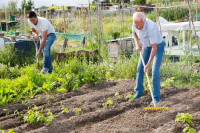
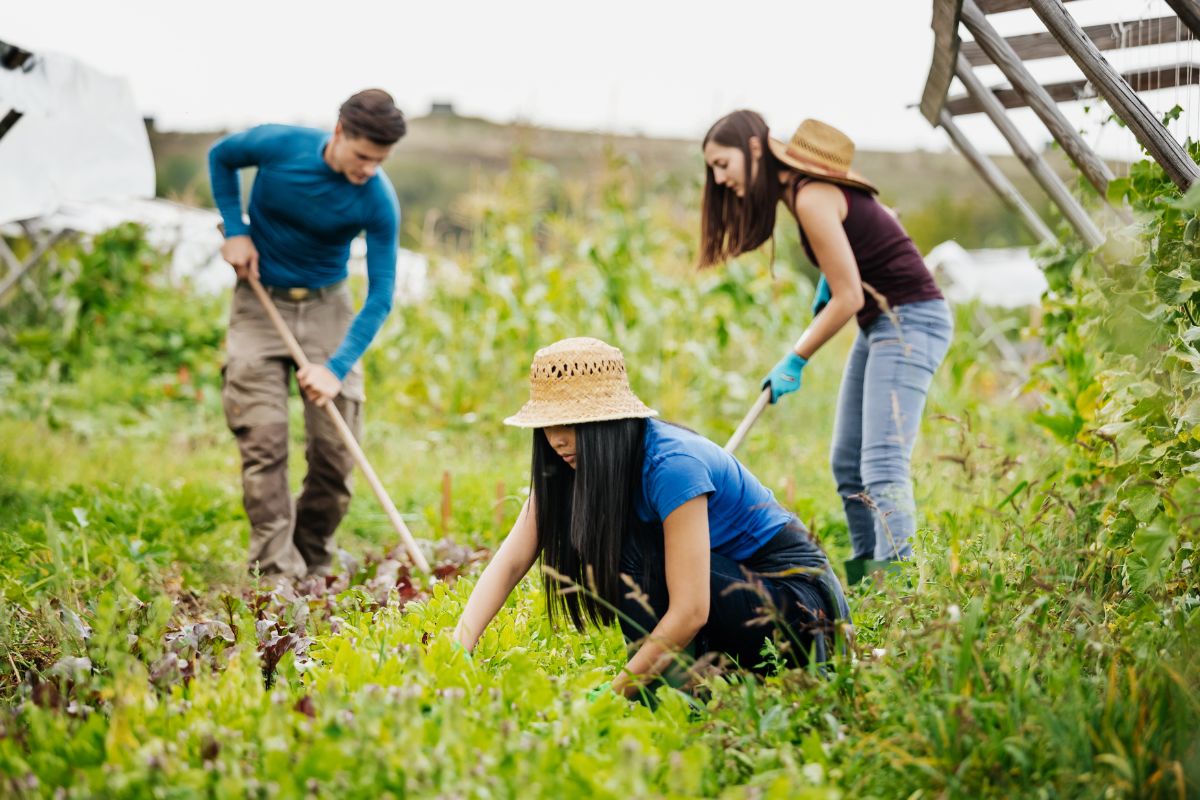
Community gardens convert unused land into thriving food-growing spaces. Members collectively manage the space, and everyone shares the harvest. It develops relationships among community members and is an educational space for kids. This setup thrives or fails entirely based on the effort and commitment of volunteers.
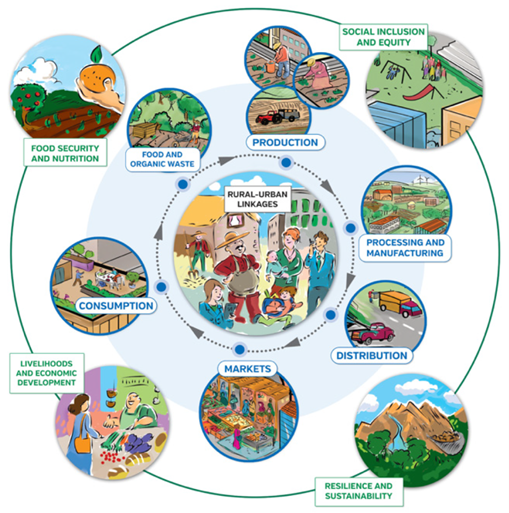
Figure 1. City Region Food System (courtesy FAO). The CRFS approach seeks to establish and reinforce points: rural-urban linkages; the flow of materials between food system nodes, including production, processing and manufacturing, distribution, markets, consumption, and waste generation; the dynamic relationships between livelihoods and economic development, food security and nutrition, social inclusion and equity, and resilience and sustainability. This food system operates within and influences related multiscale economic, environmental, and social conditions.
Why Do CBFS Matter?
CBFS aren't just about fresh tomatoes or crisp lettuce — they’re about building trust between farmers and consumers and creating healthier communities. CBFS provides jobs and improves income for people in agriculture and distribution. It also creates exchange spaces where people can interact, create memories, express cultural identities, and build social connections.
How can different stakeholders bring about change?
Look at your food and ask if you really know what’s in it. Find out if there are farms near your area of residence and if you can volunteer at a farm on weekends. Talk about it at apartment/street meetings. Subscribe to a farmer with the whole apartment. Local governing bodies can organize farmers' markets. And create frameworks for community-supported agriculture. See if you can compost your wet waste together as an apartment and offer it to nearby farmers. See if you can start any form of a guerrilla garden or community garden. Talk to your kids about different things on their plates.
In the end, CBFS reconnects us with the food we eat — and the people who grow it.
Further reading
Urban Agriculture - Applications and Benefits
Urban Farming and Vertical Farming: The Future of Food?
How urban vertical farms can help cities become food-sufficient
Solitary Bees and Their Crucial Role in Urban Forestry and Agriculture
Plant-Based Diet: A Sustainable Choice for Health and the Environment
Sustainability Unearthed: The Extraordinary Journey of “Ordinary” Peas