


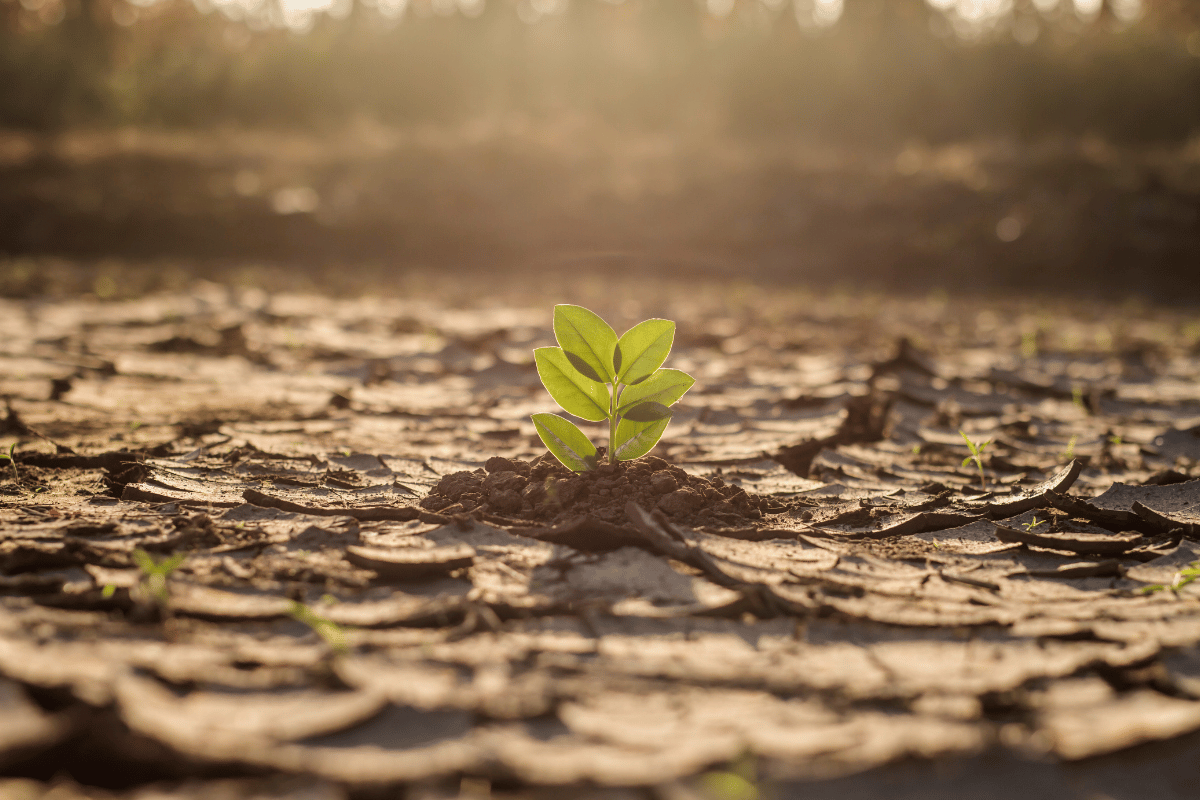
Weather extremes are no longer rare disruptions in crop production. Heat waves, frost events, dust storms, and irregular rainfall have become a major farm risk. For growers, this creates a practical problem. Even when irrigation and crop management work well under normal conditions, a short extreme event can reduce yield, lower quality, or damage an entire planting if the system cannot respond fast enough.
A climate-smart approach begins with preparation. That includes an irrigation system that can operate under both routine and emergency conditions, a microclimate strategy suited to the crop and production system, and a management plan that defines what to do before, during, and after an extreme event. When these three parts work together, the grower is in a much better position to protect the crop and keep production stable.
Start with a control system that can switch modes quickly
The best tool for creating microclimate in open-field agriculture is the irrigation system. That is why one of the most important decisions is how the irrigation system is organized. A farm that is divided into too many irrigation groups may work fine under routine conditions, but during a heat spike or frost event it can take too long to complete a full cycle. A practical design aims to divide the plot into irrigation groups that can cover the full area in relatively short cycles.
Under normal conditions, irrigation should usually be managed quantitatively. The grower defines a water dose, applies fertilizer proportionally, and sets a nominal flow together with acceptable operating limits. In routine programs, stop conditions such as fertilizer failure, overflows, or strong wind can be useful because they protect the system from operating under faulty conditions.
Emergency conditions are different. During a frost event or severe heat episode, the goal is not perfect efficiency but to keep the crop alive and reduce damage. Emergency irrigation programs should therefore be prepared in advance. These programs should usually run by time rather than by water dose, should avoid fertigation, and should use wider flow limits and fewer stop conditions. In other words, the emergency program should be built to reduce the chance that the system stops because of a secondary fault at the exact moment the crop needs protection.
Automatic switching is another major advantage. If the system can shift from routine irrigation to emergency mode according to sensor thresholds, the response becomes faster and more reliable. But automation is only useful when it is tested. Sensors must be checked, the operating logic must be verified, and the grower should simulate extreme conditions to make sure the system reacts as intended. When switching to emergency mode, all regular irrigation programs should be stopped. To reduce system load, emergency operation should focus first on the crops or plots with the highest damage potential.
Sensor placement matters as much as sensor choice
Temperature and humidity sensors can support better decisions in both open-field agriculture and controlled-environment cultivation. Air temperature, soil temperature, air humidity, and soil moisture all help identify when the farm should shift from routine management into emergency response. In greenhouses and other protected structures, it is useful to read conditions both inside and outside the structure, because the difference between those two environments often determines whether ventilation, shading, cooling, or heating adjustments are required.
Sensor placement is just as important as sensor selection. If a sensor is installed in the wrong location, the system may start too late or fail to protect the most vulnerable area. Threshold setting and sensor placement should therefore be treated as agronomic decisions, not just technical settings.
Frost protection in open fields and orchards
In open-field agriculture, the grower does not have many options to change the environment directly, so any action should be judged by its real effectiveness. Frost protection is a good example.
Where water-based protection is used, overhead sprinklers and mini-sprinklers give useful results when they are properly designed and operated. The release of latent heat around the canopy and near the ground in low-growing crops plays an important role in protecting leaf tissues from frost damage. The protective effect depends on continuous, correctly timed, and well-managed operation. For more context on these methods and their trade-offs, see this practical review of frost protection options in vineyards.
It is important to distinguish between sprinklers and drip irrigation. Drip systems do not provide meaningful active frost protection to the foliage. Their value is mainly indirect. Entering a frost event with wet soil may help because wet soil conducts and stores heat better than dry soil, improving upward heat flow from the ground. But that is not the same as active protection around sensitive plant tissue.
Heat events need short cycles and careful judgment
Heat events are often managed with short irrigation cycles, but this should not be confused with simply adding more water. The purpose is to support the crop during the hottest period, reduce stress around the root zone, and avoid the sharp decline in plant function that can occur under extreme heat.
The correct response depends on soil type, crop type, crop age, and the broader agronomic situation. A crop in a light soil may benefit from different cycle timing and water quantity than the same crop in a heavier soil. The grower should be careful not to create excess water, which can damage the crop and create a second stress factor. For perennial crops like olive trees, the calibration of timing and quantity during heat stress is particularly important. Measuring temperature at more than one soil depth can provide a clearer picture of what the irrigation strategy is really doing.
The same practical thinking applies to crop temperature and product temperature. Protection is only meaningful if the action improves the crop environment in a measurable way. Data collection and field observation should always accompany emergency irrigation decisions.
Wind and dust events need a different response
Not every weather event should be treated with irrigation during the event itself. Strong wind, especially when combined with dust, is one case where sprinkler irrigation may have limited value and may even be impractical. In such situations, the better strategy may be to react immediately after the wind event ends. In drip-irrigated fields, short recovery irrigations can sometimes help refresh the crop and support recovery.
The system should also be built and installed with weather damage in mind. A vulnerable control cabinet or exposed equipment can fail during the same event when the crop most needs support. Climate resilience therefore includes physical protection of the control system itself, not only of the crop.
Protected cultivation gives more control but needs planning
Protected cultivation gives growers more options, but it also requires better coordination. In simple protected structures, the available actions may be limited to natural ventilation, roof shading, or modest cooling support. Even these simple tools can make a difference when they are used effectively and with good timing.
In more advanced greenhouses, the grower can combine forced ventilation with active cooling systems such as wet pads or high-pressure fogging. These systems can greatly improve conditions during hot weather, but they also place demands on water supply and system planning. If the irrigation network and the cooling system depend on the same water tank, the tank must hold enough water to run cooling without interrupting routine irrigation. This is a practical engineering issue that should be solved at the design stage. Coordinating cooling with humidity control is equally important, since high-humidity periods can create their own set of problems inside the greenhouse.
For crops grown in soilless media, short irrigation cycles can also help cool the root zone. Irrigation inside protected cultivation is therefore not only about water supply. It can become part of the temperature-management strategy, especially during heat stress.
Proactive management determines what can actually be protected
The strongest technical system can still fail if management is passive. Proactive planning is one of the most important parts of climate-smart crop management.
Growers should prepare emergency work procedures for different weather scenarios and should understand what their system can realistically deliver. If the farm cannot protect every plot at the same time, priorities must be defined in advance. Younger plots may deserve higher priority, while older plots or heavy soils may require more caution if additional water could increase the risk of product rot or quality loss. In frost events, lower plots are often at higher risk than elevated ones, so the farm may need to direct its limited resources to the most vulnerable zones.
This type of prioritization is not only a technical issue. It is a management and agronomic decision. It requires the grower to think about crop value, crop stage, soil condition, marketable product, and the realistic limits of the irrigation and climate systems.
Data ties the whole system together
Data collection is what turns separate actions into a management system. The value of data lies in supporting better decisions. Did the system switch to emergency mode at the right time? Did the short irrigation cycles reduce root-zone temperature? Did the cooling system improve greenhouse conditions without disrupting irrigation or creating a secondary stress? Did the priority plan protect the most valuable plots? These are the questions that turn data into better performance in the next event.
A climate-smart farm is therefore not just a farm with sensors. It is a farm that learns from its own operation and improves its response over time.
Closing thought
Coping with climate extremes does not depend on one system, one machine, or one sensor. It depends on a farm that is prepared in advance, organized to respond quickly, and managed with clear priorities. Efficient irrigation control, realistic microclimate management, and proactive agronomic decision-making work best when they are designed as one connected strategy.
As extreme weather becomes more frequent, growers also need to prepare for combined events rather than isolated ones. A heat wave may arrive with strong wind, a dust event may be followed by irrigation stress, or a cold night may affect only the low-lying areas of a field while the rest of the farm remains less exposed. In these situations, resilience depends on more than equipment. It depends on tested emergency protocols, clear priorities, and the ability to shift quickly from routine management to targeted response. Climate-smart crop management is not about adding complexity for its own sake. It is about building a farm that can respond intelligently when several risks appear at once and when timing matters most.