
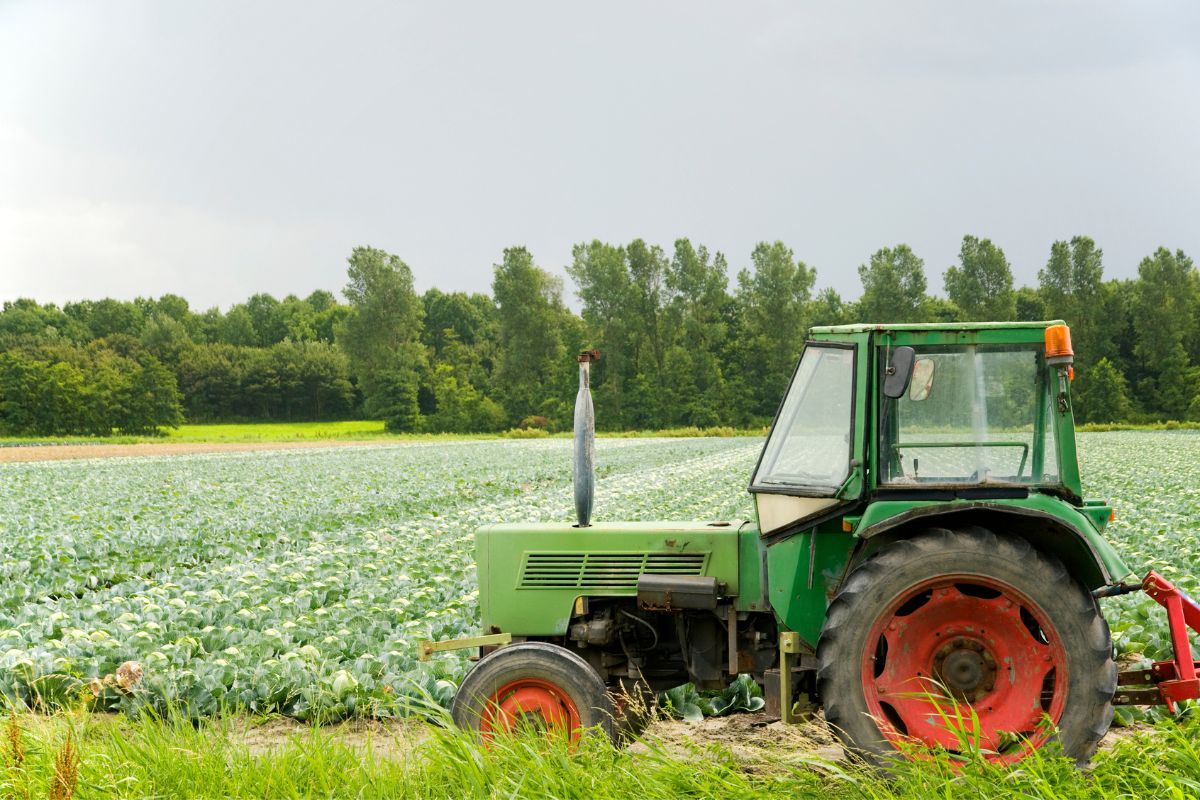
Climate-Smart Agriculture for Sustainable Food Systems
Agriculture is facing the brunt of climate change. Severe weather events like droughts, floods, and increased temperatures increasingly interrupt food production and impact food security and livelihoods (Al et al., 2008). As reported by the Intergovernmental Panel on Climate Change (IPCC), agriculture, forestry, and other land uses account for up to 23% of global human-caused greenhouse gas (GHG) emissions (IPCC, 2019). Ironically, this sector is also one of the most susceptible to climate-related disturbances. This article analyses the idea of Climate Smart Agriculture (CSA), which is a strategic approach to these issues. By prioritizing productivity, adaptation, and mitigation, CSA provides comprehensive solutions that strengthen resilience while aiding in reducing emissions (Matteoli et al., 2020).
The Three Pillars of Climate-Smart Agriculture
1. Enhancing Agricultural Productivity and Incomes
Climate-Smart Agriculture (CSA) promotes yield enhancement by developing technologies that reduce inputs and minimize environmental impact (Makate et al., 2019). One approach involves using improved crop varieties that are bred to withstand drought, salinity, and pests (Hussain et al., 2022). Examples include drought-tolerant maize in Africa and salt-resistant rice in South Asia. To enhance soil health and productivity, CSA incorporates integrated soil fertility management, which combines the strategic application of fertilizers with organic amendments (Gram et al., 2020). Water efficiency is also crucial, achieved through techniques such as rainwater harvesting and drip and sprinkler irrigation systems (Mmbando, 2025).
2. Building Resilience to Climate Change
One of the most important components of climate-smart agriculture is resilience development, which aids farmers in adjusting to and fending off the growing frequency and intensity of climatic shocks like heat waves, floods, and droughts (Kyomugisha, 2018). Promoting agroecological practices and crop diversity is a crucial tactic to lessen dependency on monocultures, which are especially susceptible to pests, diseases, and extreme weather (Altieri, 2019). As a natural hedge against crop failure, intercropping legumes with cereals, for example, increases soil fertility through nitrogen fixation and distributes the risk across several crops (Bitew & Abera, 2019).
3. Reducing Greenhouse Gas Emissions in Agriculture
Climate-Smart Agriculture (CSA) promotes a number of mitigation techniques to assist in realizing the potential for agriculture to act as a carbon sink (Bai et al., 2019). Conservation agriculture, which incorporates techniques like crop rotation, cover crops, and low tillage, is one important approach. These methods help improve soil structure, store carbon in the soil, and lower greenhouse gas emissions associated with conventional farming. CSA also encourages better livestock management techniques that reduce methane and nitrous oxide emissions from livestock production systems (Gaitán et al., 2016). These techniques include greater pasture rotation, sustainable manure management, and feed quality improvement.
Agroforestry, which involves purposefully integrating trees into grazing pastures and agricultural fields, is another essential mitigating strategy. This approach improves microclimates, provides shade, and increases biodiversity and carbon storage both above and below ground. Additionally, according to the "4R" principle, the right source of nutrients should be applied at the right rate, time, and location (Mikkelsen, 2011).
Creating an Enabling Environment for CSA Expansion
Supportive Policies and Institutional Governance
Scaling up Climate-Smart Agriculture (CSA) requires more than just changes at the farm level; a supportive policy and institutional framework are crucial. National Adaptation Plans (NAPs) must integrate CSA to align agricultural development with climate goals (Chevallier, 2022). Collaboration across agriculture, environment, and finance ministries is essential to coordinate resources and responsibilities effectively. In addition, land tenure security is a key enabler. Farmers who have secure and recognized rights to land are more likely to make long-term investments in sustainable practices, including CSA (Soma, 2020).
Financing Climate-Smart Agriculture Transitions
Adoption of CSA is still significantly hampered by high upfront expenses, especially for smallholder farmers (Mizik, 2021). Diverse and creative finance methods are needed to get over this. Sources of climate money like the Adaptation Fund and the Green Climate Fund can be quite important (Omukuti et al., 2022). By splitting expenses and profits, public-private partnerships can reduce investment risk.
Driving CSA with Research, Innovation, and Local Knowledge
In order to customize CSA solutions for certain local situations, research and development are essential (Partey et al., 2018). Developing crop varieties that are tolerant to climate stresses and regionally adapted must be the primary emphasis of agricultural research institutions. To forecast climate threats and evaluate the success of CSA measures, sophisticated modelling technologies are required (Hussain et al., 2022). Innovations are also guaranteed to be useful, acceptable, and pertinent to the communities they are intended to serve when Indigenous knowledge and participatory research methodologies are integrated. Reviving extension services is also necessary (Barakabitze et al., 2017).
Ensuring Inclusive and Equitable CSA Implementation
CSA needs to be equal and inclusive in order to be genuinely transformational. Prioritizing CSA programs is necessary since underprivileged communities, women, and youth frequently experience particular obstacles to participation (Bullock et al., 2020). In order to guarantee that both men and women have access to resources like land, loans, and suitable technologies, gender-sensitive approaches are crucial (Huyer, 2021).
Overcoming Barriers to CSA Adoption
Despite its promise, CSA implementation varies between areas and communities. One major impediment is poor coordination among key parties, including ministries, donors, and local governments, frequently resulting in fragmented implementation (Partey, 2018). Many farmers also have limited access to critical knowledge, agricultural inputs, and market possibilities, making it difficult to implement innovative practices. Furthermore, short-term policy cycles might hinder long-term planning, and unfamiliar technology may be greeted with skepticism, particularly when farmer participation is low (Steenwerth, 2014).
Conclusion: A Transformative Path Toward Resilient Food Systems
Climate-Smart Agriculture (CSA) provides a practical pathway to transform food systems for sustainability and resilience amid climate change. Rather than replacing traditional practices, CSAs promote their adaptation to modern challenges. Its success depends on coordinated action: governments must embed CSA in policies, fund its implementation, and foster supportive environments; donors and investors should enable risk-sharing finance; researchers and extension agents must engage directly with farmers; and civil society must ensure inclusive, accountable processes. With collective effort, CSA can help secure food systems, protect ecosystems, and build resilient rural livelihoods for the future.
References
- Al, W., Orking, G., and Clima, O., 2008. Climate change and food security: a framework document. FAO Rome, 3.
- Altieri, M.A., 2019. Agroecology: principles and practices for diverse, resilient, and productive farming systems. In Oxford Research Encyclopedia of Environmental Science.
- Bai, X., Huang, Y., Ren, W., Coyne, M., Jacinthe, P.A., Tao, B., Hui, D., Yang, J. and Matocha, C., 2019. Responses of soil carbon sequestration to climate‐smart agriculture practices: A meta‐ analysis. Global change biology, 25(8), pp.2591-2606.
- Bullock, Renee, Sophia Huyer, Tokelo Shai, and Mary Nyasimi. "The CCAFS youth and climate smart agriculture (CSA) strategy." (2020).
- Chevallier, R., 2022. Policy coherence analysis in climate-smart agriculture (CSA) in Africa.
- FAO. (2013). Climate-Smart Agriculture Sourcebook. Food and Agriculture Organization of the United Nations. https://www.fao.org/climate-smart-agriculture-sourcebook
- Gaitán, L., Läderach, P., Graefe, S., Rao, I. and Van der Hoek, R., 2016. Climate-smart livestock systems: an assessment of carbon stocks and GHG emissions in Nicaragua. PLoS One, 11(12), p.e0167949.
- Gram, G., Roobroeck, D., Pypers, P., Six, J., Merckx, R. and Vanlauwe, B., 2020. Combining organic and mineral fertilizers as a climate-smart integrated soil fertility management practice in sub Saharan Africa: A meta-analysis. PloS one, 15(9), p.e0239552.
- Hussain, S., Amin, A., Mubeen, M., Khaliq, T., Shahid, M., Hammad, H.M., Sultana, S.R., Awais, M., Murtaza, B., Amjad, M. and Fahad, S., 2022. Climate smart agriculture (CSA) technologies. Building climate resilience in agriculture: Theory, practice and future perspective, pp.319-338.
- Huyer, S., 2021. Gender-smart agriculture: An agenda for gender and socially inclusive climate resilient agriculture.
- IPCC. (2019). Climate Change and Land: IPCC Special Report. Intergovernmental Panel on Climate Change.
- Kassie, M. et al. (2015). Adoption of Conservation Agriculture and Its Impact on Household Income and Food Security in Southern Africa. International Food Policy Research Institute.
- Kingiri, A.N., 2013. A review of innovation systems framework as a tool for gendering agricultural innovations: exploring gender learning and system empowerment. The Journal of Agricultural Education and Extension, 19(5), pp.521-541.
- Kyomugisha, C., 2018. Effect of climate-smart technologies on smallholder farmers’ resilience to climate change.
- Matteoli, F., Schnetzer, J. and Jacobs, H., 2020. Climate-smart agriculture (CSA): an integrated approach for climate change management in the agriculture sector. Handbook of Climate Change Management: Research, Leadership, Transformation, pp.1-29.
- Mikkelsen, R.L., 2011. The “4R” nutrient stewardship framework for horticulture. HortTechnology, 21(6), pp.658-662.
- Mizik, T., 2021. Climate-smart agriculture on small-scale farms: A systematic literature review. Agronomy, 11(6), p.1096.
- Mmbando, G.S., 2025. Harnessing artificial intelligence and remote sensing in climate-smart agriculture: the current strategies needed for enhancing global food security. Cogent Food & Agriculture, 11(1), p.2454354.
- Omukuti, J., Barrett, S., White, P.C., Marchant, R. and Averchenkova, A., 2022. The green climate fund and its shortcomings in local delivery of adaptation finance. Climate Policy, 22(9-10), pp.1225-1240.
- Partey, S.T., Zougmoré, R.B., Ouédraogo, M. and Campbell, B.M., 2018. Developing climate-smart agriculture to face climate variability in West Africa: Challenges and lessons learnt. Journal of cleaner Production, 187, pp.285-295.
- Soma, C., 2020. The Land Tenure Security Advantage: A catalytic asset for sustainable and inclusive rural transformation.
- Steenwerth, K.L., Hodson, A.K., Bloom, A.J., Carter, M.R., Cattaneo, A., Chartres, C.J., Hatfield, J.L., Henry, K., Hopmans, J.W., Horwath, W.R. and Jenkins, B.M., 2014. Climate-smart agriculture global research agenda: scientific basis for action. Agriculture & Food Security, 3, pp.1-39.
- World Bank. (2022). Transforming Food Systems with Climate-Smart Agriculture. Washington, DC.
Further reading
Double Yields and Income with Maize-Vegetable Intercropping
Regenerative Farming in India: A Smallholder Success Story
Scaling Up Organic Farming Adoption: Recommendations for Sustainable Growth
Climate-Smart Agriculture Solutions in Rice
Climate-Smart Forestry: Strategies, Benefits and Challenges
Rethinking Agribusiness: Climate-Smart Agriculture, Fertilizers & Sustainable Solutions