
What is soil acidity and how can farmers manage it?
Imagine your soil like a cup of tea. The more lemon you add, the more sour it tastes. In this case, the "lemon" in the soil is the hydrogen ions. When more hydrogen ions are in the soil, the pH value is lower, which stands for "Potential of Hydrogen". A low pH value, therefore, indicates soil acidity. So, the higher the hydrogen ion concentration in the soil, the lower the pH, and the more acidic the soil becomes.
Why is acidic soil a problem for farmers?
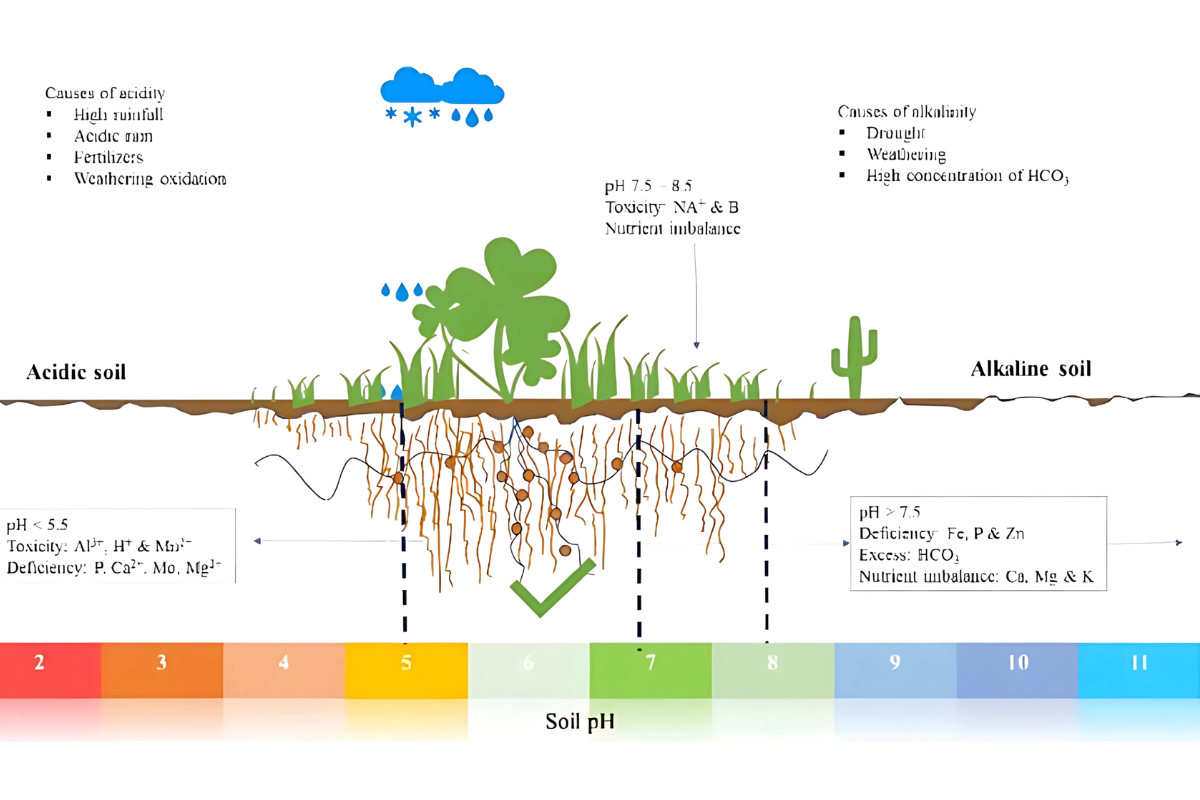
In acidic soils, several major nutrients essential for plant growth, such as phosphorus, calcium, and magnesium, become fixed or unavailable to plants. Even when fertilizers are applied, plants may still struggle to absorb these nutrients. Additionally, elements like aluminium and manganese may exceed their normal concentrations due to the lack of other nutrients, becoming toxic to crops. Leguminous crops, which fix nitrogen through root nodulation, are also adversely affected by soil acidity.
What causes soil acidity?
In regions with high rainfall and humidity, rainwater leaches away basic nutrients like calcium, magnesium, potassium, and sodium into the deeper soil layers. This leaching process leaves behind acidic ions such as hydrogen and aluminium, which create acidic conditions. The continuous use of acid-forming fertilizers like urea, DAP, and ammonium sulphate further increases the release of hydrogen ions, intensifying soil acidity. In some cases, soils are naturally acidic due to the acidic nature of the parent rocks or materials from which they formed. Additionally, practices such as burning crop residues or irrigating with poor-quality water also contribute to developing acidic soils over time.
Signs your soil is too acidic
In acidic soils, plants often show stunted growth, remain small and weak, and have reduced tillering in cereals like rice and wheat due to poor nutrient uptake. Older leaves may turn yellow from nitrogen, phosphorus, magnesium, or molybdenum deficiencies, especially in crops like maize, groundnut, and rice. In some cases, leaves appear burnt or dried, with brown, scorched tips and margins, mainly due to excess aluminium and manganese. Roots may be short, thick, stubby, or even discoloured and decaying; nodulation in legumes is often poor or absent. Seeds may take longer to germinate or fail to sprout, and seedlings are usually weak and die early. Even when fertilizers are applied, crops often respond poorly under such conditions. The soil may feel hard when dry, sticky when wet, and may show signs of crusting or sealing. An orange or reddish subsoil color is sometimes visible, indicating iron toxicity or nutrient leaching.
How to test soil acidity?
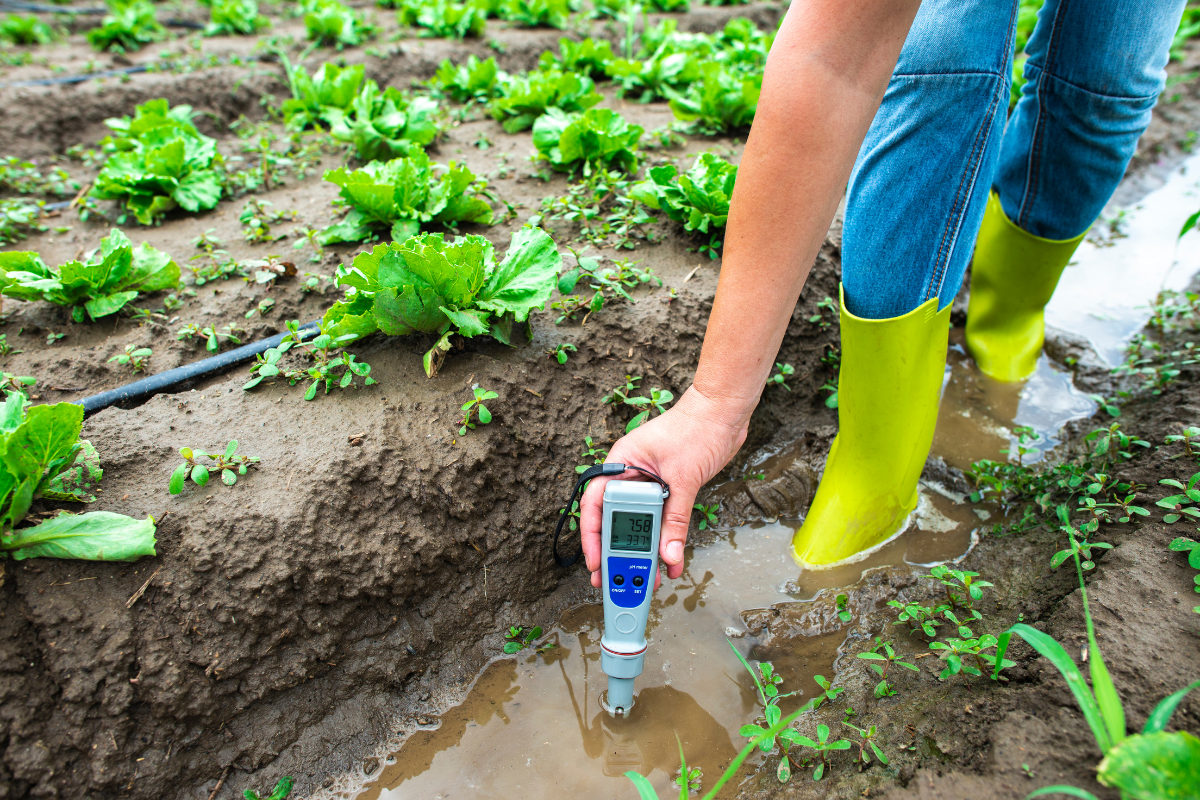
The most accurate way to test soil acidity is through laboratory analysis using advanced pH meters. However, a simple litmus paper test can offer a quick indication under field conditions. If you mix soil with distilled water and insert blue litmus paper, it will turn red in the presence of acidity. Another basic method involves adding baking soda to moist soil; the soil is likely acidic if it fizzes. While not highly accurate, this can signal the need for further testing. Portable kits and handheld pH meters are also available and easy to use for more reliable on-field assessment.
Simple and effective solutions
The simplest and effective ways to deal with soil acidity are:
- Use of liming material like agricultural lime (calcium carbonate) is the most traditional and effective method for managing soil acidity. It should be applied as per soil test recommendations (usually 0.5–2 t/ha) and thoroughly mixed into the top 15 cm of soil about 2–3 months before sowing.
- Organic amendments such as compost, green manure, and farmyard manure improve soil structure and microbial activity. These materials release organic acids that help bind toxic aluminium and iron ions, reducing their harmful effects.
- Crop selection can be adjusted based on soil acidity conditions. Several crops are naturally tolerant of acidic soils:
- Biofertilizers like PSB (phosphorus-solubilizing bacteria), acid-tolerant rhizobium strains, and mycorrhizae can improve nutrient availability and uptake under acidic conditions.
- Avoid using acid-forming fertilizers such as urea, DAP, and other ammonium-based fertilizers. Apply them in balanced and split doses to minimize their acidifying effect if needed.
- Crop rotation with legumes or green manure crops can help manage acidity by improving soil fertility and nutrient cycling. Choose crops with varied nutrient demands to avoid nutrient exhaustion.
- Soil conservation practices like mulching and reduced tillage help retain organic matter, prevent nutrient leaching, and stabilize natural pH levels.
- Wood ash can be used to raise soil pH, but it should be avoided if the soil already has high potassium levels. Similarly, lime sludge from industries can be applied with caution, only if it has been tested and deemed safe.
- For long-term management, practices like integrated nutrient management (combining organic and inorganic sources), contour bunding, terracing, and strip cropping are effective, especially in sloped lands. The inclusion of agroforestry species like Sesbania grandiflora, Acacia spp., and Gliricidia sepium can also help sustain soil acidity.
|
Crop Type |
Acid-Tolerant Crops |
|
Cereals |
Finger millet, maize, rice |
|
Pulses |
Horse gram, cowpea |
|
Roots |
Sweet potato, cassava |
|
Cash Crops |
Tea, pineapple, ginger |
Final thoughts: From acid soil to successful harvests
Acidic soils may quietly rob crops of nutrients, but with the right steps, they're fully manageable. Simple actions like soil testing, liming, using organic matter, and choosing acid-tolerant crops can revive even the most stubborn fields. Avoiding excess acid-forming fertilizers and adopting sustainable practices like mulching or agroforestry helps build long-term resilience.
With smart care, even sour soils can lead to sweet harvests.
References