
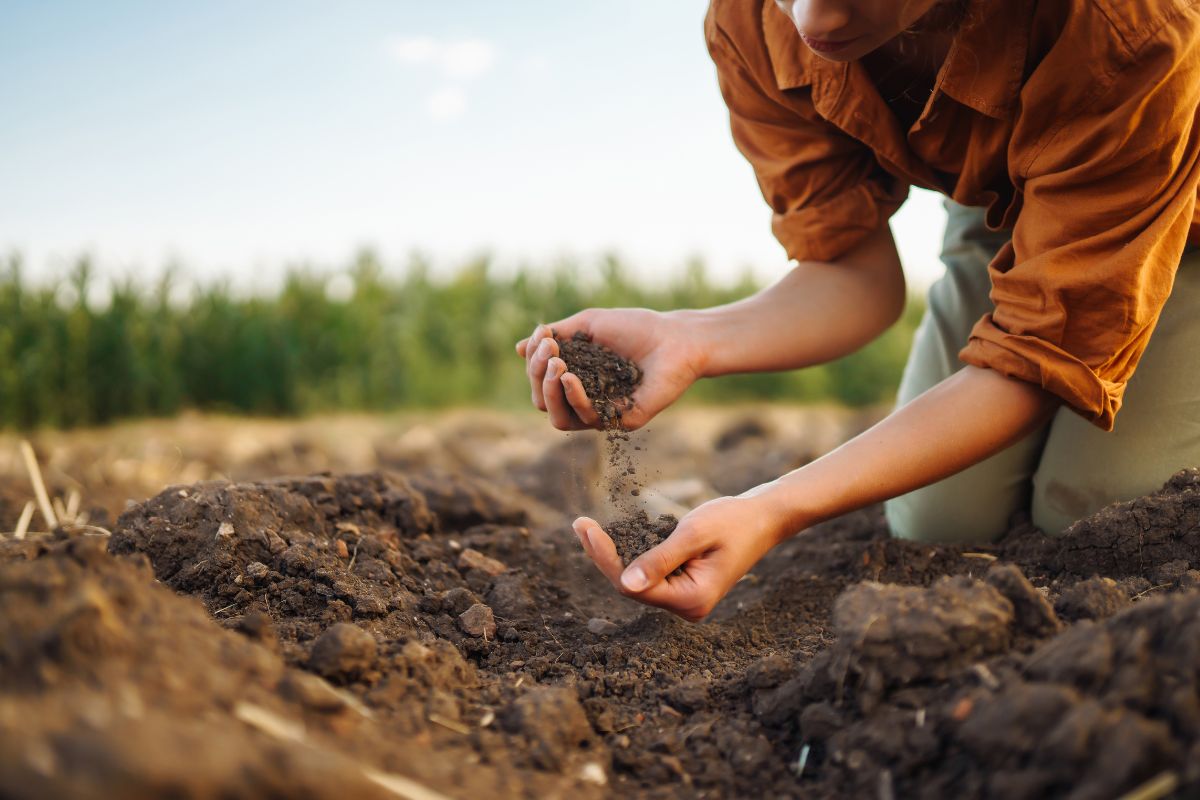
Soil carbon credits are emerging as a potential financing strategy for farmers transitioning to regenerative agriculture, offering the promise of an additional revenue stream. The global carbon market is currently valued at around USD 1.4 billion and is projected to grow to USD 50 billion by 2030. While soil-based carbon credits currently represent a small share of the market, recent studies suggest that if regenerative practices were implemented on just half of EU farmland, they could sequester or avoid over 250 million tonnes of CO₂ annually.
This article explores what soil carbon credits are, how farmers can access them, and the key challenges, especially for small-scale operations.
What are soil carbon credits and how do they differ from other carbon credits?
Carbon credits are tradable certificates representing the reduction, removal, or avoidance of one metric ton of carbon dioxide (or equivalent greenhouse gas) from the atmosphere.
Common sources of carbon credits include:
- Renewable energy projects (e.g., wind, solar)
- Forest conservation or reforestation
- Methane capture (e.g., from landfills or livestock)
- Energy efficiency improvements
- Industrial process modifications
Soil-based carbon credits are a specific subset of these credits, generated by agricultural practices that increase the amount of carbon stored in soil, a process known as soil carbon sequestration. They fall under the category of Nature-based Solutions (NbS) and currently make up a modest portion of the overall carbon credit market.
Typical practices include:
- Regenerative or conservation agriculture (e.g., no-till, cover crops)
- Organic amendments (e.g., compost, biochar)
- Holistic grazing management
Are all carbon credits valued the same?
No. The price of carbon credits varies based on several factors, including the type of project, the methodology used, and the overall quality and permanence of the captured carbon. For example, credits generated from avoided deforestation are often priced differently than those resulting from regenerative agriculture or the restoration of degraded land.
In general, larger projects and more advanced or complex carbon capture methodologies generate more credits and, therefore, more revenue. This dynamic makes carbon markets more interesting and profitable for large-scale operations, while posing significant barriers for small-scale farms.
How can a farmer get certified and start selling carbon credits?
The process typically involves five key steps:
1. Find a carbon program or project developer. Project developers help farmers adopt regenerative practices, measure carbon sequestration, submit documentation for certification, and sell credits on the market. These developers usually retain a portion of the credits as compensation. Contracts often last 10 years or more.
2. Conduct a baseline assessment. Soil samples are collected to measure existing carbon levels and establish a baseline for future comparisons.
3. Design a carbon farming plan. A tailored plan is developed outlining practices that will increase carbon sequestration, such as cover cropping, reduced tillage, agroforestry, and lower synthetic fertilizer use.
4. Implement practices and track progress. Farmers must implement the practices and meticulously record outcomes. Third-party verification is required to confirm the amount of CO₂ sequestered. This process is known as MRV (Monitoring, Reporting, and Verification). While administratively intensive, many developers now offer digital tools to ease the burden.
5. Receive certified credits and get paid. Once certified, the credits can be sold to buyers (often arranged through the project developer). Farmers receive payment based on the agreed revenue-sharing model.
Key challenges for small-scale farmers
While interest in soil carbon markets is growing, several barriers make participation difficult for small-scale and diversified farms. Organizations like Climate Farmers have even stepped back from carbon markets, citing fundamental misalignments between market structures and the principles of regenerative agriculture in their latest position paper.
Core challenges include:
- Standardization vs. complexity: Carbon markets prioritize uniformity and scale, relying on a single metric—tons of CO₂ captured. This approach overlooks the ecological complexity of regenerative systems, which deliver a range of environmental and social benefits beyond carbon.
- High MRV costs and administrative burden: The verification and documentation requirements are often too costly and time-consuming for smaller farms.
- Disincentives to holistic livestock integration: Current accounting methods often penalize farms that integrate livestock, despite their potential role in regenerative systems.
- Additionality rules: To qualify for credits, projects must prove that carbon sequestration is “additional”, i.e., it wouldn’t have happened without the project. This rule penalizes early adopters of regenerative practices, as their efforts are no longer considered new or additional. Moreover, ongoing improvements are rarely rewarded, as most credits are issued for initial changes only.
- Delayed payment and high risk: It can take 12 to 24 months from enrollment to receiving the first payment. In the meantime, farmers bear all the financial and climatic risks. For example, a drought or wildfire can invalidate credits, even if the farmer implemented all required practices.
Conclusion
Soil carbon credits offer great potential, especially those tied to high-quality, long-term carbon removal. However, small-scale farmers remain largely out of reach due to their limited capacity to generate large volumes of credits and the complexity of verifying integrated practices like agroforestry or rotational grazing.
Partnering with a reliable project developer can help overcome some of these hurdles by offering technical support, simplifying MRV processes, and connecting farmers with buyers.
Some of the most prominent project developers include:
- Europe: InSoil, Agreena, Regreener, ClimatePartner, eAgronom
- US: Indigo Ag, TruCarbon (by TruTerra), Nutrien Ag Solutions
As the market matures, there's a growing call for carbon credit systems that better reflect the realities of regenerative agriculture and reward not just carbon outcomes, but holistic land stewardship.
Sources:
Carbon credits, Agricultural Carbon Credits and Carbon Farming Guide (2025)
eAgronom, A 6-step guide for farmers to get carbon credits in agriculture (2022)
Carbon credits, Carbon Credits in 2024: What to Expect in 2025 and Beyond ($250B by 2050) (2025)
European Alliance for Regenerative Agriculture (EARA), Farmer-led research on Europe’s full productivity (2025)
McKinsey, A blueprint for scaling voluntary carbon markets to meet the climate challenge (2021)
Planet 2050, Primer on Carbon Finance: Pricing Future Carbon streams (2025)
Climate Farmers, Position Paper - Aligning Carbon Markets with Regeneration (2025)