

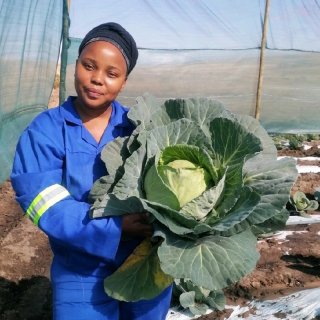
I had just finished my practicals in 2020, and like many young people during COVID-19, I had no clear plan for what came after graduation.
Then I applied for what I remember as an agricultural basic voucher. I didn't take the application very seriously. I wasn't sitting there thinking I was going to become a farmer. I knew I wanted to work for myself, and I knew I wanted to farm, but I honestly didn't know where to start.
Then the news came that I had been approved. They asked me to send pictures of my garden so they could come and inspect it, and suddenly this thing I hadn't taken seriously became real. Agricultural officials were coming, I needed somewhere to farm, and I didn't want the voucher to go to waste. So, with the support of my mother, I started looking for land. That became my first real struggle as a young farmer.
The struggle to find land
For young farmers, getting land is not as simple as people make it sound. You can have the passion, the knowledge, even funding opportunities. But where do you actually farm?
My mother knew a man who had a farm, with around 20 cows and a few crops, green peppers, tomatoes and maize. He wasn't doing much with the crops, and some were already struggling. I asked him for two hectares. He told me, "I can't just give you two hectares. Work with me for a month first. Help me with the crops and the cows. Let me see if you are capable of working this land."
I agreed. Let me prove myself, I thought. I drove there several times a week in my mother's car, even though the farm was far from home.
The green peppers were already spoiled and the tomatoes had pests. We had no money for pesticides, so I protected the tomatoes with transparent plastic, making sure water wasn't trapped and damaging the plants. By the second week we could see progress. I started working with the cows too, checking their condition, their skin, and treating illness. By the third week we were already talking about what to plant next and where we could sell it.
In the fourth week, agricultural officials came to inspect the farm, and they were happy with what they saw. The month was over. It was time to sign the papers for my two hectares.
Then everything changed. He started postponing. He wouldn't come when we had agreed to meet, and another weekend passed, then another excuse. Eventually I stopped going. When he called to ask why, I told him the truth: "I'm not your fool. We had an agreement. You said I would get two hectares. We need to sign the papers."
He suggested I work with his son instead. But that wasn't the agreement, and I wasn't there to work for his son. I walked away.
Then he threatened to tell people in agriculture that I had been using his farm illegally, and the agricultural relief funding I had applied for was then blocked. Another door closed.
I could have gone back to school. I could have decided farming was too difficult. I didn't. I kept looking for land.
Finding another farm
At an agricultural and municipal meeting, someone asked me whether I had a registered business. I didn't. He told me I needed one to apply for funding and potentially for help with land, and I went home thinking about it.
But my mother had already found another solution, a man willing to lease me land. The farm was near a large river that people in the area called the Snake River, because of the mysterious things they believed happened there. On the way there was a bridge, and that bridge was not playing. It was unstable, and I was driving my mother's little VW Polo. At that point I didn't care. I just wanted to farm.
The owner offered me the land for around R6,000 a year. The first portion he showed me had little water, but one of his workers told me about another section with plenty. People were afraid of that section because it was close to the river. I wasn't. I was too ambitious, and I just wanted to work.
There were dams, there was water, and the soil was sandy on top with clay underneath. I didn't even do a proper soil test at first. I saw pipes, I saw water, and I saw an opportunity. The farm had belonged to the man's father, who had apparently been a serious farmer, and there were tractors and other equipment built up over the years. The man who inherited it didn't really know what to do with them. And then there was me. I arrived and started farming.
Doing everything at once
I wasn't just farming. I was doing everything. I prepared the soil, managed the irrigation, monitored fertilisation and dealt with pests. At the same time I was attending meetings, applying for funding, trying to unblock the relief funding that had been stopped, going to the Department of Rural Development, and applying to the National Youth Development Agency (NYDA) and to the municipality.
Every morning I made a list of people to call that day, and I kept calling. I had realised very early that if I didn't fight for myself, nobody would.
The support from the agricultural departments around me was disappointing. I would go looking for help and sometimes there was simply nobody available. Later, when I worked there as an intern, I understood some of it from the other side, and I saw how disconnected some departments could be from the farmers they were meant to serve.
The call that changed everything
I was calling different people for help when I got the number of an official at the Department of Rural Development. I called him, and he told me he was in a meeting but would assist me. I carried on calling others, then dialled another number. It was him again. He laughed and said something like, "Aren't you the lady who called me earlier? You're calling me from different numbers!"
That was how we started talking, and eventually we became close friends. He told me that if I really was farming, he needed to see the farm for himself. When he came, he joked about whether I was really a farmer, because I didn't look like someone who could be doing all this. I told him, "Come and see for yourself."
He did, and he was surprised. I had planted. I was working. The farm was real. He took pictures, opened a file for me, and started the process of helping me. I remember thinking, finally, someone sees me.
A few months later he called and told me to collect agricultural inputs: fertiliser, diesel and seeds, all things I desperately needed. When I had no transport to collect everything, he offered to bring it, because he was passing near my area. To me, that man was an angel. He wasn't even from my immediate area. He worked for the department in Witbank, quite far from where I was farming. He also referred me to another official, who helped me with the relief funding that had been blocked. For the first time, things started moving.
Then the farming started working
I knew one thing from my practical training: quality starts with quality seedlings. I knew where good seedlings were sourced because I had been hands-on during my practicals, so I bought good ones and started farming properly. And it worked. I planted tomatoes, cabbage, butternut and other crops, made money from one harvest, and reinvested it.
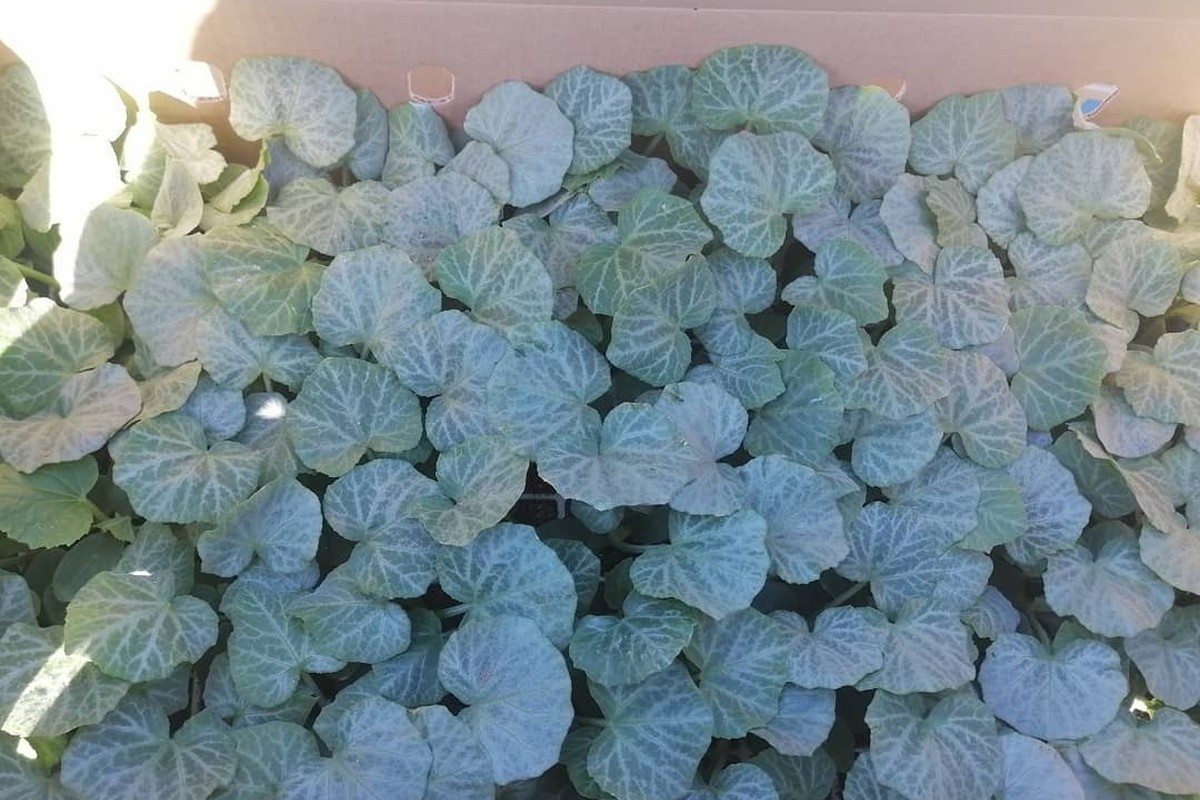
Seedlings ready for transplanting. Quality starts with quality seedlings. Photo: Pearl Katlego Motau
At one point I spent about R5,000 on seedlings, because I believed that with the right crop and the right market that cycle could earn me around R100,000.
But there was another problem, the market. A good product doesn't automatically mean you have a buyer. Sometimes local people bought, and sometimes Spar stores took produce, but a consistent market was hard to find. I was doing everything alone. I prepared the soil, monitored irrigation, managed fertiliser, ran the spraying programme and controlled pests, and then, once the crops were ready, I had to find someone to buy them. I eventually realised that marketing was one of my biggest weaknesses. I could grow a beautiful product, but I didn't always know where to take it, and when I asked the agricultural departments for help finding a market, I didn't get it.
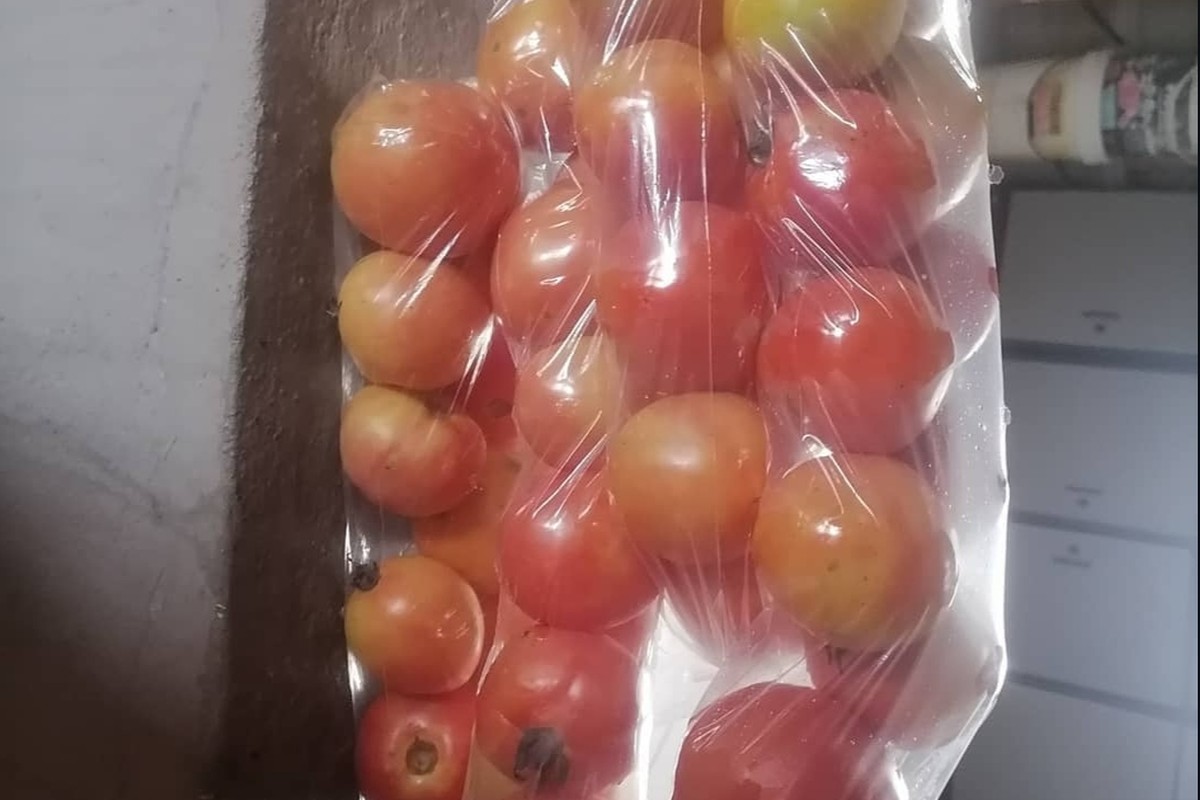
Tomatoes packed for sale. Growing a good crop was one challenge, finding a steady buyer was another. Photo: Pearl Katlego Motau
Then the rain came
Farming taught me that sometimes you can do everything right and still lose.
I had planted the R5,000 of seedlings, everything was looking good, and I had calculated what I could make. Then it rained, not for a day but for almost the whole week.
Remember that bridge? The same unstable bridge I had been crossing in my mother's Polo was now full of water. I would drive there and turn back, genuinely afraid the water would take the car.
Meanwhile, on the farm, the sandy topsoil over clay was holding the water, and then the weeds came. The weeds won. They grew aggressively and competed with my crops for everything. When I finally got back, the crops were struggling and the weeds had taken over. I lost the harvest, the expected profit and the money I had invested. Basically, I lost everything, and that money was what I had depended on.
But I had learned something. I wasn't going to let the same problem defeat me twice.
Losing everything didn't mean the support stopped
After losing that harvest I had to start again, and I kept applying for assistance. Eventually I received the basic voucher I had originally applied for. It had taken time, with the problems at the first farm and the blocked funding, but I never stopped following up, and finally receiving it felt like a small victory.
I also applied for municipal funding and was told it would be worth around R250,000 in materials. I was hopeful again. I thought about what that could do for the farm, for its infrastructure, its production and the opportunities it could create.
What I eventually received was nowhere near that. Instead of materials worth R250,000, I received goods worth about R10,000, a water tank and a shade net. I remember looking at them and thinking about the difference between what had been promised and what was in front of me.
Again I had two choices. I could complain about what I didn't receive, or I could use what I had. Farming had already taught me that you work with what you have, so I kept going.
NYDA came through
The following year, NYDA came through, and this time I wasn't going to make the same mistake. I had already learned what happens when heavy rain comes and weeds take over, so I used the support to protect the farm from the problems I had already lived through.
I bought plastic mulch. I found someone who knew how to build a net shade structure properly and had it built. I hired seasonal workers, three women and two men, whom I would call in for planting and harvest whenever the workload became too much.
Building that net shade was hard, physical work. We had to cross the bridge through waist-deep water to fetch stones from the other side, and we used those stones to keep the poles balanced and the net firm. I was part of that process myself.
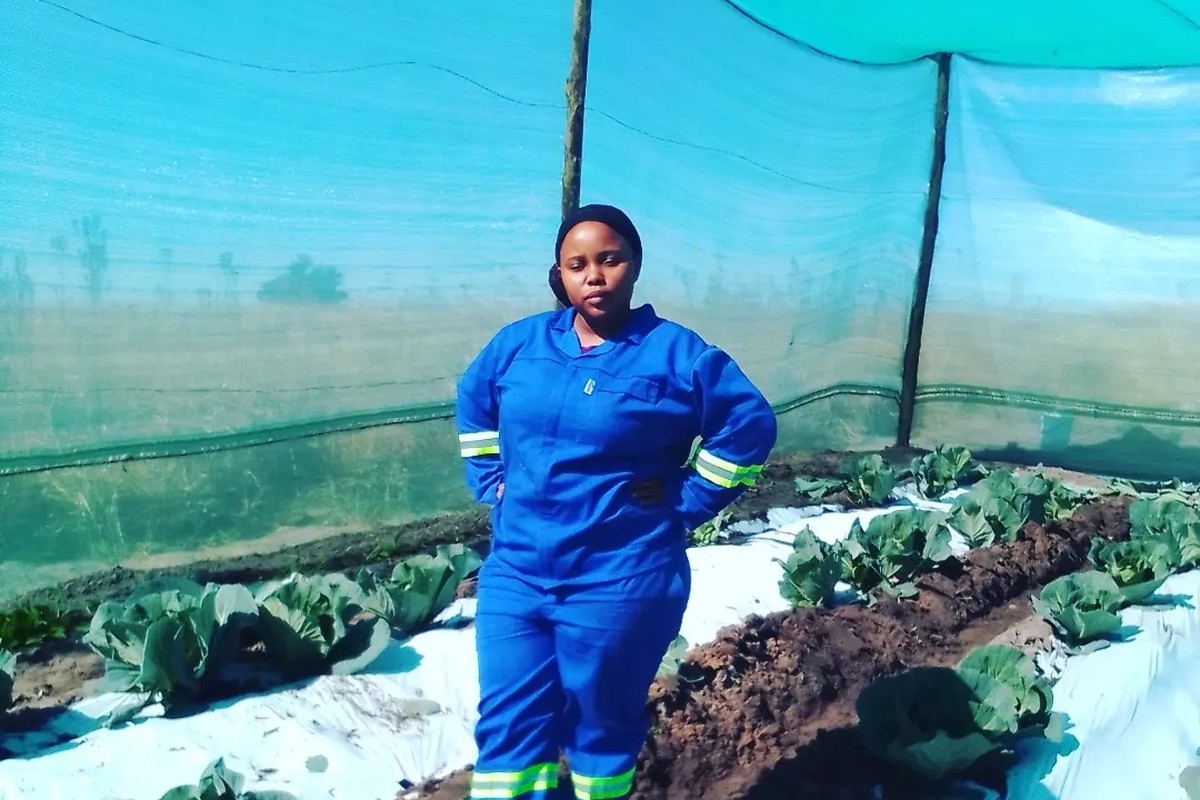
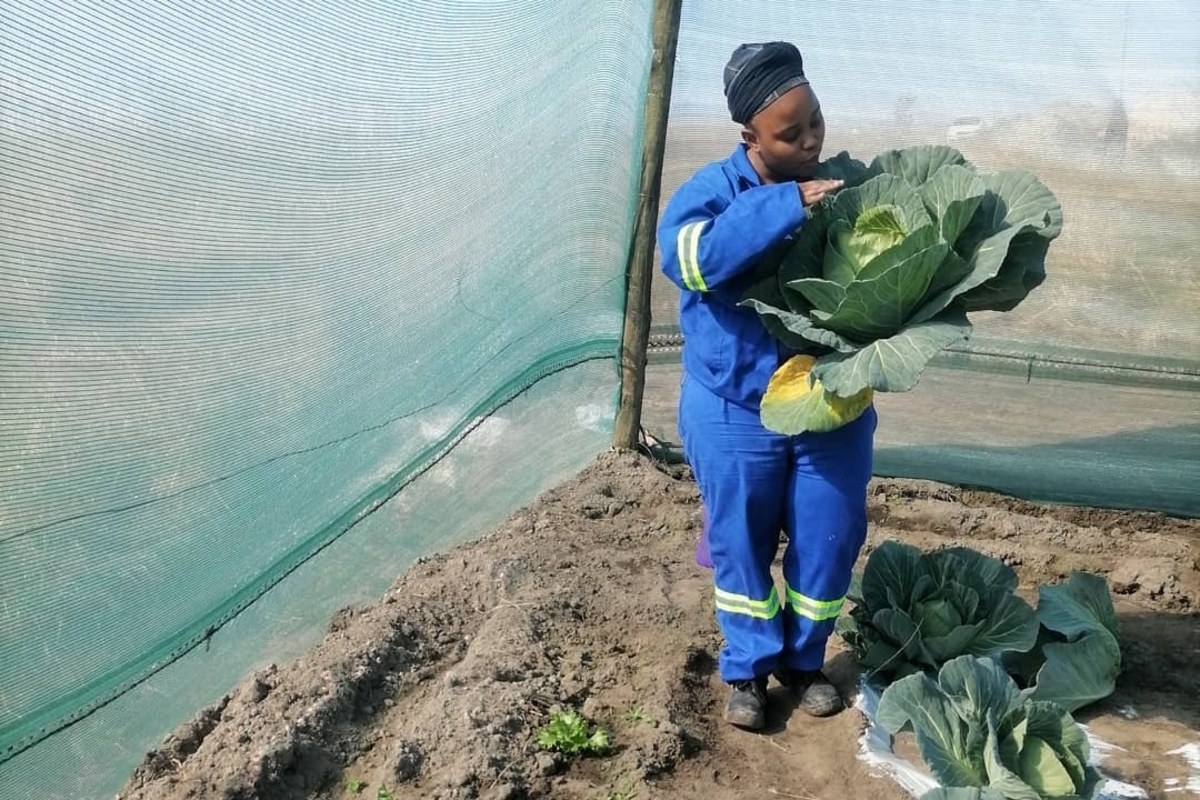
Inside the net shade house, with the crops planted through plastic mulch after the weeds had cost me a harvest. Photo: Pearl Katlego Motau
Things were finally coming together. The net shade was up, the mulch was down, the irrigation was working and the crops were growing. I had inputs from Rural Development and materials from NYDA, and I had learned from my mistakes. For once, it felt like everything was working. I was getting ready to harvest, and I remember thinking, what could possibly go wrong now?
The fire
One night, around 11 p.m. or midnight, my phone rang. It was the man who had built the net shade, who was staying nearby. "Ma'am, your net is burning. Your net is burning. You need to get here. Call the firefighters."
I froze. I was at home, the farm was far, and I didn't know how I was supposed to drive there in the middle of the night. He told me he had tried to get close but couldn't, because the fire was spreading fast.
Then I found out what had happened. I was told the man who leased me the farm had been fighting with his workers because they hadn't been paid for months. Some of those workers had even asked me earlier to hire them. Now, it seemed, they had decided to burn the farm. The farm was big, there was grass everywhere, and my net shade was made of plastic.
There was nothing I could do. So I knelt down and prayed, harder than I had prayed in a long time. I told God about my farm. I told my ancestors. I said, "I have done everything I can. The rest is in your hands." Eventually I fell asleep.
At 5 a.m. I woke up, the time I would normally leave for the farm, and I drove there. Everyone was shocked. The fire had passed only a few inches from my net shade, but it hadn't burned it. It hadn't burned my plastic and it hadn't destroyed my crops. There were ashes and damage everywhere, and some of the cows had been affected and had to be moved, but my net shade was still standing and my crops were still there.
I don't know how else to explain it except as a miracle. I prayed that night because I didn't know what else to do, and the next morning the fire had come incredibly close and simply passed by. It strengthened my faith in a way I cannot explain.
Then life happened again
We kept farming. We harvested and tried to sell. The weed problem was solved, the net shade was standing, the mulch was down, and I had workers when I needed them. I was becoming a farmer, not because anything was easy but because every problem had taught me something.
Then we went to a family ceremony at my grandmother's place, and when we came back my mother became sick. At first we didn't take it too seriously, but after about a month we realised she was really ill, and this time I couldn't simply leave home for the farm.
My mother had been there from the beginning. She had driven me to farms, helped me search for land, and supported me when things were hard. Now it was my turn. Her condition became serious and I had to take care of her. My visits to the farm became less frequent, the daily operations suffered, and I was carrying an enormous amount of stress.
There was another problem too. The man who leased me the land increased the rent from around R6,000 to R12,000 a year. He had seen the improvements I was making and the farm becoming productive, but with everything else happening, the increase was more than I could carry.
Eventually I started looking for a formal job. Not because I no longer loved farming, and not because I had failed, but because life had become bigger than the farm. So I stepped away.
I thought I was starting over
In early 2023 I got a job at the nearby Department of Agriculture. I wanted to earn money and strengthen myself financially, and I still hoped to return to farming properly one day. I stayed in touch with the person from Witbank who had helped me with inputs. I also applied for a tender, received feedback asking whether I wanted to supply, and said yes. And then nothing. I never heard from them again.
Then my contract at Agriculture ended, and shortly afterwards I received devastating news. The man who had helped me, who had opened that file for me and brought me fertiliser, diesel and seeds, the man I had come to regard as an angel in my farming journey, was found dead. He had been killed.
That was another loss I struggled to process. By then so much had happened that I felt I had lost myself. I lost opportunities, harvests, money and the farm. I lost a person who had genuinely helped me. And somewhere along the way, I lost me.
But when I look back at the young woman who applied for a voucher in 2020 without knowing what she was going to do with her life, I see something. She didn't have land, money, a perfect business plan or all the support she needed. But she kept trying.
I was rejected. I was misled. I was promised land and didn't receive it. I had funding blocked, struggled to find markets, and lost a whole harvest to rain and weeds. I watched a fire come dangerously close to everything I had built, chose my mother over the farm, left farming for a job, and lost someone who had helped me when I needed it most.
But I never stopped loving farming. I didn't stop farming because I didn't love it. I stopped because life happened.
Maybe that is the part of my story that matters most. Farming taught me that success isn't always about how long you stay in the field. Sometimes it's about what the field leaves inside you. I lost the farm, but I don't believe I lost the farmer in me.
What the farm gave me
The experience I gained on the farm did not go to waste. I began using those skills to create opportunities for myself. After my internship ended, I used what I had learned to help other farmers, and over time that grew into facilitation, assessment and moderation services.
Today my company also supports training providers in agriculture and helps people apply for funding, drawing on my own experience of chasing support as a young farmer. This journey has helped me sustain myself financially.