
Introduction: A sustainable solution for smallholder farmers
Agriculture is a cornerstone of Uganda’s economy, contributing about 20% of GDP, providing 48% of exports, and supplying raw materials for local industries (Global Yield Cap Atlas, 2023). It supports the livelihoods of 75% of the population (World Bank, 2020), with over 4 million households depending on small-scale farming, primarily rain-fed, for food and income (MAAIF, 2018; Global Yield Cap Atlas, 2023).
However, climate change has significantly reduced agricultural productivity, threatening food security and household incomes (MWE, 2015; Tiyo et al., 2015). In Eastern Uganda’s Elgon region, unpredictable rainfall, droughts, and land pressure exacerbate these challenges. A promising response is microscale irrigation (MSI), a low-cost, small-scale method of watering crops year-round. This article explores the key challenges and opportunities for expanding MSI in rural Uganda.
What is microscale irrigation?
Microscale irrigation refers to small, farmer-managed irrigation systems using solar or fuel-powered pumps with hosepipes, sprinklers, or drip lines, suitable for farms of less than 2.5 acres.
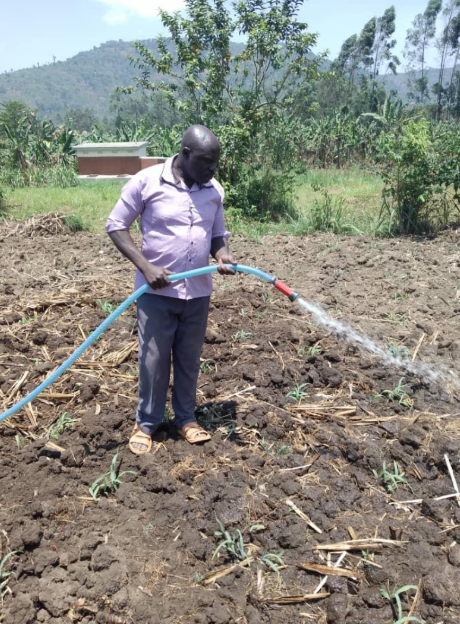
Figure 1: A small-scale farmer utilizing a pipe to irrigate maize
Benefits of MSI include
- Increased crop yields and quality
- Off-season farming, providing higher prices and year-round income
- Reduced crop failure from drought, pests, and diseases
- Enhanced household food security through a constant supply of produce
- Reduced reliance on unpredictable rainfall
- Improved climate resilience and adaptation to water scarcity
- Expansion of productive land that would otherwise remain unutilized
- Strengthened local economies through sustained agricultural income
- Lower poverty rates in irrigated households compared to rain-fed households
- Prevention of soil erosion and salinization through proper water management
- Support for wetlands and ecosystems dependent on regular water flow
- Development of local infrastructure such as dams and canals
- Sustained food systems, particularly in water-scarce regions
For further insights, see our guide on irrigation technologies for smallholder farmers
Why microscale irrigation matters for Uganda
FAO (2020) reported that irrigation covers a small percentage of the total irrigable land (4.5 million ha of irrigable land) in Uganda. This indicates low irrigation adoption and heavy dependence on rain-fed agriculture making the country's agricultural economy extremely fragile and vulnerable to climate change impacts (MWE, 2011). For example, FAO (2020) indicated that Uganda’s area of harvested cereals has been fluctuating since 1979 and dramatically declined in 2019 due to climate change impact (Figure 2).
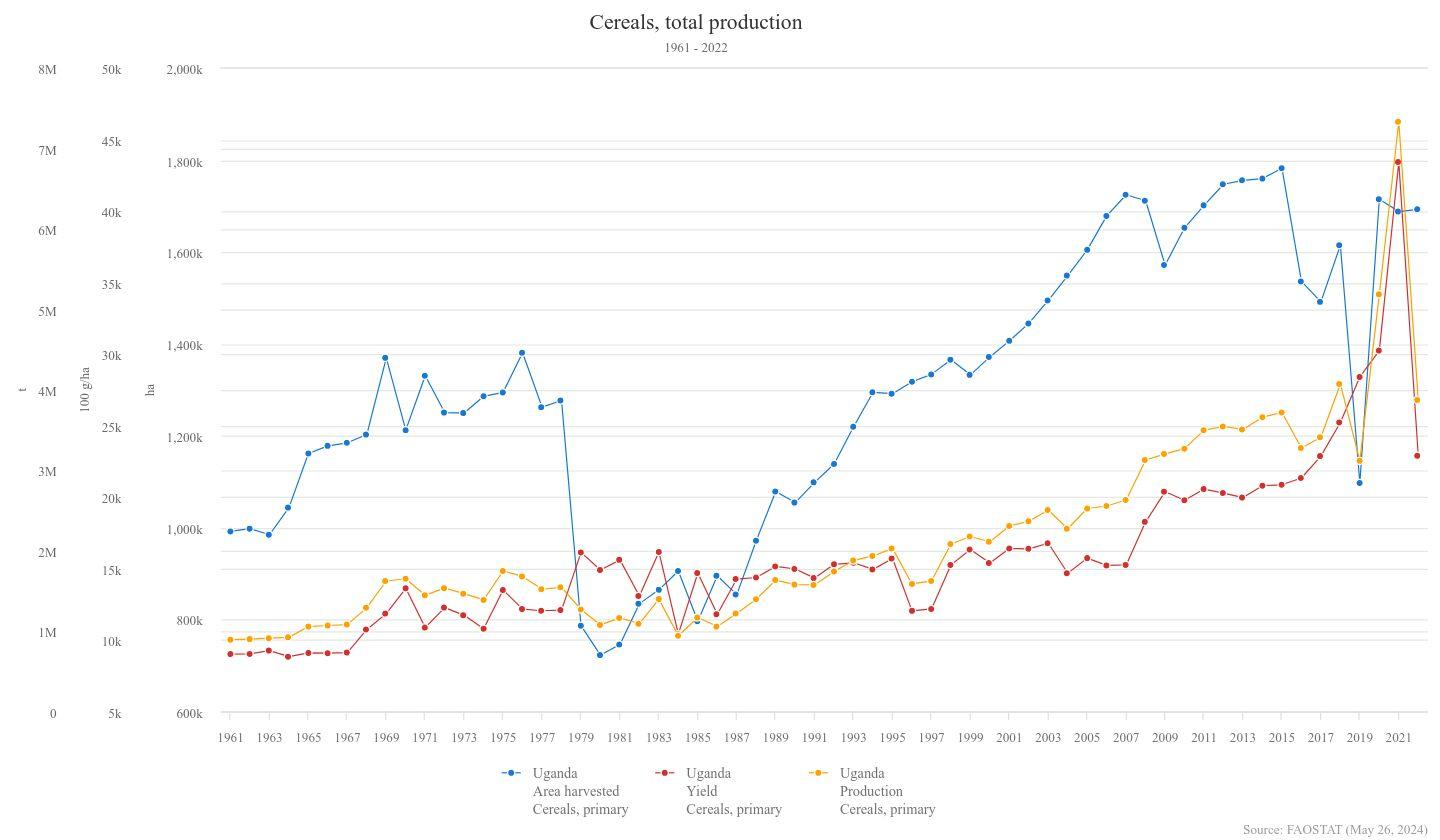
Figure 2: Variations in cereal production in Uganda. | Source: FAOSTAT 2024
According to the report by Uganda’s Ministry of Water and Environment (MWE), the country has fresh water that covers about 15% of the total land area, an opportunity for irrigated agriculture. Surprisingly, Uganda contributes 1% of the 70% of global water use for irrigation (FAO, 2020). MWE (2017) reported that the country’s terrain, Soil, Water, water source distance and accessible transport favour irrigation in addition to 3.03 million hectares that have irrigation potential. However, Burney et al. (2013) reported low irrigation adoption in Uganda, highlighting the lack of resources that enable smallholder farmers to access and utilise the available water sources effectively.
Uganda has significant potential for irrigable land with vast water sources, but its irrigated capacity is limited (FAO, 2015a). Farmers face challenges such as a lack of developed water infrastructure and erratic rainfall (World Bank, 2020) that impact agricultural production. For instance, MAAIF reported a 16% decrease in cash crop production in fiscal year 2010/21 due to poor rains and droughts. Yet Uganda’s fresh water resources, topography, and climate favour the potential of MSI expansion.
Why microscale irrigation benefits smallholder farmers
Smallholder farmers are believed and reported by IFAD, FAO and World Bank as capable of enhancing rural economies in Sub-Saharan Africa (Serote et al., 2021). Globally, over 800 million people are SHFs depending on subsistence farming for their livelihoods (Andrezejewski, 2014). Uganda is dominated by rural SHFs who produce products on less than one hectare for their families and local markets (FAO,2015). However, the Ugandan population is increasing dramatically in rural areas (Figure 3), where agriculture takes place, thereby imposing pressure on land use. Therefore, a shift from rain-fed and traditional irrigation practices, such as buckets, to modern water pumps, application, and water storage facilities dramatically and positively enhances households’ livelihood and contributes to more sustainable use of natural resources (Andrezejewski, 2014).
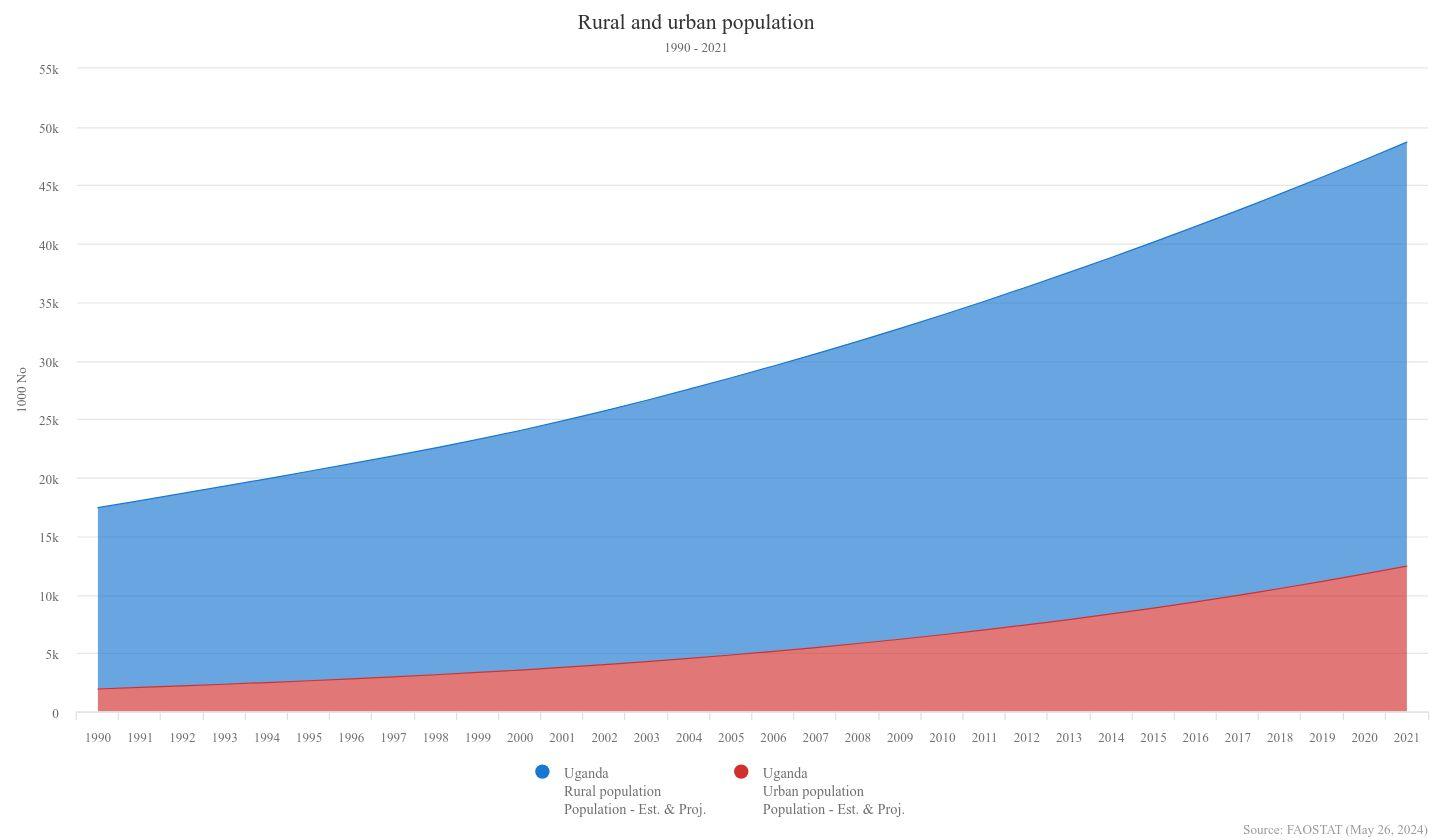
Figure 3: Uganda's population has increased since 1990. | Source: FAOSTAT, 2024
According to UgIFT (August 2020), SHFs are affected by scarce and variable rainfall. The farmers cannot forecast rainfall and, therefore, cannot make farming decisions. In most cases, rain disappears during cropping seasons, resulting in crop failure and, hence, low production and productivity (MAAIF 2019). This situation is very challenging for SHFs whose livelihoods depend on agriculture and is forecasted to worsen in the future. Accelerating rainfall variability and drought have left most Ugandan communities food-insecure and poor (MAAIF 2019). The Consultative Group to Assist the Poor (CGAP) in 2020 reported that weather variability posed a greater risk to smallholder farmers’ agricultural activities.
Abebaw et al. (2015) noted that weather variability has led to low agricultural production, resulting in famine in some communities. Irrigation enables farmers to grow crops all year round, thereby increasing production that enhances food security (Burney et al.,2013). In addition, irrigation enables SHFs to face weather uncertainties, make decisions on when to plant to meet the high market prices, produce high-value crops such as horticulture and coffee all year round, and achieve high yields and quality, hence more income (Pathak et al.,2022; World Bank, 2020). Therefore, microscale irrigation adoption is essential for smallholder farmers to meet the global food demand.
According to IFAD (2020), most countries' reliance on large-scale irrigation schemes suffers from limited sustainability and maintenance of the infrastructure. The small-scale irrigation schemes are successful when well-planned to limit complex physical and managerial issues (IFAD, 2020). However, MSI is more efficient, climate-smart, resilient, and financially sustainable. Ugandan smallholder farmers have a greater opportunity for individual irrigation as most of their farms are near water sources such as streams, rivers, lakes, wells, or boreholes (MWE 2017). Individual farmers can use simple irrigation systems such as solar or petrol pumps with a pipe to irrigate their farm with on-farm systems such as a hosepipe, sprinklers, or drip lines for water distribution to the crops (World Bank, 2020).
The Government and World Bank Intervention
Since 2019, Uganda’s Ministry of Agriculture (MAAIF), supported by the World Bank, has offered co-funding for irrigation kits under the Microscale Irrigation Program (MSIP). With a farmer contribution of 25% or 75% for fuel-powered or solar-powered systems, respectively, of the total cost. Through the program, the farmers are believed to be able to cope with climate change impact, transition to commercialization of high-value crops such as horticulture and coffee, and reap the high market prices (World Bank 2020). According to MAAIF (2024), the program is projected to install 2500 irrigation equipment by the end of fiscal year 2024/25, but has only installed 250 by fiscal year 2023/24. What’s holding farmers back?
Key barriers to microscale irrigation adoption
1. Socio-economic challenges
- Low household income limits co-funding capacity
- Small land size reduces perceived return on investment
- Gender and education disparities affect adoption rates
- Newer farmers are more willing to adopt MSI than experienced ones
- Farmers with alternative income sources are more likely to invest
2. Institutional gaps
- Limited access to extension services and training
- Poor access to credit without collateral
- Market limitations, including poor roads, perishability, and lack of storage
3. Environmental and technical factors
- Hilly terrain increases setup costs
- Undeveloped water sources and lack of storage or pumps
- High technology costs of modern irrigation kits
Strategies to boost MSI adoption in Uganda
- Diversify household income: Promote off-farm activities and livelihood diversification to increase farmers’ financial capacity to invest in irrigation.
- Expand access to education: Strengthen adult education programs in rural areas and ensure children’s schooling to build long-term capacity for adopting modern irrigation technologies.
- Promote mindset change: Train communities to shift cultural practices and norms toward modern, climate-smart farming methods.
- Develop market infrastructure: Invest in rural roads, storage facilities, and marketplaces to improve produce trading and access to agricultural technologies.
- Strengthen extension services: Ensure extension staff are well trained and resourced, with public-private partnerships mobilizing resources and promoting MSI technologies.
- Support farmer associations: Facilitate cooperatives and farmer groups to share market information, irrigation knowledge, and collective bargaining power.
- Improve access to credit: Establish micro-finance schemes tailored to smallholder farmers, enabling affordable loans without heavy collateral requirements.
- Revise MSIP cost-sharing policy: Reduce farmer contribution requirements (currently 75% for solar and 25% for fuel-powered systems) to a more affordable threshold, such as a commitment fee below £210.
- Introduce pay-as-you-use models: Allow farmers to gradually pay for irrigation equipment while using it, instead of requiring full upfront payments.
- Invest in water infrastructure: Encourage collaboration among ministries of water, environment, and agriculture to build multipurpose, affordable water systems for irrigation.
- Support irrigation research and innovation: Fund the development of modern, cost-effective irrigation technologies to reduce the high costs that discourage adoption.
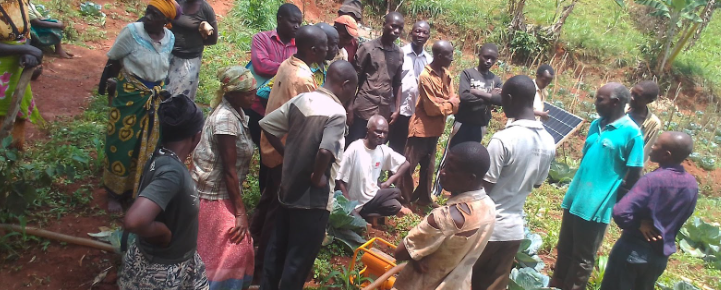
Figure 4: Farmer training and raising awareness on irrigation systems fostering adoption
Conclusion
Microscale irrigation has the power to transform Ugandan agriculture—from subsistence to climate-resilient and market-driven. But adoption requires more than funding. It needs policies and infrastructure that empower farmers to invest, learn, and grow. If Uganda is to ensure food security and achieve its development goals, smallholder irrigation must become a national priority in policy and practice. Microscale irrigation is about empowering rural families to secure food, increase incomes, and build climate resilience. As Uganda works toward its Vision 2040 and agricultural transformation, scaling up MSI adoption must be a priority.
References
- FAO, International Fund for Agricultural Development, UNICEF, World Food Programme, and WHO, 2020. The state of food security and nutrition in the world 2020. Transforming food systems for affordable healthy diets.
- Nakawuka, P., Langan, S., Schmitter, P. and Barron, J., 2018. A review of trends, constraints and opportunities of smallholder irrigation in East Africa. Global food security, 17, pp.196-212.
- Dawid, I., Workalemahu, S. and Hassen, A., 2021. Small-Scale Irrigation Farming Adoption as a Climate-Smart Agriculture Practice and Its Impact on Household Income in Ethiopia: A. Int. J. Food Sci. Agric., 5, pp.584-591.
- Ministry of Agriculture, Animal Industry and Fisheries (MAAIF), 2018. National adaptation plan for the agricultural sector.
- Mow, 2017, national irrigation policy
- World Bank (September 14, 2020) Knowledge, Empowerment and Technology – Supporting Micro-Scale Irrigation in Uganda, feature story September 14, 2020. Uganda Micro Scale Irrigation Program — World Bank