


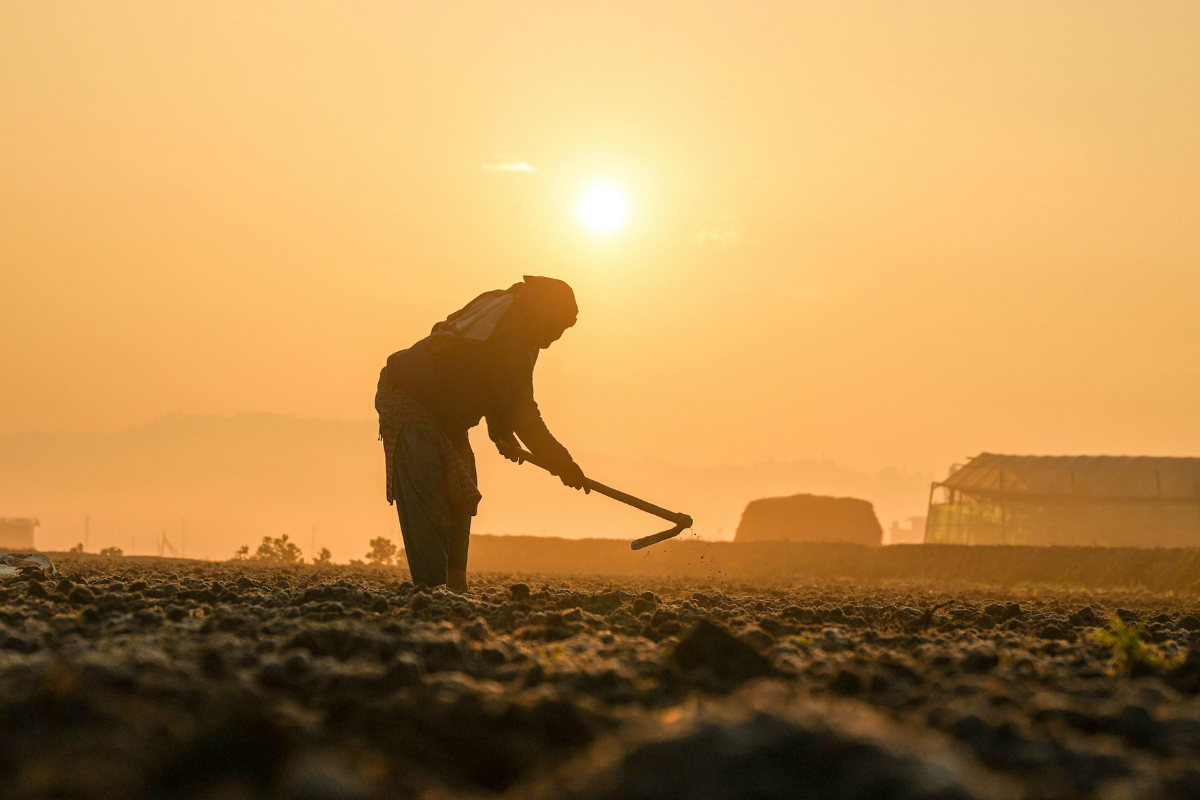
Agriculture was never my first choice when selecting a course at university. In fact, it was something I had never imagined for myself. In the society where I grew up, farming was often viewed as a profession for people who had no other options. Because of this perception, when I enrolled in university to pursue a degree in horticulture, I felt uncertain and even embarrassed. Whenever someone asked what I was studying, I struggled to say it confidently.
During my first year, I strongly considered changing my course to clinical medicine. However, the process of switching programmes seemed long and complicated, so I decided to continue with horticulture. As time passed, I discovered that I genuinely loved plants, and what had started as a reluctant choice slowly developed into a meaningful interest.
What the classroom cannot teach
While studying at university, much of our focus was on passing exams, and I assumed that once I graduated, I would be well prepared for the industry. However, when I began working in the field, I quickly realised that school had not fully prepared me for the practical realities.
In textbooks, agricultural problems are often presented clearly and systematically. In the field, problems rarely appear that simple. A farmer may approach you with a crop problem, perhaps a pest infestation or a plant disease, and expect you, as the trained expert, to immediately identify the cause and provide a solution. But real-life situations are often more complex than what we studied in class. Sometimes the symptoms do not match the textbook descriptions, and the answer is not obvious. Those moments are always humbling, and they remind me that agriculture is a profession of continuous learning. You never know it all.
One of the most important lessons I have learnt is that agriculture cannot be practised solely through theory. Reading about farming techniques is easy; applying them successfully in real-life conditions is where the real challenge lies.
Every farm is different
Every farm operates within unique conditions. Soil types vary, rainfall patterns differ, pest pressures change, and market demands fluctuate. A solution that works well in one location may not work in another. Successful farming therefore requires more than technical knowledge. It requires observation, flexibility, and a deep understanding of the local environment.
Working closely with farmers has taught me how critical timing, labour, and local conditions are in agriculture. On farms that depend on rainfall, timing is everything. Farmers must understand seasonal patterns and plant crops at the right moment to take full advantage of the rains. Choosing crops that suit the local climate while also considering market demand is essential for success.
Labour is another important factor. In many cases, labour can be the most expensive part of a farm's budget. A dedicated and responsible worker can significantly improve the productivity of the farm, while an unmotivated one can create serious problems. From experience, I have learnt that when hiring farm workers, responsibilities should be clearly defined from the beginning. It is also important to choose people who genuinely care about working in the field. Someone who is only interested in the paycheck, without commitment to the farm, can easily undermine the operation.
Listen before you advise
One of the biggest mistakes I made early in my career was believing that my university education had made me the expert in every situation. I assumed my role was simply to give instructions while farmers followed my advice. Experience quickly taught me otherwise. These farmers possess years, sometimes decades, of practical knowledge. They understand their land, their crops, and their environment far better than I did as a recent graduate. This realisation taught me one of the most important lessons of my career: before giving advice, listen. When a farmer presents a problem, it is important to understand what they have already tried, what has worked for them in the past, and what has not. By combining their experience with your knowledge and other findings, better and more practical solutions can be found.
Advice for young agronomists and aspiring farmers
For young agronomists entering the field, my advice is simple: be humble. A university education provides a strong foundation, but real expertise develops through experience. Farmers are not just clients. They are valuable sources of knowledge, and they will teach you what books could not.
For those thinking about starting a farm, it is important to understand that agriculture is not an easy path. Farming is a continuous learning process that requires patience, resilience, and dedication. Challenges are inevitable, but each challenge brings an opportunity to learn and improve. Do not be afraid to start. The best way to learn farming is by doing it. Over time, the lessons gained from the field will shape you into a knowledgeable and confident practitioner.