


Introduction
What is heat stress, and why does it matter in livestock farming?
As explained by Das et al. (2016), stress is a reflexive response of animals to harsh environmental conditions, and it can result in a range of adverse outcomes, from mild discomfort to death. Livestock are subjected to various forms of stress, including chemical, physical, nutritional, and thermal stress. Several factors influence livestock productivity, such as photoperiod, geographical location, age, breed, nutrient and water availability, management practices, and environmental conditions. In the context of climate change, thermal stress has emerged as the most critical limiting factor affecting animal productivity.
The IPCC (2007) stated that climate change poses a significant threat to the survival of numerous species and ecosystems, and it challenges the sustainability of livestock production systems worldwide, particularly in tropical and temperate regions. It also reported that the global temperature has increased by approximately 0.2°C per decade. Furthermore, projections indicate that the global average surface temperature could rise by 1.4 to 5.8°C by the year 2100. The report also emphasized that developing countries are particularly vulnerable to the adverse effects of extreme climatic events, mainly because their economies depend heavily on climate-sensitive sectors such as agriculture and forestry.
ELR (2025) also supported a similar claim about how climate change is reshaping seasons globally, particularly by creating hotter and longer summers. Research indicates that the duration of summer increased globally by approximately two weeks between 1952 and 2011. Projections further suggest that this trend of lengthening summers is likely to persist in the absence of significant reductions in greenhouse gas emissions.
Causes of heat stress
As explained by the United Nations Climate Action, Fossil fuels —namely coal, oil, and natural gas —are the predominant drivers of global climate change, contributing to over 75% of global greenhouse gas emissions and nearly 90% of all carbon dioxide emissions. As greenhouse gas emissions accumulate in the Earth’s atmosphere, they form an insulating layer that traps solar radiation. This process exacerbates global warming and contributes to climate change. Current evidence indicates that the planet is warming at an unprecedented rate in recorded history. The sustained rise in global temperatures is altering weather patterns and disturbing the natural equilibrium of ecosystems, posing significant threats to human societies and biodiversity worldwide.
Effect of Heat Stress in Livestock Performance
When environmental temperatures move beyond the thermo-neutral zone, animals are forced to divert metabolizable energy normally allocated for growth, reproduction, and production towards maintaining thermal homeostasis. The combined effects of elevated temperature and humidity can be particularly detrimental and potentially fatal to livestock populations worldwide. Multiple factors, including species, genetic potential, physiological life stage, management or production system, and nutritional status, influence livestock's vulnerability to heat stress.
Thermal stress in livestock is multifactorial in nature. It directly impairs cellular functions across various tissues, alters blood flow distribution, and reduces feed intake, all of which collectively contribute to diminished production performance.
Effect of heat stress on reproduction
Reproductive functions in livestock are particularly sensitive to climate change. Research indicates that large ruminants are more susceptible to heat stress than small ruminants (Figure 1). Heat stress is a leading contributor to infertility and reproductive inefficiency in livestock, resulting in significant economic losses. It reduces libido, fertility, and embryonic survival rates, and increases the incidence of diseases in neonates due to compromised immunity. Furthermore, heat stress impairs reproductive performance by disrupting the function of the reproductive tract, altering hormonal balance, reducing oocyte quality, and ultimately decreasing embryo development and survival (Wolfenson et al., 2000).
In female animals, high temperatures from heat stress can interfere with puberty, reduce chances of pregnancy, and increase embryo loss. This happens because stress triggers hormones that help the body cope, but also block the hormones needed for reproduction. As a result, heat stress shortens the time during which animals exhibit signs of heat (estrus), disrupts egg development, and increases egg cell death, leading to reduced fertility. Extreme heat can delay puberty in both male and female animals. In females, heat stress during early egg development can impede proper egg growth and prevent ovulation (Ozawa et al., 2005).
Effect of heat stress on pregnancy
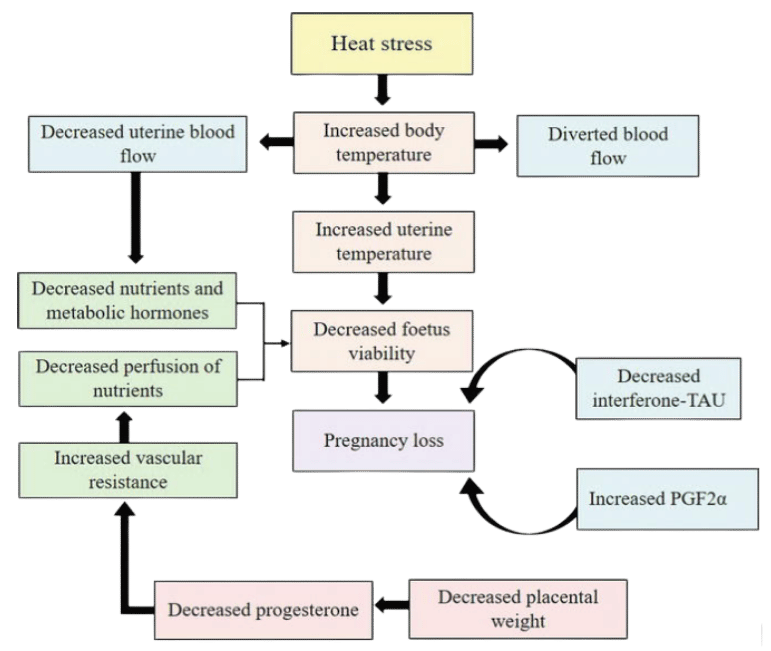
Figure 1. Impact of heat stress on pregnancy in livestock (Krishnan et al., 2017)
The highest rate of pregnancy loss from heat stress typically occurs during the early embryonic stage, particularly between days 8 and 17 of gestation (López-Gatius, 2023). Heat stress impairs embryonic development up to day 17, a crucial period for interferon-tau (IFN-τ) production. IFN-τ suppresses PGF2α secretion, helping maintain the corpus luteum (CL) necessary for sustaining pregnancy. However, heat stress reduces embryo quality and weakens CL function, both of which contribute significantly to early embryonic loss. During the late gestation period, heat stress in dairy cows leads to the birth of lower-weight calves and reduced milk yield, linked to decreased levels of thyroxine, prolactin, and growth hormone (Avendaño-Reyes et al., 2006).
Strategies for minimizing heat stress
Heat stress causes significant economic losses in livestock, but these can be mitigated through strategies such as environmental modification, nutritional management, and breeding for heat tolerance. These approaches, used alone or together, help create optimal conditions for animal productivity. Advanced reproductive technologies, such as gonadotropins, timed AI, and embryo transfer, can also address summer infertility. Farmers are more likely to adopt cost-effective strategies rooted in local knowledge.
Physical modification of the environment
Environmental management is crucial in animal science, particularly in light of climate change. It aims to create a favorable microclimate that supports optimal livestock productivity by minimizing the negative effects of harsh weather. Two primary strategies are commonly used:
Provision of Shade: Natural or artificial shades help reduce direct solar radiation, lowering heat load on animals.
Evaporative Cooling Techniques (Dash et al., 2016): Methods such as fogging and misting release fine water droplets into the air. These droplets evaporate quickly, reducing ambient temperature and providing cooling to the animals. This is especially important in pigs.
Nutritional management of heat stress
Providing adequate and balanced nutrition is crucial to maintaining livestock productivity in changing climate conditions. Nutritional management supports optimal reproduction, as energy balance directly affects fertility. In hot, arid regions, poor-quality and scarce feed further reduce reproductive efficiency. To counteract heat stress, animals may require 7–25% more energy for maintenance. Supplements like betaine help reduce heat stress in sheep, while feed buffers prevent rumen acidosis. Adding ascorbic acid can improve immunity, feed intake, weight gain, fertility, and overall resilience to heat stress (Sejian et al., 2015; NRC, 1981; DiGiacomo et al., 2016)
Environmental and nutritional adjustments can temporarily reduce the impact of heat stress, but long-term solutions require genetic approaches. Differences in thermal tolerance among livestock offer insight for selecting heat-tolerant animals. Certain cattle breeds, like Senepol and Carona, show better adaptation to heat due to traits such as short, thick hair and light coat color, which are linked to better thermoregulation. Heat shock proteins (HSPs), including Hsp100, Hsp90, and Hsp70, among others, play crucial roles in protecting cells during thermal stress and are involved in physiological adaptation.
The expression of HSP genes is triggered by heat and influences metabolism, immune response, and hormonal activity. Specific genetic markers, or single-nucleotide polymorphisms (SNPs), in HSP genes and others, such as ATP1B2 and ATP1A1, have been linked to heat tolerance in cattle. These markers can be used in selective breeding to develop animals with better thermal adaptation, with thermotolerant bulls recommended for breeding programs to improve offspring resilience (Bernabucci et al., 2010; Mariasegaram et al., 2007; Collier et al., 2008)
Conclusion
Heat stress presents a critical challenge to livestock productivity, particularly in tropical and arid regions. It impairs growth, reproduction, and overall performance, resulting in significant economic losses. While environmental and nutritional interventions offer short-term relief, long-term strategies such as genetic selection for heat tolerance are essential to ensuring sustainable animal production in a warming climate.
References
- Bernabucci, U., Lacetera, N., Baumgard, L. H., Rhoads, R. P., Ronchi, B., & Nardone, A. (2010). Metabolic and hormonal acclimation to heat stress in domesticated ruminants. Journal of Animal Science, 4(7), 1167–1183.
- Collier, R. J., Collier, J. L., Rhoads, R. P., & Baumgard, L. H. (2008). Invited review: Genes involved in the bovine heat stress response. Journal of Dairy Science, 91(2), 445–454.
- Dash, S., Chakravarty, A. K., Singh, A., Upadhyay, A., Singh, M., & Yousuf, S. (2016). Effect of heat stress on reproductive performances of dairy cattle and buffaloes:A review. Veterinary World, 9(3),235–244.
- Das, R., Sailo, L., Verma, N., Bharti, P., Saikia, J., Imtiwati, & Kumar, R. (2016). Impact of heat stress on health and performance of dairy animals: A review. Veterinary World, 9(3), 260–268.
- DiGiacomo, K., Simpson, S., Leury, B. J., & Dunshea, F. R. (2016). Dietary betaine impacts the physiological responses to moderate heat conditions in a dose dependent manner in sheep. Animals, 6(9), 51.
- Environmental Law Review. (2025, February 23). The endless summer: How global climate change is intensifying heat waves. Fordham University.
- Intergovernmental Panel on Climate Change (IPCC). (2007). Climate change: Synthesis report.
- Krishnan, G., Bagath, M., Pragna, P., Vidya, M. K., Aleena, J., Archana, P. R., Sejian, V., & Bhatta, R. (2017). Mitigation of the heat stress impact in livestock reproduction. In Theriogenology. InTech.
- López-Gatius, F. (2003). Is fertility declining in dairy cattle? A retrospective study in northeastern Spain. Theriogenology, 60(1), 89–99.
- Mariasegaram, R., Chase, C. C., Chaparro, J. X., Olson, T. A., Brenneman, R. A., & Niedz, R. P. (2007). The slick air coat locus maps to chromosome 20 in Senepol-derived cattle. Animal Genetics, 38(1), 54–59.
- National Research Council (NRC). (1981). Effect of environment on nutrient requirements of domestic animals.
- Ozawa, M., Tabayashi, D., Latief, T. A., Shimizu, T., Oshima, I., & Kanai, Y. (2005). Alterations in follicular dynamics and steroidogenic abilities induced by heat stress during follicular recruitment in goats. Reproduction, 129(5), 621–630.
- Sejian, V., Samal, L., Haque, N., Bagath, M., Hyder, I., Maurya, V. P., ... & Bhatta, R. (2015). Overview on adaptation, mitigation and amelioration strategies to improve livestock production under the changing climatic scenario. In Climate Change Impact on Livestock: Adaptation and Mitigation (pp. 359–397). Springer India.
- Wolfenson, D., Roth, Z., & Meidan, R. (2000). Impaired reproduction in heat-stressed cattle: Basic and applied aspects. Animal Reproduction Science, 60-61, 535–547.
- Avendaño-Reyes, L., Alvarez-Valenzuela, F. D., Correa-Calderón, A., Saucedo-Quintero, J. S., Robinson, P. H., & Fadel, J. G. (2006). Effect of cooling Holstein cows during the dry period on postpartum performance under heat stress conditions. Livestock Science, 105(1–3), 198–206.