
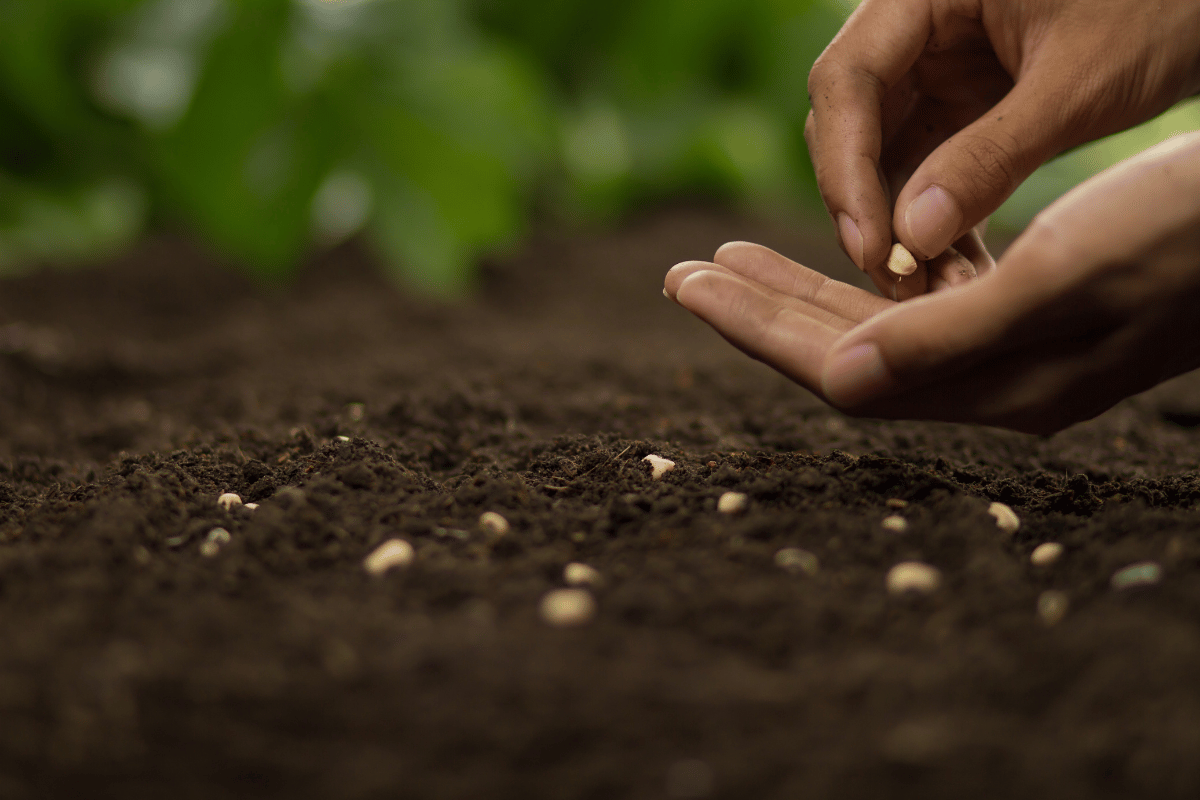
Climate change and climate variability are sharpening the challenges that come with farming for a living, and farmers are struggling to maintain crop diversity more than ever. Existing mechanisms for meeting farmers' seed needs are often inadequate. There is a workable response within reach. Studies show that seed banks can strengthen farmer resilience by improving access to diverse, locally adapted crops and varieties, and by supporting indigenous knowledge and skills around seed selection, treatment, storage, multiplication, and distribution.
Seed banks also act as repositories of local genetic diversity that has often adapted to prevailing climate conditions, including biotic stresses such as crop pests. Done well, they form part of community-based adaptation strategies to climate change. Various initiatives across Uganda have shown that seed banks are climate-smart and have the potential to lift crop productivity, household income, and food security in a changing climate.
What a seed bank actually is
Before discussing how seed banks can help impoverished communities, it is useful to define them. A seed bank is a place where seeds of different crops and rare plant species are stored to preserve genetic diversity for future use. The most secure facilities are flood, bomb, and radiation-proof vaults holding sealed jars of seeds from many different plant species. Seeds are placed in airtight glass containers stacked in large freezers held at around -20 °C (-4 °F), and can be drawn on later to grow new plants over years or decades.
Seed banks are built to preserve biodiversity by collecting and storing samples of many species. If seed reserves elsewhere are damaged, the seed bank can release seeds to farmers and partner organisations in defined quantities for replanting. There are now more than 1,000 seed banks around the world, varying in type, size, and focus. The largest is the Millennium Seed Bank at Wakehurst in Sussex, managed by the Royal Botanic Gardens, Kew. It opened in 2000 and now holds more than 2.5 billion seeds from over 40,000 species, including nearly all of the UK's native trees and plants.
Anyone can also start a small seed bank of their own. Saving seeds from the produce you eat and storing them in a sealed container in the freezer is the most basic version. People can also donate seeds. Organisations such as Seeds to the World, Seeds of Peace, and Seed Global Health accept seed donations to support food security work around the world.
With the rise of genetically modified plants and the pressures of climate change, communities everywhere face new challenges around food production. Seed banks can help the most affected areas by conserving local crops that are already adapted to the region and by reviving the use of specific plants that anchor agricultural stability.
Globally, an estimated 40% of plant species are at risk of extinction, according to the State of the World's Plants and Fungi report published by Kew. Seed banks act like an insurance policy for plants and trees, a way of protecting as many species as possible from this fate. Plants face pressure from many directions, including habitat loss, climate change, pollution, pests, and diseases. The pace of those pressures is increasing, raising the risk of an incremental and catastrophic loss of plant diversity. We are losing plants faster than we are discovering them.
How seed banks operate
Seed banks select, collect, and store seed varieties. They also build seed exchange networks linking governments, NGOs, and community seed banks across the world. They serve as ex situ ("off site," "out of place") storage facilities, and they support seed exchange, on-farm conservation, training and capacity-building for farmers, and continuous monitoring of cultivation. Experts and volunteers around the world are out in the field carefully collecting seeds for the banks, working to rigorous criteria so that only the best material is stored. It is also common practice for each bank to send a portion of its valuable seeds to another bank, as additional insurance.
To make seed banking work, experts generally recommend the following sequence.
Decide what to collect. Researchers usually give priority to threatened plants.
Locate plants and time the collection. Seeds are most viable when ripe. Many fruits release their seeds at maturity. Some plants hold their seeds for extended periods, which gives a longer collection window. Others seed irregularly and require repeat visits.
Collect carefully. Researchers gather seeds manually with tweezers, pole cutters, seed traps, nets, or buckets, depending on the plant. For each collection they record the location, plant description, habitat, soil type, and other details. This data describes the local plant population and supports optimal replanting later.
Number and clean each sample. Each sample is given a unique number. Cleaning is done by shaking samples through a sieve or with a machine that uses air to separate seeds from debris.
Dry the seeds. Seeds are dried in a temperature- and humidity-controlled room to reduce their moisture content. Lower moisture significantly extends storage life.
Store sealed and frozen. Cleaned, dried seeds are placed in sealed airtight containers and frozen, typically at around -20 °C (-4 °F).
In theory, properly stored seeds can stay dormant for hundreds or even thousands of years, depending on the species. Long-term confirmation is limited, since none of the modern frozen vaults have run for nearly that long. There are anecdotal cases of ancient seeds from pyramids and old palaces germinating, but the data on seed longevity is still scarce. The most reliable predictions, based on current models, suggest that seeds in vaults will remain viable for at least 150 years, and likely much longer.
Who decides what happens to the seeds
Seeds stored at a seed bank may be owned by the collectors or by the curators, and the owner has the final say on how they are used. Some banks store only seeds related to agricultural crops, as insurance against genetic loss in our food supply. Others hold only seeds from rare species and may be very selective about how those seeds are used. Some banks hold many seeds for multiple purposes, from restocking populations to research projects and plant breeding programmes.
A useful example is the clover glycine (Glycine latrobeana), a rare herb native to Australia. In 2007, more than 1,000 seeds were sent to the Millennium Seed Bank in the UK. When the Cudlee Creek bushfire of late 2019 and early 2020 destroyed a major habitat for the species in the Adelaide Hills, the seed bank was able to send 250 seeds back to Australia. Those were used to propagate a seed orchard and produce plants for habitat restoration in the fire-scarred area.
Why seed banks matter for farmers
Strengthening seed banks brings real, practical benefits for farmers, especially in the regions where the banks are based.
Preservation of crop diversity. This is the central reason seeds are stored. Just as humans and animals adapt to different conditions, so do crops. Different varieties of the same species exist because of this adaptive capacity, and that diversity needs to be preserved.
Protection from climate change. For decades the world has experienced increasingly disruptive climate change, accelerated by industrial pollution. Crop extinction becomes a real risk under these conditions. Seeds held in seed banks remove the danger that whole varieties of certain crops disappear permanently.
Protection from natural disasters. Natural disasters can wipe out crops over wide areas. Rice paddies in tsunami-affected parts of Asia were severely damaged by the 2004 Indian Ocean tsunami, and international seed banks helped supply farmers with seeds so they could start again. The same logic applies to floods, hurricanes, and droughts.
Disease resistance. Crop diseases spread fast and can be devastating. Where disease has destroyed a local crop, seed banks can supply farmers with replacement material so they can replant on a clean slate.
Material for research. Seeds stored in seed banks can be made available to scientists and researchers, which supports work that improves crop production, including breeding for resilience to climate stress.
Protection from man-made disasters. War, oil spills, and other human-driven crises can wipe out local crops. Where conflict makes farming impossible for a period, seeds saved in a seed bank can be retrieved and replanted once stability returns.
A call to action for Uganda
Properly stored seeds can stay viable for decades, and in some cases for centuries, removing the risk of losing crops that are central to the survival of people, livestock, and wildlife. On that basis, I strongly recommend to the Government of Uganda, and specifically to the Ministry of Agriculture, Animal Industry and Fisheries (MAAIF), that seed banks be deliberately strengthened. Strengthening the country's seed-banking infrastructure is one of the most direct and lasting actions Uganda can take to preserve its endangered crop varieties and its rare plant species, and to keep food production secure for the generations that follow.