About weeds
Most people do not understand the true importance and function of weeds. Most gardeners and farmers dislike them, but if they only knew what weeds are trying to achieve, that dislike could easily turn into admiration.
The ecological role of weeds
Weeds actually perform two valuable jobs on a farm.
1. Weeds protect the soil
If a farmer ever forgets to cover the soil, weeds volunteer to do the job. Without ground cover, nutrients are lost to the sun and erosion quickly takes over.
Erosion can be compared to keeping your wallet open, letting your money fly away. Weeds act as a natural shield, helping to protect and restore the soil surface.
2. Weeds bring nutrients back
The second job weeds perform is nutrient recovery. They draw up nutrients from deeper soil layers and bring them closer to the surface, enriching the topsoil. In this way, weeds act as free fertilizers.
Once the nutrient imbalance has been corrected, many of these “unwanted” plants naturally disappear on their own.
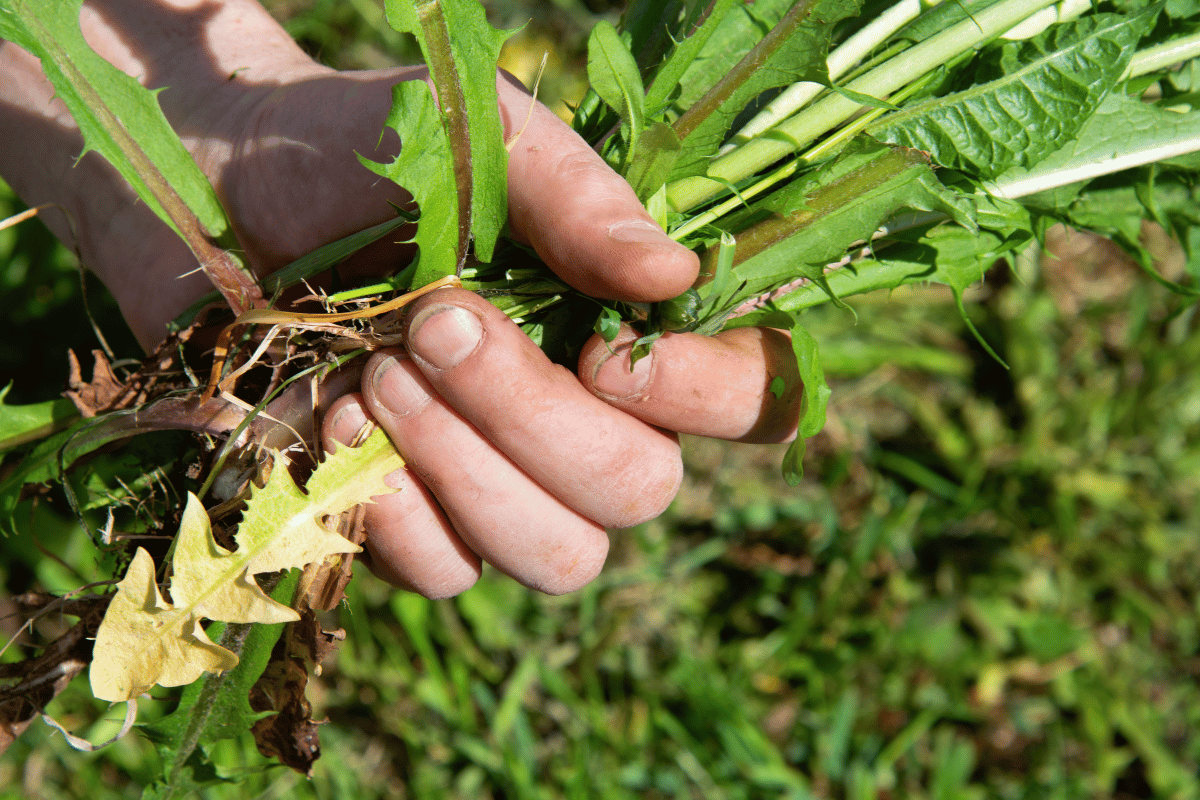
Common beneficial weeds like chicory (Cichorium intybus) have deep taproots that break up compacted soil and improve soil structure. They also dynamically accumulate nutrients by drawing minerals from deep soil profiles and making them available to other plants. Similarly, dandelion (Taraxacum officinale) with its deep taproots breaks up compacted soil and enhances soil aeration while attracting pollinators by providing early-season nectar sources.
Why weeds grow stronger than crops
The problem is not the weeds themselves but the way we grow our crops. Most crops are cultivated in conditions far from their natural habitat. Plants that thrive in forest-like ecosystems are forced to grow in open fields, which favors the appearance of weeds.
Weeds seem stronger because they are perfectly adapted to these desert-like farming systems that humans have created. Instead of blaming them, we should understand that they are trying to restore balance and fertility.
learning from nature
If we cannot yet transform our farmlands into diverse, forest-like systems, we should at least learn to work with weeds, not against them. When removing weeds, avoid discarding them completely. These plants are rich in nutrients your farm needs. Removing them entirely may worsen soil conditions and encourage even more aggressive species to appear.
Instead, it is better to use weeds as mulch. This allows their nutrients to decompose and return to the soil, gradually improving its structure and fertility, similar to how forest soils regenerate naturally.
More than just a nuisance
These are only a few advantages of weeds. There are many others. For example, deep-rooted weeds help decompact the soil and improve aeration. From a successional agroforestry perspective, weeds are vital pioneers that help restore degraded ecosystems.
Deep-rooted weeds mine minerals like potassium, calcium, and iron from subsoil layers. When their leaves decompose, these nutrients return to the topsoil, benefiting nearby plants without synthetic fertilizers. For instance, dandelion's taproot acts like a natural tiller, physically loosening soil and creating channels that allow air, water, and nutrients to penetrate more easily. As dandelion leaves die and decompose, they return accumulated minerals like potassium, magnesium, calcium, and trace elements to the surface, enriching the topsoil.