


By Folia Cakra
Water scarcity is becoming an increasingly real challenge for farmers, gardeners, and agricultural professionals around the world. Rising temperatures and longer dry seasons demand smarter, more sustainable approaches to land management. Among the practical responses available, an old, nature-based practice has earned scientific support and renewed attention, organic mulching. Among organic materials, teak (Tectona grandis) leaf mulch deserves a closer look, with benefits that show up across dryland systems and commercial vegetable farms alike.
Why water conservation in soil matters now
Climate change is putting steady pressure on agricultural production, and the efficient use of water resources has become critical for the long-term sustainability of dryland farming in particular. Bare soil, with no protective cover, loses significant moisture through direct evaporation, which depletes the water available for plant roots. The cost goes beyond crop stress. Over time, exposed soil also loses structure and fertility, compounding the original problem.
How mulching works
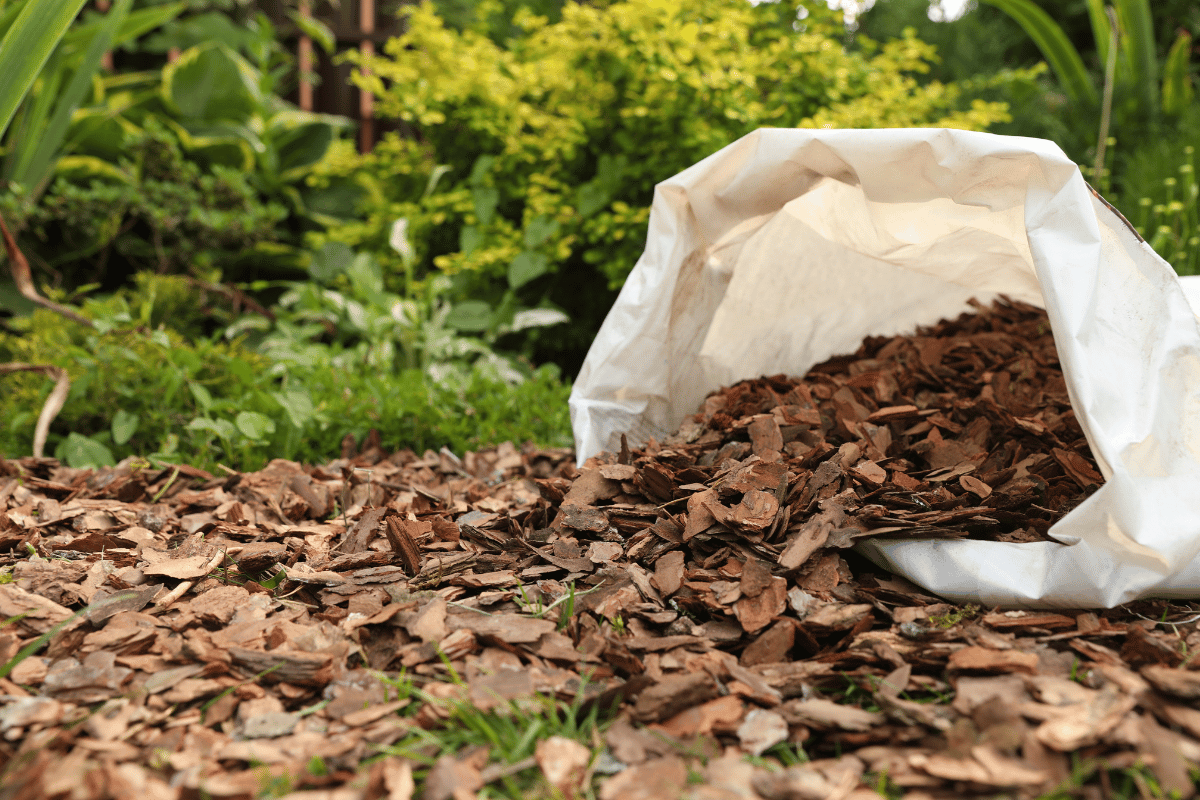
Applying a layer of organic material to the soil surface, the practice known as mulching, is a well-established way to slow moisture loss. The mulch layer physically interrupts evaporation, creating an insulating barrier that keeps the soil underneath cooler and significantly wetter than uncovered ground.
A 2025 review of mulching and organic matter in drought research summarised the effect across multiple studies. Mulches reduce soil evaporation by 28 to 58.8% and can increase soil moisture by 4.6 to 22%, while organic matter additions can improve soil infiltration capacity by 39 to 44% (Saputri & Pasaribu, 2025). By slowing evaporation and supporting infiltration, organic mulching helps build a more resilient and self-sustaining growing environment.
What teak leaves bring to the table
Teak (Tectona grandis) leaves offer a distinctive set of advantages among organic mulch options. The leaves are large, leathery, and slow to decompose, which makes them well suited to staying in place across a season as protective ground cover. Field experience in Indonesia, where teak plantations produce abundant naturally fallen leaves each year, shows that dry teak leaves spread over the soil gradually become moist themselves, holding the underlying soil soft and helping it retain water for longer periods. In a small ginger-farming case from Java, growers reported that the mulch turned the surface from cracked and dry to consistently soft within weeks of application.
The structural and nutritional contribution is also worth noting. A 2023 characterisation study of Tectona grandis leaf litter compost found that, depending on the leaf-to-cattle-dung mixing ratio, composting increased total nitrogen by 11 to 104%, total phosphorus by 54 to 103%, and total potassium by 39 to 262% over 120 days, with the highest values reported at the upper end of each range (Sharma & Garg, 2023). The same study found that the compost reached good maturity, with germination index values up to 99% on test seeds, indicating a stable, plant-friendly product.
Separately, work on calcareous soils has shown that the decomposition of teak leaves can improve soil texture and porosity over time, with porosity rising from about 31% at day 30 to about 50% at day 85 in one experiment (Sufardi et al.). The signal is consistent. Teak leaf mulch acts as both a protective cover and a slow-release soil conditioner.
Practical application in the field
Integrating teak leaf mulch into a working farm is straightforward and adaptable.
Application rate. Around 5 tonnes per hectare is a reasonable starting point, drawn from positive field trials. Thicker layers can be useful on very poor soils or in long-term restoration projects.
Placement. Spread the dry leaves evenly around plants or across whole beds, to a depth of 5 to 10 cm. The layer should be thick enough to block sunlight from reaching the soil surface and to slow evaporation effectively.
Integration into the soil. At the end of the growing season, lightly incorporating the mulch into the top few centimetres of soil supports the next phase of decomposition. As the leaves break down, they enhance soil water-holding capacity and feed soil biology, which drives nutrient mineralisation and longer-term fertility.
Crop compatibility. Teak leaf mulch has been used on a range of crops including ginger, plantain, maize, and sunflower. One thing to be aware of is that teak leaves contain quinones and other phenolic compounds that have mild allelopathic activity in the very early stages of decomposition. Used at appropriate rates, these compounds break down quickly and the net effect on the crop is positive.
Teak leaves as a raw material for organic fertiliser and compost
Beyond direct mulching, dried teak leaves are increasingly used as a plant-based feedstock for organic fertiliser and compost manufacturing. With an organic carbon content of around 48 to 51% reported in the published literature, and a balanced profile of slow-release macronutrients and micronutrients, particularly nitrogen, potassium, and calcium, the material works well as a carbon-rich base for formulated organic NPK blends and humus-rich composts. The decomposition pattern releases these nutrients gradually. Potassium and calcium become available early, followed later by magnesium, phosphorus, and nitrogen, which means the nutrient supply is naturally matched to crop demand over the growing cycle.
For formulators and compost producers, teak leaf material is generally supplied dried and unprocessed, which lets it be incorporated directly into fermentation and blending lines. It contributes to microbial activity in the finished product, and is particularly valued where a plant-based alternative to animal-derived feedstocks is preferred.
A sustainable option for the long term
In a world where water is becoming an increasingly precious resource, mulching is a foundational practice for anyone working toward more sustainable farming. Teak leaf mulch is one option among several, with the particular advantages of strong physical durability, useful nutrient release as it decomposes, and, where it is collected from naturally fallen leaves, no pressure on the standing forest. For regions with established teak plantations, it represents a practical way to turn an abundant local material into something that builds soil and supports crops at the same time.
References
Saputri, S. R., & Pasaribu, P. (2025). The potential and differences between mulch and organic matter in reducing drought stress in plants – a review. Cogent Food & Agriculture, 11(1), 2454342.
Sharma, K., & Garg, V. K. (2023). Characterization of Tectona grandis leaf litter compost: an ecological approach for converting leaf litter waste into organic product using composting. Biomass Conversion and Biorefinery.
About the author
This article was contributed by Folia Cakra, a supplier of sustainable teak leaf products from Indonesia. Folia Cakra collects only naturally fallen teak leaves, gathered by communities living near forests and plantations, and processes them into materials for agriculture, interior design, and other sustainable uses.