


Fields on fire: Uncovering the reality of stubble burning in Punjab
Introduction
Punjab, often referred to as the agricultural powerhouse of India, plays a pivotal role in ensuring the nation’s food security. As one of the top contributors to India’s grain production, Punjab accounted for approximately 30,131 metric tons of food grain in 2023, making it the third-largest producer in the country. Known for its substantial share in rice and wheat production, Punjab is a cornerstone of the nation's agricultural landscape. However, this success comes with significant challenges, including the widespread practice of stubble burning.
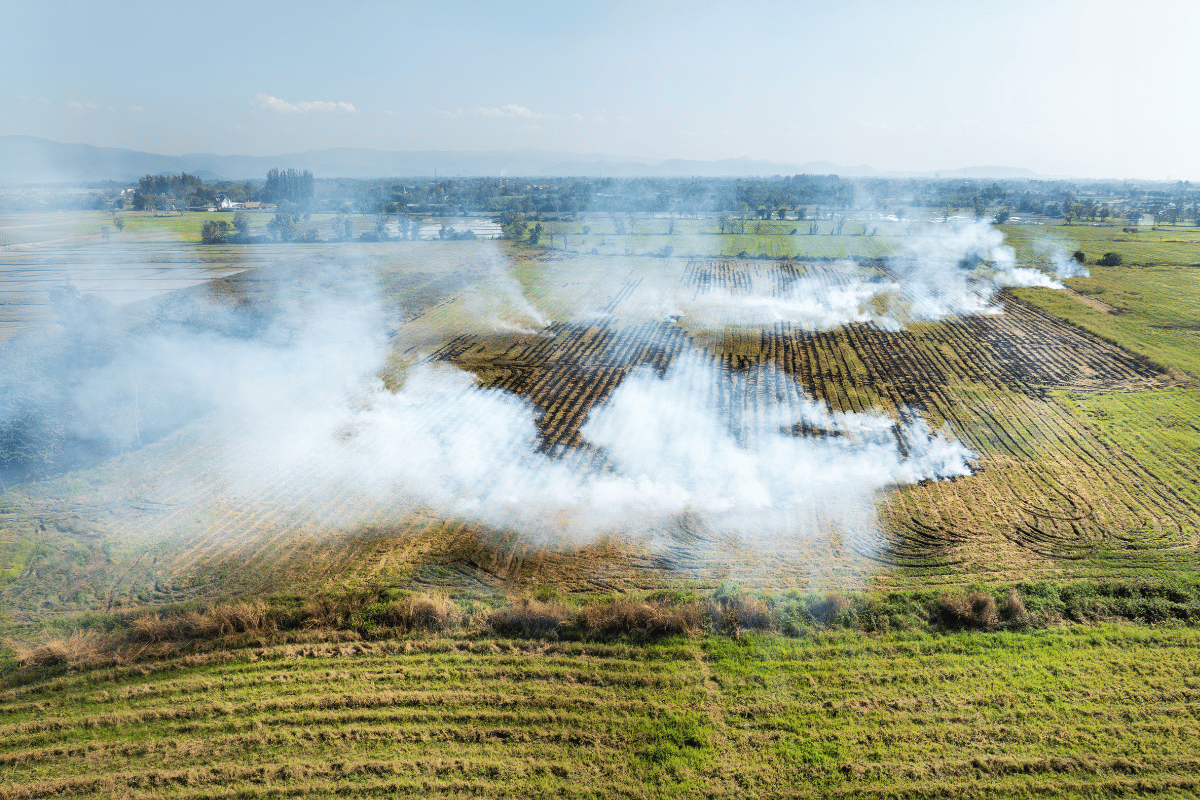
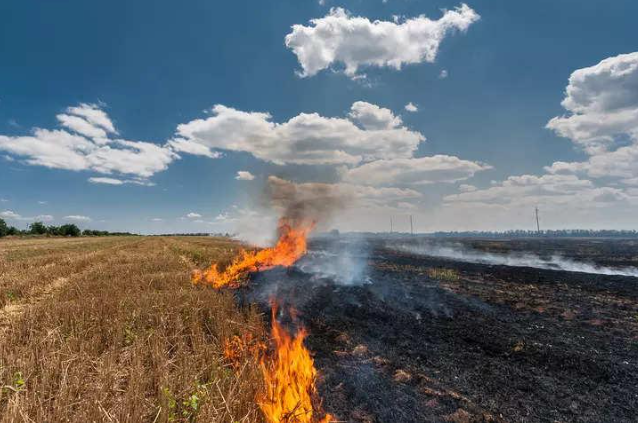
Stubble burning refers to the act of setting fire to crop residues, particularly after the harvesting of paddy. This practice is prevalent in Punjab, primarily due to the limited time available for sowing the subsequent wheat crop. While it offers a quick and cost-effective solution for clearing fields, the practice poses severe environmental and public health risks. The adverse effects of stubble burning are not confined to Punjab alone but extend to neighbouring states, including Delhi, which experiences a sharp decline in air quality during the burning season.
This article delves into the historical, economic, and policy-driven factors behind stubble burning in Punjab, its environmental and health impacts, and the challenges faced by farmers.
The historical roots of stubble burning
Punjab’s agricultural dominance
Punjab contributes 1.5% of the total geographical area in India and shares 13-14% of total grain production, including 25.5% rice and 35.5% wheat, which is significantly high compared to all other states in the available area.
In the 1960s, India was severely affected by drought. At the time, India didn’t have enough food for its people. Finally, the Prime Minister of India, Lal Bahadur Shastri, introduced the slogan "JAI JAWAN, JAI KISAN" to emphasize the vital roles soldiers and farmers play in the nation’s security and food production. After that, the well-known Green Revolution occurred, and years later, India stabilized its food economy—but at what cost?
Adoption of modern farming practices
In the beginning, farmers were reluctant to use chemical fertilizers, hybrid varieties, pesticides, etc., to increase yield and instead stuck to traditional methods of production. Then, the government introduced MSP (Minimum Support Price) incentives for farmers, which caused them to choose selective crops like rice and wheat. This was initially good for supplying enough grain production in the country during the 1960s, but now Punjab produces more rice and wheat than needed, and there is not enough storage available to store the grain. This primarily affects food diversity in the state, and the majority of North Indian farmers have switched to rice and wheat cultivation.
Monocropping and food diversity issues
It is well-known that continuously growing a single crop affects soil fertility, and cultivating water-intensive crops like rice and wheat impacts the groundwater table. To address this problem, the Punjab government enforced an act called The Punjab Preservation of Subsoil Water Act, 2009. Under this act, the government decides the sowing date of paddy to increase groundwater levels. Farmers are forced to sow paddy in late June to ensure efficient use of monsoon rains and reduce irrigation water usage. Farmers who violate the order must pay a penalty of Rs. 10,000.
Due to this, farmers now have less time between rice harvesting and wheat sowing because wheat is a climate-sensitive crop, and its sowing cannot be delayed. Generally, farmers harvest rice in late October and sow wheat in the first week of November. Before the 2009 act, farmers had 45 days to prepare for the new crop, but now they only have 14-21 days, creating a huge rush for sowing wheat.
Farmers now use machines to harvest rice, leaving stubble of about 10 inches. However, back in the 1990s, farmers typically harvested by hand, leaving no stubble behind. Therefore, stubble burning was not required. Now, to clear the stubble as quickly as possible, farmers resort to stubble burning.
A smoke trail: environmental and health impacts
Every year, nearly 20 million tonnes of paddy stubble are burnt across 17,900 sq. km in Punjab. Burning one tonne of straw releases:
- 60 kg of carbon monoxide
- 1,460 kg of carbon dioxide
- 199 kg of ash
- 2 kg of sulfur dioxide
- multiple carcinogenic compounds
In addition, around 5.5 kg, 2.3 kg potassium, and 1.2 kg sulphur are lost when one tonne of straw is burnt. Heat from burning straw penetrates 1 cm into the soil, and burning straw reduces bacterial and fungal populations immediately and substantially only in the top 2.5 cm of the soil. Repeated burning permanently reduces the bacterial population by more than half.
Impact on Delhi and North India’s air quality

Coming to Delhi’s pollution, the direction of the plume is from northwest to southeast over Delhi NCR during October-November, when the stubble burning is at its peak. The meteorological conditions during this period created stagnation of particulate matter over the Indo-Gangetic plain and helped build up air pollution over Delhi NCR. The Himalayan mountain range traps the pollutants, preventing them from dispersing northward, further concentrating them over the Indo-Gangetic plain. Open biomass burning contributes to PM 2.5 in Delhi by 20-25%. SAFAR (System of Air Quality and Weather Forecasting) says that 46% of air pollution in Delhi and surrounding areas is caused by stubble burning in Punjab and Haryana.
Health consequences
The smog significantly reduces air quality, leading to an increase in respiratory ailments such as asthma, bronchitis, and other chronic lung diseases. The carcinogens in the smoke can increase the risk of cancer. The toxic gases can also lead to headaches, dizziness, and nausea. In addition to physical health, smoking can affect mental health, leading to feelings of lethargy and depression, and also reduce sunlight and visibility.
Towards a cleaner future: Possible solutions
1. Pusa decomposer
The Pusa Decomposer is a microbial spray (a consortium of seven different microorganisms) designed to decompose crop residues in a short span of time, thereby clearing the land for the next crop. It was developed by researchers at the Indian Agricultural Research Institute (IARI), Delhi, India.
The decomposer is available in the form of capsules (1 packet containing 4 capsules) prepared using fungal strains. The microorganisms thrive at temperatures of 30–32°C, which are prevalent during the paddy harvest. The fungal activity produces essential enzymes that decompose crop residues much faster than usual.
Preparation of pusa decomposer solution:
- Mix water, jaggery, and gram flour (bean) with the capsules.
- Four capsules can prepare 25 liters of solution, which is sufficient to cover 1 hectare of land.
- After spraying, it takes approximately 20–25 days to completely degrade crop residues, which is significantly faster than natural decomposition.
The challenge with Pusa decomposer
Another potential solution, the Pusa Decomposer, also faces hurdles. Farmers harvest paddy in late October, but the decomposer takes a month to break down stubble, delaying wheat sowing. Since wheat is climate-sensitive, such delays can significantly reduce yields. Additionally, running rotavators on decomposed stubble increases diesel consumption and costs, discouraging adoption.
Farmers, therefore, urge the government to provide a feasible and cost-effective alternative to stubble burning.
2. Utilizing stubble for biomass energy
Another proposed solution involves utilizing stubble in biomass plants to generate electricity instead of burning it. Estimates suggest that if stubble burning is avoided, around 2,500 gigawatts of electricity could be produced annually. However, this solution has not been widely implemented due to a lack of proper incentives. While some attempts have been made to adopt this approach, it has not been scaled up effectively.
Process of Producing Electricity from Paddy Straw:
- Mechanical Pulverization: The size of paddy straw is reduced through mechanical pulverization.
- Mixing: Ten parts of straw are mixed with 90 parts of water.
- Biogas Production: The mixture is kept in a biomass plant for 30 days to produce biogas.
- Hydrogen Sulphide Removal: Hydrogen sulphide is removed to lower its concentration, as it can damage engines.
- Power Generation: The purified gas is then used in electricity generators to produce power.
3. Happy seeder technology
The Happy Seeder is a seed-drilling machine that allows crops to be sown without removing paddy stubble from the field. The machine spreads the stubble across the field, using it as a natural fertilizer. Farmers can sow seeds for the next crop directly over the stubble, integrating it into the soil.
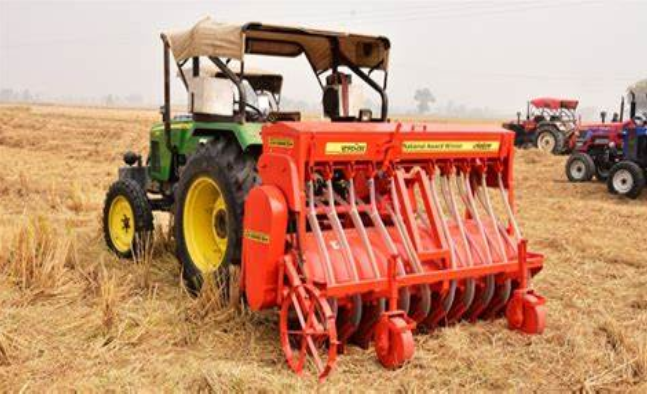
While this method shows promise, its results have been inconsistent, and farmers have yet to see significant improvements in yield or cost-effectiveness on a large scale.
Rooted in reality: The challenge of stubble burning in Punjab
A survey in Punjab revealed that 41% of farmers attribute crop stubble burning to the limited window between harvesting paddy and sowing wheat, while 48% consider it the most economical and time-efficient solution. Farmers explain that clearing one acre of stubble without burning costs ₹3,000–₹4,000, whereas burning the same acre requires only ₹500 and a single matchstick. This cost and time efficiency make stubble burning a practical choice, allowing farmers to sow wheat promptly.
To address this issue, the Punjab government allocated over ₹200 crores to subsidize machines like the Happy Seeder, which sows seeds while incorporating stubble into the soil. However, adoption has been limited. Farmers claim, “The Happy Seeder doesn’t allow seeds to mix properly with the soil, affecting germination and increasing costs. Moreover, it requires a 45-HP tractor, which many farmers cannot afford.”
Even among farmers willing to use these machines, another issue arises: supply shortages. While 24,000 Happy Seeder machines were subsidized, Punjab needs over 100,000 machines to clear 65 lakh hectares of land in just 15 days. In some villages, only one machine is available to cover 3,000 acres, but a single Happy Seeder can clear only 10 acres daily. Consequently, the shortfall forces many farmers to resort to stubble burning.
Farmers have proposed an alternative: incentives of ₹2,000 per acre for stubble management, but the government remains focused on selling machines. Although 1.37 lakh machines were sold in recent years, these are used only for three weeks annually, leaving them idle for the rest of the year. Many farmers lack the financial stability to purchase such equipment.
Regional differences in stubble burning practices
Stubble burning is more prevalent in Punjab, Haryana, and Delhi due to the rice-wheat cropping system. In contrast, other states primarily follow a rice-rice pattern, which allows farmers more time to clear stubble. Since wheat is temperature-sensitive, Punjab’s farmers face a strict time constraint, intensified by the 2009 Punjab Preservation of Subsoil Water Act, which delays paddy sowing to conserve groundwater. This law creates additional pressure to clear fields quickly for wheat cultivation.
In other states, residues like hay can remain on the soil to decompose naturally, as the next rice crop is transplanted much later. In southern regions there are several crop diversity present , so they are also practising rice – pulse cropping pattern .The absence of such strict regulations enables farmers in these regions to manage stubble without resorting to burning.
The farmers of Punjab continue to seek practical and region-specific solutions, urging policymakers to address the root causes of stubble burning rather than focusing solely on mechanized alternatives.
Conclusion
Stubble burning in Punjab, a practice rooted in economic and logistical constraints, continues to pose significant challenges to environmental sustainability and public health. While Punjab's vital contribution to India’s grain production is undeniable, the environmental cost of this achievement cannot be overlooked. The release of harmful pollutants, deterioration of soil health, and adverse impacts on neighboring regions like Delhi underscore the urgent need for effective solutions.
To achieve a cleaner and more sustainable future, a multifaceted approach is essential. This includes providing region-specific solutions, financial incentives for sustainable practices, and scaling up mechanized alternatives. Collaboration between government bodies, agricultural institutions, and farmers is crucial to creating an ecosystem that prioritizes both productivity and environmental health.
The farmers of Punjab have been at the forefront of India’s agricultural revolution, and with the right support, they can once again lead the way in adopting sustainable practices that benefit both the land and the people. Addressing the root causes of stubble burning and implementing practical, scalable solutions will be key to transforming this challenge into an opportunity for growth and sustainability.
References
- Council on Energy, Environment and Water (CEEW). (n.d.). Punjab farmers explain why they burn crop stubble. Retrieved from Punjab Farmers Explain Why They Burn Crop Stubble
- Govardhan, G., Ambulkar, R., Kulkarni, S., Vishnoi, A., Yadav, P., Choudhury, B. A., Khare, M., & Ghude, S. D. (2023). Stubble-burning activities in north-western India in 2021: Contribution to air pollution in Delhi. Heliyon, 9(6), e16939.
- Kadian, M., Nagoria, S., Monga, S., & Meera, M. (2024). Stubble burning in India: Environmental concern and alternative tools. Current Agriculture Research Journal, 12(1).
Co-author
R. Ashok Krishnan, Second year B.Sc. (Hons.) Agriculture, JKK Munirajah College of Agricultural Science,Erode
Email:[email protected]|Contact:6383772052
LinkedIn profile: linkedin.com/in/ashok-krishnan-a6165233b