


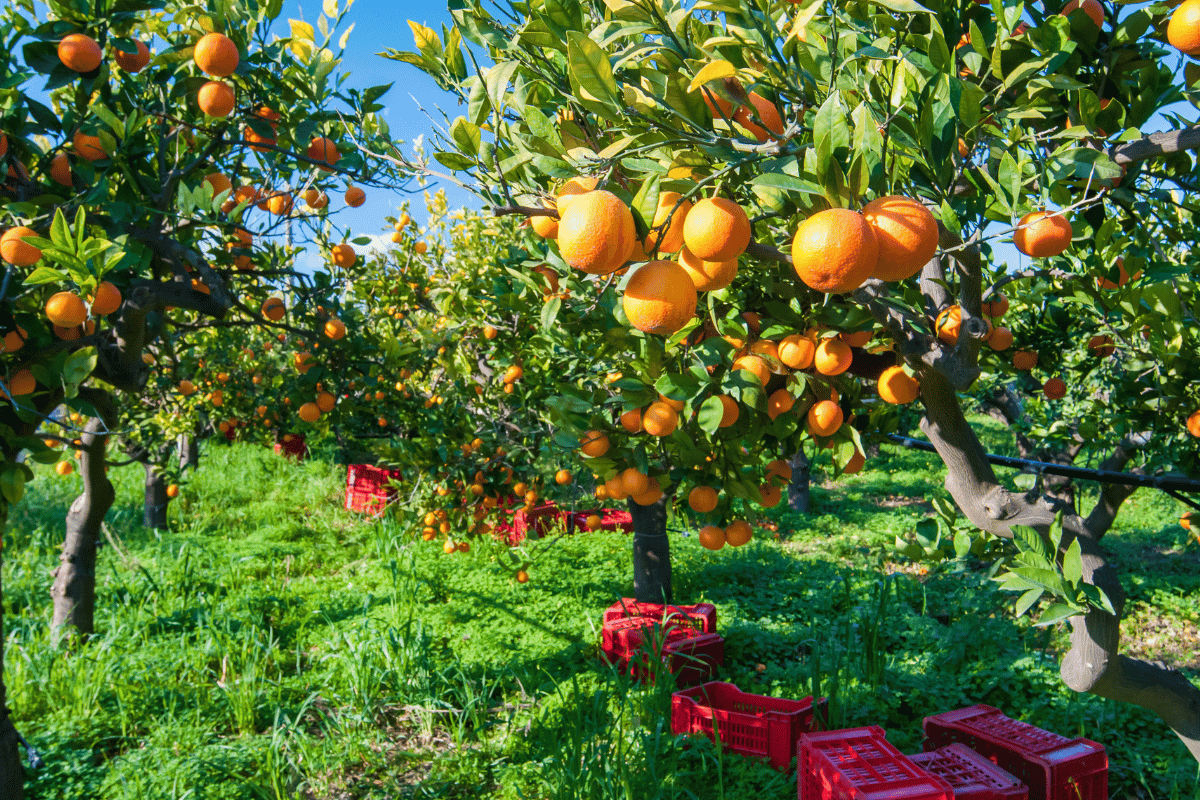
The CLEVER project develops a DSS for smart orange harvesting
Citrus cultivation has long been a cornerstone of Mediterranean agriculture, yet it faces constant economic and organizational challenges. Harvesting is one of the most critical stages, accounting for 35–45% of total production costs [1]. Lowering harvesting expenses becomes essential in a market marked by sharp price fluctuations. When prices fall, they help farms stay afloat; when they rise, they maximize profit margins.
Today, harvesting remains a labor-intensive task, burdened by high costs and the ongoing difficulty of finding seasonal workers. Attempts to speed up the process with manual tools have brought limited results, and so attention has shifted to mechanization. Machines capable of collecting fruit rapidly could cut costs dramatically [2]. However, the biggest challenge persists, selecting and detaching individual fruits without damaging them, something human pickers still do better than any machine.
Another decisive factor is timing. Harvesting oranges at the right stage of ripeness ensures flavor, quality, nutritional value, and longer shelf life, while reducing post-harvest losses [3]. Traditionally, growers have relied on visual checks (color, size, texture) and personal experience. However, these methods are slow, subjective, and error-prone [4].
In recent years, the push toward sustainable and efficient farming has opened the door to new solutions. Computer vision, machine learning, and the Internet of Things make it possible to classify ripeness through images, predict fruit growth with models, and collect real-time environmental data via sensors. This integrated approach reduces reliance on human judgment, automates decision-making, and makes monitoring systems scalable.
CLEVER: Technology to cut costs and reduce waste during harvest
While new technologies hold great promise, their use in agriculture still faces barriers: ripeness signals differ between orange varieties, advanced equipment is costly, and large-scale data management requires infrastructure that is not always available.
This is exactly where the R&D team at Agricolus, an Italian agri-tech company based in Perugia, has focused its efforts. Within the CLEVER project, the team is building a Smart Harvesting application that turns harvesting into a digital, strategic process accessible even to farmers with limited resources.
To achieve this, Agricolus collaborates with leading partners such as the Sant’Anna School of Advanced Studies, NVIDIA, Italtel, Dell, and the Fraunhofer Research Centre. The goal is a technological infrastructure that is both cost-effective and highly efficient. Thanks to edge computing, data is processed directly in the field, reducing connection costs, response times, and energy consumption. Farmers can monitor plant and fruit conditions in real time, accurately assess ripeness, and plan an “intelligent” harvest that optimizes yield and quality while minimizing losses.
The CLEVER model also promotes a collaborative approach to developing a digital infrastructure that can be shared across multiple farms, further lowering costs and extending accessibility even to rural areas with limited connectivity.
At the heart of CLEVER lies edge computing, which processes data close to the source without relying on remote data centers. This minimizes latency, energy use, and costs while ensuring instant responses even with poor connectivity. Agricolus’ R&D team is also testing 6G and NB-IoT connectivity. As the next leap after 5G, the former promises ultra-high speeds and near-zero latency, ideal for handling real-time agricultural data. The latter, designed for IoT devices, consumes very little power and can cover vast, hard-to-reach areas.
Together, these technologies lower operational costs and break down geographic barriers, enabling farming communities traditionally excluded from innovation to access advanced monitoring and management tools. In this way, the benefits of precision farming extend to entire territories, not just high-tech hubs.
Results for Italian Citrus Farming
The results obtained so far are encouraging. The system, which relies on cameras installed in the orchards and connected to the edge computing infrastructure, does not simply capture images but processes them in real time through artificial intelligence. It can recognise the number of oranges present on the trees with over 90 percent accuracy, evaluate their level of ripeness with almost perfect reliability, and estimate yield per plant and per hectare based on tree detection. In practice, this means that farmers can know in advance how much they will harvest, when the right moment has come to collect the fruit, and how to allocate their resources best.
With CLEVER, Agricolus and its international partners show that digital innovation can offer concrete answers to the pressing challenges of modern agriculture. Harvesting is no longer seen merely as a labor-intensive task, subject to unpredictable factors, but as a scientific process guided by data, more sustainable, and capable of strengthening the competitiveness of the entire citrus supply chain. The future of orange farming therefore, seems to be moving towards a balance between increasingly efficient mechanical harvesting systems and intelligent digital tools that help identify the perfect moment to pick fruit from the tree.
Reference list
[1] Sanders, K. F. (2005). Orange harvesting systems review. Biosystems Engineering, 90(2), 115-125.
[2] Li, P., Lee, S. H., & Hsu, H. Y. (2011). Review on fruit harvesting method for potential use of automatic fruit harvesting systems. Procedia Engineering, 23, 351-366.
[3] Caixeta-Filho, J. V. (2006). Orange harvesting scheduling management: a case study. Journal of the Operational Research Society, 57(6), 637-642.
[4] Vrochidou, E., Tsakalidou, V. N., Kalathas, I., Gkrimpizis, T., Pachidis, T., & Kaburlasos, V. G. (2022). An overview of end effectors in agricultural robotic harvesting systems. Agriculture, 12(8), 1240.