


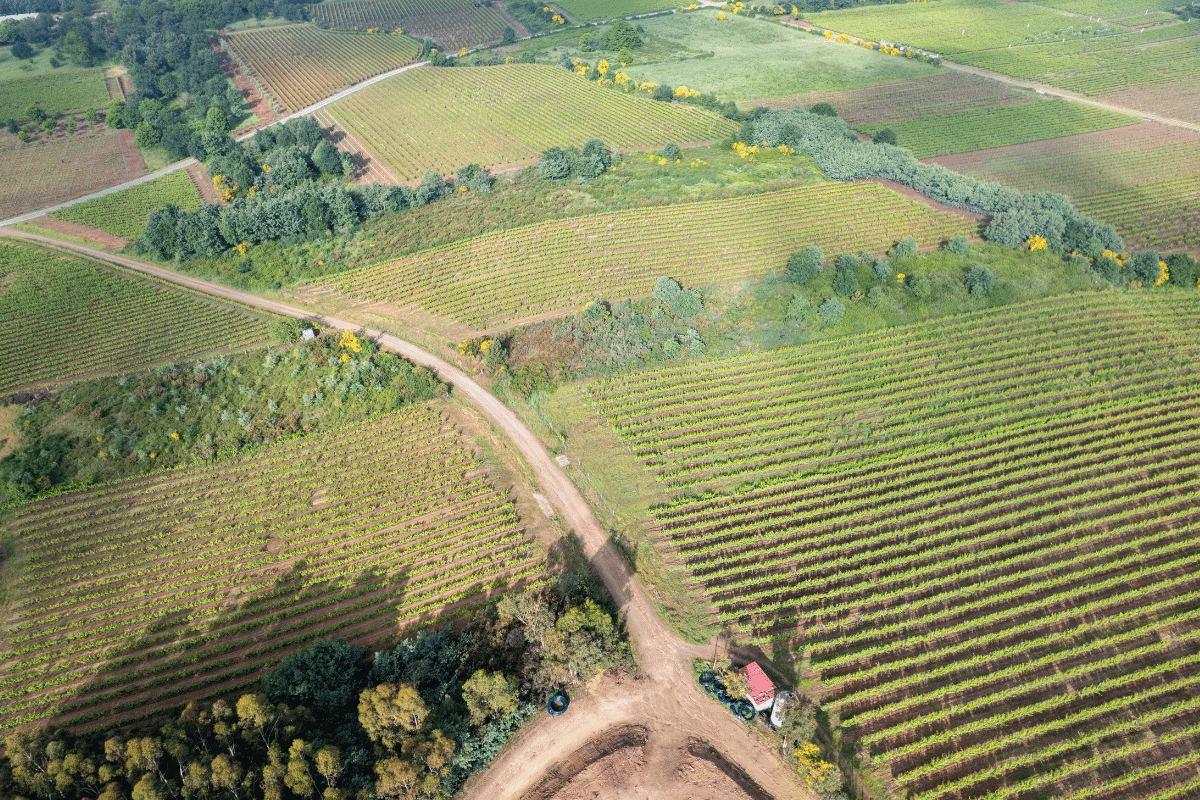
Every season begins with hope. Farmers carefully select seeds, prepare the land, apply fertilizers, and watch the weather. Yet despite all their efforts, crops sometimes fail to perform as expected. A patch of paddy stays yellow, a section of maize grows unevenly, or vegetables suddenly show signs of stress. The question every farmer asks is what went wrong, and the answer often lies beneath our feet, in the soil.
Healthy soil is the foundation of profitable farming. It stores water, supplies nutrients, supports plant roots, and sustains millions of beneficial microorganisms. Soil problems such as nutrient deficiencies, low organic matter, salinity, erosion, or moisture stress often develop silently, long before any visible symptom appears in the crop. By the time leaves turn yellow or yields begin to decline, a farmer may have already lost valuable time, money, and production.
What if farmers could detect these problems before the crop starts suffering? What if they could monitor the condition of every corner of a field without digging countless soil pits or collecting dozens of samples? What once seemed impossible is now becoming a reality.
Today, satellites orbiting hundreds of kilometers above Earth and drones flying low over fields are helping farmers see their land in a completely new way. Using remote sensing, these eyes in the sky can detect differences in soil moisture, crop vigor, nutrient stress, salinity, erosion, and even indicators of soil organic carbon. In many cases, they can identify problems weeks before those problems become visible from the ground.
Think of it as a smart advisor constantly watching over the farm from above, alerting the farmer to trouble spots, helping use water and fertilizers more efficiently, and guiding better decisions. In an era of rising input costs, climate uncertainty, and growing pressure to produce more from less land, information has become as valuable as seed, fertilizer, and irrigation. The future of farming is still rooted in the soil, but increasingly it is being guided from the sky.
Why soil health matters more than ever
Soil is much more than the dirt beneath our feet. It is a living system that stores water, supplies nutrients, supports roots, and houses millions of beneficial microorganisms. Healthy soil helps a farmer achieve higher yields, reduce fertilizer costs, improve water-use efficiency, increase resilience to drought, and maintain long-term productivity.
Soil health can gradually decline through continuous cultivation, erosion, nutrient depletion, salinity, waterlogging, or poor management. Because these changes often happen slowly, they may go unnoticed until crop performance begins to suffer. This is where remote sensing becomes valuable.
How can a satellite help a farmer
Many farmers are surprised to learn that satellites can detect changes in soil and crop conditions. Different surfaces reflect sunlight differently. Healthy crops, dry soil, wet soil, and saline areas each produce distinct patterns that satellite sensors can detect, and scientists analyze these patterns to create maps showing the condition of fields.
Today, many agricultural advisory services use satellite data to provide information directly to farmers through mobile applications and extension programs. The technology may be advanced, but the benefits are very practical.
Finding dry spots before crops suffer
One of the most useful applications of remote sensing is monitoring soil moisture. Imagine a farmer growing paddy or vegetables during a dry spell. From the field entrance, everything may look normal, yet certain parts of the field may be receiving less water because of blocked channels, uneven land leveling, or irrigation problems.
Satellite images can identify these dry zones before severe crop stress becomes visible. A moisture map might reveal that one area stays drier than the rest because irrigation water is not reaching it effectively. After repairing the channel and improving water distribution, crop growth becomes more uniform and yields improve. Instead of wasting water across the whole field, the farmer can focus on the specific area that needs attention.
Identifying nutrient deficiencies early
Farmers often apply fertilizers uniformly across a field, yet soil fertility rarely stays the same everywhere. Some areas may be rich in nutrients, while others are deficient. Remote sensing helps identify areas where crops are not growing as expected, and poor growth often indicates a nutrient deficiency that warrants further investigation.
A maize farmer using satellite-based crop monitoring might notice that one part of the field looks less vigorous than the rest. A soil test from that specific area could reveal low nitrogen. Instead of applying extra fertilizer across the entire farm, the farmer can target only the deficient zone, which reduces fertilizer costs while improving crop performance. This kind of site-specific nutrient management is becoming increasingly important as fertilizer prices rise and farmers seek to get the most from every input.
Detecting soil organic matter and fertility problems
Soil organic matter is often called the engine of soil health because it influences nutrient availability, water retention, soil structure, and overall crop productivity. One of its most important components is soil organic carbon, which serves as a key indicator of soil health.
Recent advances in remote sensing have enabled the estimation of soil organic carbon over large areas using satellite and drone imagery. Soils rich in organic carbon generally appear darker and retain more moisture, and crops growing on them often show healthier growth and stronger vegetation signals. By analyzing how soil and vegetation reflect different wavelengths of light, especially in the visible and near-infrared parts of the spectrum, scientists can identify patterns linked to higher or lower organic carbon. Combined with field observations and soil testing, satellite imagery can help estimate soil organic carbon and flag areas where soil quality may be declining.
Where satellite imagery indicates poor crop vigor, a follow-up soil test might confirm low organic carbon and nutrient deficiencies. Instead of applying compost, crop residues, or fertilizers uniformly across the whole farm, the farmer can concentrate these inputs on the affected zone. Over time the organic carbon content improves, soil fertility is restored, and crop productivity increases. This kind of targeted soil management raises yields and reduces unnecessary input costs, which makes farming both more profitable and more sustainable.
Early detection of soil salinity
Salinity is becoming a serious challenge in many irrigated areas. Salt accumulation reduces water uptake by plants and can severely affect productivity. Remote sensing is particularly effective at identifying salt-affected areas, because saline soils reflect light differently from healthy soils.
Consider a wheat farmer who sees poor germination in the same small section of a field every year. Satellite images flag the area as potentially salt-affected, and soil testing confirms high salinity. Early intervention through improved drainage, gypsum application, and better irrigation management can then prevent the problem from spreading further.
Protecting valuable topsoil from erosion
Topsoil holds most of the nutrients and organic matter that crops need, and heavy rainfall, floods, and strong winds can strip this valuable layer away. Remote sensing helps monitor erosion-prone areas and track changes in land condition over time.
After a season of intense rainfall, satellite images might reveal that runoff is consistently occurring along a particular slope in a field. The farmer establishes grass strips and contour bunds to slow water movement and reduce soil loss. Over time the field retains more soil, moisture, and nutrients, and productivity improves.
Crop health as a reflection of soil health
Healthy crops usually point to healthy soil. When crops struggle, the underlying cause is often moisture stress, nutrient imbalance, compaction, or another soil problem. Remote sensing lets farmers monitor crop health across an entire field, so instead of relying only on what is visible from the field edge, they can see exactly where problems are developing.
A rice farmer who receives a satellite-based crop health report showing several weak patches can visit those locations and find, for example, insect damage in one and poor drainage in another. Because the issues are caught early, corrective measures can be taken before significant yield losses occur.
Drones, a closer look at the field
While satellites provide regular monitoring over large areas, drones offer far more detail. Flying low over fields, they capture high-resolution images that reveal problems invisible from the ground. They are particularly useful for assessing crop damage after storms, monitoring pest outbreaks, identifying waterlogged areas, and evaluating field variability. Drone services may not yet be affordable for every farmer, but they are increasingly used by agricultural institutions, cooperatives, and service providers.
Remote sensing and soil testing work best together
Remote sensing does not replace soil testing. A soil test gives exact measurements of soil pH, organic carbon, available nutrients, and salinity. Remote sensing helps identify where soil samples should be collected and where problems are emerging. The best results come from combining the two. Remote sensing works like a health screening that flags where to look, and soil testing is the detailed examination that confirms the diagnosis.
The future of soil health monitoring
The future of agriculture lies in combining remote sensing with artificial intelligence, geographic information systems, internet-of-things sensors, and precision agriculture tools. Scientists are already developing systems that deliver real-time recommendations to farmers through mobile phones.
In the near future, a farmer may receive alerts such as moisture stress detected in field 2, possible nitrogen deficiency developing, rising risk of salinity, or declining crop health in the northern section. This kind of information helps farmers act before serious yield losses occur.
Looking after the soil, looking after the future
For generations, farmers have relied on experience, wisdom, and a close connection with the land to grow crops successfully. Those traditional skills remain invaluable, and modern technologies now add new ways to understand what is happening beneath the soil surface and across entire fields.
Remote sensing is one such tool. By using satellites and drones to track soil moisture, nutrient stress, organic carbon, salinity, erosion, and crop vigor, farmers can identify problems earlier and act before significant yield losses occur. This improves productivity and enables more efficient use of fertilizers, water, and other costly inputs.
Remote sensing is not a replacement for field visits, farmer experience, or soil testing. It works best as a powerful companion to these practices, and together they give a more complete picture of soil health and support better-informed decisions.
As agriculture faces growing challenges from climate change, declining soil fertility, water scarcity, and rising production costs, protecting soil health matters more than ever. The farms of the future will need to be both productive and sustainable, and tools like remote sensing can help farmers achieve both by making agriculture more precise, resource-efficient, and resilient.
The message is simple. Healthy soils produce healthy crops, and healthy crops support healthy livelihoods. By combining traditional knowledge with modern technology, farmers can safeguard their most valuable asset, the soil, and ensure that it continues to nourish future generations.
Tomorrow's successful farmer will not only know the soil beneath the crop but also understand the signals coming from the sky above it.