


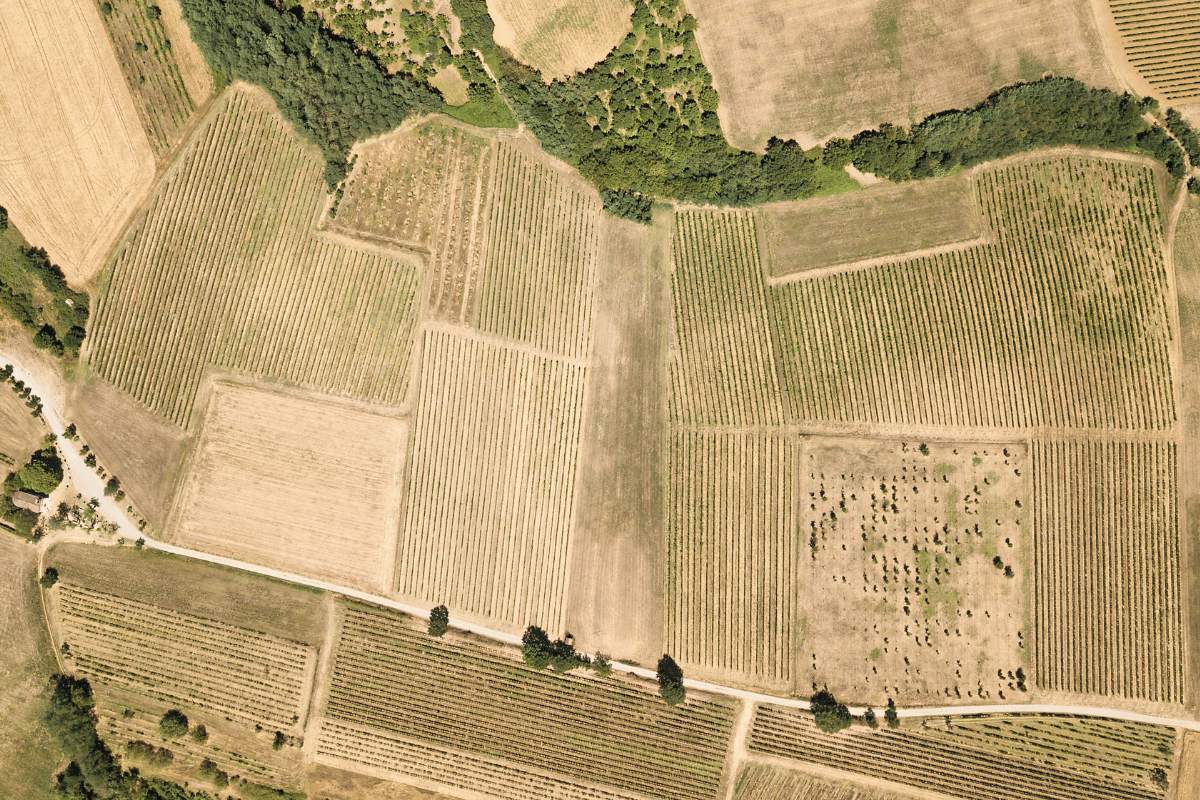
Agriculture has always been an important pillar of society, shaped by a range of factors that are often hard to control, predict, or prevent in time to avoid yield loss. Today, farmers must tackle many pressures at once, including high input costs, unpredictable weather, labor shortages, sustainability demands, and pests and diseases, all of which make achieving both profitability and sustainability harder.
Precision drone technology is showing that these two goals can, and should, go hand in hand. By moving from broad-acre blanket applications to surgical, data-driven, and well-timed interventions, farmers are reducing their environmental footprint while improving their yields and profits.
Drone use in precision agriculture has grown worldwide over the past few years. Regardless of the country, the crop, or the weather, farmers everywhere are recognizing the benefits of precision technology, and as adoption rises, so do the tools and solutions that support it. This article examines real-world cases of farmers benefiting from PIX4Dfields, a hybrid drone and satellite mapping software for aerial crop analysis, to demonstrate how precision agriculture software helps farmers worldwide save on inputs, time, and resources while protecting soil health.
Precision nutrient management that cuts fertilizer costs
One of the most direct paths to both profit and sustainability is Variable Rate Application (VRA) of agricultural chemicals such as fertilizers, pesticides, and growth regulators. Traditional methods often overapply chemicals, which leads to runoff into waterways, harm to soil health, and unnecessary expense.
Fertilizer VRA success story: in Florida, ELMScience used multispectral drone imagery to measure nitrogen levels in St. Augustine grass grown for pastures. By creating custom vegetation indices, they generated VRA maps that applied fertilizer only where the plants actually needed it.
Measurable benefit: ELMScience achieved an average nitrogen reduction of 23 lb/acre. Scaled across a 3,000-acre operation, that adds up to 34.5 tons of fertilizer saved and over $25,000 in cost reductions in just six months.
Targeted pest control with less chemical waste
Insecticides and herbicides are vital for crop protection, but over-reliance can lead to chemical resistance and soil degradation. Drones enable stress detection and spot-spraying that target only infested zones, with simple workflows that improve the accuracy and speed of traditional methods.
Variable rate insecticide application: In Brazil, Vetorgeo used high-precision sensors to detect damage from the brown stink bug in soybean fields. They identified infestation hotspots from multispectral drone imagery, to the point of estimating the number of bugs per soybean plant using vegetation indices alone. From those maps, generated fast and offline, they then produced prescription maps for variable-rate insecticide application.
Measurable benefit: the team achieved a 95% success rate in controlling the stink bug infestation. The prescription maps were compatible with all the sprayers they used during harvest, allowing direct application in the field. By targeting only the affected 20 to 30% of the field rather than spraying the whole field, they significantly reduced chemical use while protecting the yield quality of their seed crop.
Rapid damage assessment for insurance claims and recovery
Natural disasters, from windstorms to wildlife encroachment, can devastate a season. The speed and detail of crop monitoring by drone or satellite imagery is valuable for securing insurance payouts and planning remedial action.
Wind damage in rice: in Uruguay, KPN Group assessed wind damage across a 268-hectare rice field. Using the software's Magic Tool, they quantified the crop damage accurately in just three hours, a task that would have taken days of manual field scouting.
Wildlife damage in corn: in Germany, Copterinspect used NDVI vegetation index maps to quantify 109 metric tons of corn yield lost to wild boar, worth more than €3,800.
Lodging detection in wheat using satellite data: in Brazil, Auster Technology used satellite imagery to validate the lodging areas of a wheat field. The satellite image matched the drone imagery exactly, which meant they could get an overview of the crop damage from the office without setting foot in the field.
These georeferenced, ready-to-use reports give quantifiable, accurate evidence for insurance claims. In the rice field case, the data also showed that the damage occurred in low-lying areas, which informed future land leveling to prevent further losses.
Optimizing the grape harvest for better wine quality
For winemakers, sustainability is about the longevity of the vine, and profitability is about the quality of the grape. Drones provide a view of vineyard vigor that human scouting cannot match.
Monitoring vineyards and planning the harvest: in the UK, a drone survey team used multispectral drones to monitor chlorophyll levels and photosynthetic activity. Processing the imagery locally and offline produced vegetation indices that revealed diseases such as powdery mildew weeks before they were visible to the naked eye.
Measurable benefit: in Croatia, by identifying different vigor zones, winemakers could plan a staggered harvest, picking the ripest grapes first. This ensured optimal sugar and acid levels and led to higher-quality wine.
Green-on-green spot spraying that cuts herbicide and protects yield
Identifying weeds hidden within a growing crop is often tricky and requires real precision to avoid blanket spraying of the whole field.
Controlling dock weed in grassland: using the Magic Tool for AI-assisted weed detection, farmers can identify specific weed nests within a standing crop. In one case, the technology mapped dock weeds on a pasture field using a drone with a Ground Sampling Distance of 0.9 cm per pixel, which allowed the creation of a precise spot-spraying prescription map.
Measurable benefit: by switching from blanket to targeted spraying, farmers have documented input reductions in both green-on-green and green-on-brown cases ranging from 56% up to 93%. For a large-scale operation, that represents thousands of dollars in savings, a significantly reduced chemical load on the environment, and a slower development of herbicide-resistant weeds.
Working from satellite imagery alone
Aside from drones, satellite imagery can also report on crop health, potential crop damage, and more. A field becomes accessible at any time from anywhere, and the user can derive critical information to plan targeted and variable-rate applications.
Variable-rate urea prescription via satellite imagery: in Uruguay, DigitalAgro bypassed bad-weather delays by using satellite imagery instead of on-site drone flights to manage a project converting 354 hectares of traditional cropland into dedicated livestock pasture. Working entirely from the office, they generated an NDVI index and completed a complex zonation and variable rate prescription map in just 18 minutes.
Measurable benefit: by moving from a flat-rate application to variable-rate zonation based on crop health insights, the required volume of urea fertilizer dropped from 46,055 kg to 36,624 kg. This delivered a 20% reduction in input costs and saved the producer over $6,000 in a single operation, while also lowering transport costs and ensuring the right amount of fertilizer reached the areas that needed it.
The future of precision agriculture and the case for rapid adoption
The shift toward precision agriculture through drone and satellite imagery is no longer a niche trend. It is becoming the global standard for modern food production. As sensor technology becomes more affordable and AI-driven analysis becomes faster, the barriers to entry are falling.
Exponential market value: the global agricultural drone market is on a steep upward trajectory. Valued at approximately $4.98 billion in 2023, it is projected to reach nearly $23.8 billion by 2032, growing at a compound annual growth rate of around 18.5% (Fortune Business Insights).
Meeting global demand: with the world population expected to reach 9.7 billion by 2050, the FAO estimates that agricultural production must increase by around 70%. Precision tools are a primary force multiplier that will let farmers meet this demand without expanding their land footprint (FAO, How to Feed the World in 2050).
Efficiency as the new standard: current research shows that AI-powered selective spraying can reduce herbicide use by an average of 78% in major crops such as corn and soybeans. As these results become more widely documented, the transition from broad application to targeted application will be driven by economic necessity as much as by environmental responsibility (ASABE Technical Library).
The bottom line, data-driven farming
The shift toward drone-assisted agriculture is about measurable efficiency. Whether it is saving $25,000 on fertilizer, reducing herbicide use through spot-spraying, or securing insurance claims with precise damage reports, the pattern is consistent. Profitability comes from reducing inputs and protecting yields, while sustainability comes from localizing applications and improving soil health.
By integrating precision agriculture into their workflows, farmers are no longer guessing. They are seeing, evaluating, and acting at once and in time, with a level of precision that secures the harvest, helps put food on tables worldwide, and protects the environment for the generations to come.
References
Fortune Business Insights. (2024). Agriculture Drones Market Size, Share and Industry Analysis.
FAO. (2009). How to Feed the World in 2050.
ASABE Technical Library. Improvements and Evaluation of Smart Sprayers.
Sishodia, R. P., Ray, R. L., and Singh, S. K. (2020). Satellite Imagery in Precision Agriculture.
A Systematic Review of the Use of Deep Learning in Satellite Imagery for Agriculture. ResearchGate.
Evaluation of Satellite Imagery to Increase Crop Yield in Irrigated Agriculture. ResearchGate.
Remote Sensing Basics. ResearchGate.