


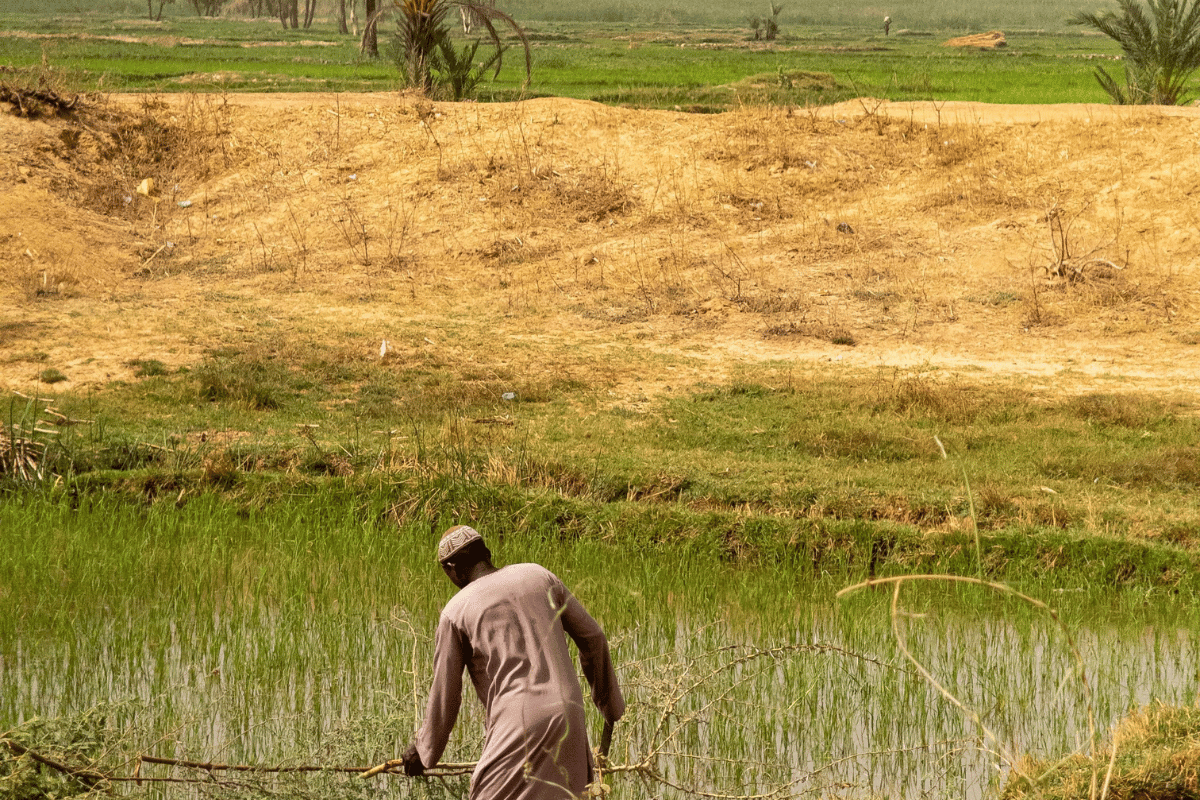
From classrooms to farmlands
I grew up in a small community in Southeastern Nigeria — somewhere in Umubelle, Awka, Anambra State. In my family, classrooms were our fields. My parents were teachers, and like many children in homes like mine, I grew up believing education only happened within four walls and a chalkboard. Agriculture was something distant — a task left to the elderly women I saw bent over vegetable beds under the sun.
Back then, I never wondered where the food I ate came from. Food was simply there — in the markets, on our plates, and that was enough. As I grew older and travelled beyond Awka, I realised that farming in many communities was often left in the hands of a few — mostly older women who tilled the soil out of necessity rather than opportunity. To me, it looked like hard, unrewarding work, and I subconsciously believed it was reserved for the less privileged. That was one of the biggest misconceptions I carried.
Then came the COVID-19 pandemic, and it changed everything. Suddenly, food was not only expensive but also scarce. Prices of essentials shot up overnight, and hunger seemed to loom everywhere. For the first time, I saw how fragile our food systems really were. The crisis was not just about a virus — it was about our collective neglect of sustainable agriculture. Climate change was already threatening crop yields, altering rainfall patterns, and exacerbating food insecurity, but the pandemic made its impact even more pronounced. It became evident that without climate-smart farming, our food future would remain uncertain. So, I decided to act.
Rethinking farming in a changing climate
Agriculture sits at the heart of our biggest global challenge, climate change. Across Nigeria, we are already witnessing rising temperatures, irregular rainfall, floods, droughts, and declining soil
fertility. Agriculture itself contributes to this crisis through deforestation, excessive tillage, and unsustainable land use.
Globally, agriculture and land use contribute over one-third of greenhouse gas emissions (World Economic Forum, 2022). More than half of the world’s agricultural land is degraded, causing annual productivity losses exceeding US$400 billion (Food and Agriculture Organization, 2021). In Nigeria, agriculture contributes approximately 24% of the national GDP and employs nearly half of the working population (Nairametrics, 2024). Yet, the sector emitted 8.7 million tonnes of CO₂ in 2021, representing 4.9% of global agricultural emissions (Climate Scorecard, 2023).
Farming that heals the land
But agriculture is not just part of the problem; it also holds one of the greatest keys to the solution. That solution is what the world now calls regenerative agriculture: farming that works with nature rather than against it. Think of regenerative agriculture like caring for the land as you would for your body. When you eat nutritious food, drink enough water, and get enough rest, your body becomes stronger and healthier. But if you skip meals, take too many drugs, and never rest, you will eventually break down, tired, weak, and sick. That is exactly what has happened to our farmlands after years of overuse.
We have “fed” the soil with chemicals, cleared away its trees (its natural shade), and burned crop residues that could have been its food. Over time, the soil becomes “sick”; it cannot hold water, crops struggle to grow, and yields keep dropping.
Regenerative agriculture is like putting the soil on a healing diet. We use natural methods to help it recover, things like planting cover crops, adding compost, using animal manure, and allowing trees to grow again on the farm (agroforestry). These practices help the land “breathe” again. Imagine a plantain farm in Anambra where the farmer plants cashew and palm trees at the edges.
- The palm trees provide shade and prevent erosion.
- The cashew trees drop leaves that become natural manure.
- The plantains enjoy the cooler microclimate and grow even better.
- Add a few chickens running around, which naturally enrich the soil with their droppings.
Over time, that piece of land becomes more fertile, yields more food, and even captures carbon from the atmosphere. That is regenerative agriculture: farming that heals the land while feeding people.
Regenerative agriculture restores the soil, increases biodiversity, improves water retention by up to 30%, reduces input costs by 25–50%, and can increase yields by 20–30%. If adopted at scale, it could sequester up to 10 gigatonnes of CO₂ annually (World Economic Forum, 2022).
A Story that opened my eyes
In understanding the urgency of climate-resilient farming, a story shared by my friend, Oluoma Jovita Adibe, opened my eyes. In Anambra State, the 2021 farming season was a success story. The weather was stable, yields were strong, and many families, including Jovita’s, were prepared to scale up in 2022. Freshly out of university and raised by two farmer parents, she decided to support the family farm for a year before pursuing her own path. Her father, full of hope, took a
₦15 million loan to expand their rice, cassava, yam, bitter leaf, and vegetable production.
Then came the 2022 floods, one of the most devastating in Nigeria’s history. According to the National Emergency Management Agency (NEMA, 2022), the floods affected 4.4 million Nigerians, displaced 1.4 million people, and destroyed over 676,000 hectares of farmland nationwide. When the floods reached Anambra, Jovita’s family lost everything: the rice fields, yam barns, cassava, and even their storage facilities. Their bitter leaf and vegetables from the riverbanks were unsalvageable. Her father's health deteriorated from the losses, and though he survived, he never recovered enough to farm again.
Hearing her story shook me deeply. Yet, it reaffirmed something vital: the same sector contributing to climate change also holds the key to combating it, through regenerative agriculture.
Core regenerative agriculture practices in Southeastern Nigeria
In Nigeria, smallholder farmers cultivating less than two hectares of land make up about 70 % of the total farming population and produce up to 90 % of the nation’s agricultural output (African Development Bank, 2023; IFC, 2024). There are about 40.2 million agricultural households across the country (National Agricultural Sample Census, 2022). For these smallholders, regenerative practices are not only practical and affordable but crucial for survival in the face of erratic weather.
1. Agroforestry: Growing trees and crops together
Agroforestry involves planting trees alongside your crops, allowing them to mutually benefit from each other's growth. The trees protect the soil, reduce erosion, provide shade, and even drop leaves that turn into natural manure. Just as in the initial example I used, consider a small farmer in Anambra who plants plantains, cassava, and vegetables on her land. Around the edges of her farm, she plants oil palms, cashews, and coconuts.
- The oil palm helps to hold the soil firmly, especially during heavy rains, preventing erosion on sloping land.
- The cashew tree provides shade and drops leaves that rot and feed the soil naturally.
- The coconut tree adds extra income — its fruits, water, and husk can all be sold or used at home.
Over time, her land becomes richer, cooler, and more productive. Instead of depending on chemical fertilizers, her soil stays healthy on its own. And when the harvest season comes, she earns from her crops and from her trees.
2. Cover Cropping: Using plants to protect the soil
Cover cropping means planting certain crops mainly to cover and protect the soil, not just to harvest them. These crops act like a blanket, keeping the soil cool, stopping erosion, and replenishing nutrients in the land. Imagine a farmer in Imo State who just finished harvesting her cassava. Instead of leaving the land bare until the next planting season, she plants cowpea (beans) or mucuna (velvet bean) on the same field.
- These plants grow fast and spread across the soil like a green carpet.
- They block the sun from drying out the soil and stop rain from washing it away.
- When they are cut down and mixed into the soil, they act as a natural fertilizer, helping the next crop, such as maize or plantain, to grow strong and healthy.
In this way, the farmer spends less on fertilizer, improves her soil, and keeps her land alive all year round. That’s the beauty of cover cropping: it protects today's soil for tomorrow's harvest.
3. Composting and Mulching: Feeding the soil naturally
Composting involves transforming farm waste, food scraps, and animal manure into rich, organic fertilizer that promotes crop growth. Mulching, on the other hand, means covering the soil with dry leaves, grasses, or crop residues to keep it cool and moist. Think of a farmer in Anambra who sweeps up dry plantain leaves, vegetable stems, and goat droppings from her farm. Instead of burning them, she piles them up in a corner, sprinkles some water, and turns the heap from time to time. After a few weeks, it becomes dark, crumbly compost — full of nutrients. She spreads this compost around her plantain and vegetable beds, and then covers the soil with dry coconut husks and palm fronds as mulch.
- The mulch keeps the soil cool and holds moisture, especially during the dry season.
- The compost enriches the soil naturally, so her crops grow stronger without chemical fertilizers.
In the end, nothing goes to waste — every leaf, husk, and stem returns to feed the land that produced it. It’s a perfect cycle of renewal that keeps the soil alive and the farm thriving.
4. Water Harvesting and Soil Management: Saving every drop of rain
Water harvesting means collecting and storing rainwater so that it can be used later, especially during dry periods. It also includes shaping the land in a way that allows water to soak into the soil instead of washing it away.
In places like Nnewi or Nsukka, where the land slopes and heavy rain can wash away topsoil, a wise farmer digs small trenches or contour bunds across the farm. When it rains, the water gently settles into these trenches instead of rushing off.
- The trapped water slowly seeps into the soil, keeping it moist for a long time.
- The roots of cassava, maize, and vegetables absorb this water and grow better, even when the weather becomes dry.
- The farmer can also line the trenches with palm fronds or dry leaves to reduce evaporation.
By managing rainwater in this way, the farmer protects the soil, reduces erosion, and ensures that every drop of rain is accounted for. It is a simple yet powerful step toward building a more resilient farm — one that thrives even in a changing climate.
5. Integrated Systems: Nothing is wasted on the farm
Integrated farming involves combining different types of farming — including crops, animals, and fish — in a way that supports one another. One part of the farm that produces waste becomes useful for another. Imagine a small farm in Awka or Aba, where a farmer grows plantains and vegetables, rears poultry, and has a small fish pond adjacent to the farm.
- The poultry droppings are collected and used to fertilize the vegetable beds — making them greener and more productive.
- The water from the fish pond, rich in nutrients from fish waste, is used to water the plantain and cassava crops.
- The plantain leaves and vegetable residues are fed back to the goats or fish as part of their diet.
In this way, nothing is wasted. Every part of the farm helps another part to grow. This closed-loop system reduces the cost of buying chemical fertilizers, increases productivity, and builds resilience, ensuring that even if one aspect of the farm fails, others continue to provide income and food.
These practices are not old-fashioned; they are the same methods I use on my own farm, and they have worked tremendously well. Over the years, I have seen firsthand how they restore soil fertility, attract more beneficial insects and earthworms, and even reduce costs. My vegetables stay greener, my plantain yields are stronger, and the soil feels alive again.
Research supports this claim: studies indicate that regenerative farming systems can increase crop yields by up to 13% by 2040 and as much as 40% in later decades, particularly in sub-Saharan Africa, where soil degradation remains a significant threat (World Economic Forum, 2022). Beyond the figures, these practices offer something even more important — hope. Hope that smallholder farmers can feed their families, rebuild their lands, and still make a profit without harming the environment.
Why regenerative farming matters
In 2025, Associated Press (AP) News reported that Nigeria’s food security crisis had deepened due to water scarcity and extreme weather. For farmers in the Southeast, where erosion and flooding are recurring threats, regenerative agriculture is not just a buzzword; it is a matter of survival. Farmers adopting regenerative methods report higher productivity, improved soil structure, and reduced input costs. Beyond that, regenerative farming fosters inclusion, empowering women, engaging youths, and creating employment across the agricultural value chain.
As of 2024, about 9 out of 10 smallholder farmers in Nigeria still rely on rain-fed agriculture (FAO, 2024), making climate-adaptive methods indispensable. Integrating soil-friendly practices could help Nigeria reduce food imports (which currently cost over US $10 billion annually, NBS 2023) and secure local food systems.
References
- Abbah, E. U., Onyeje Doki, N., & Terhemba Andohol, J. (2025). Investigating agriculture-induced greenhouse gas emissions on food production in Nigeria. Journal of Economics and Allied Research, 10(1), 361-373.
- Food and Agriculture Organization of the United Nations. (2018). Country factsheet on small family farms.
- Food and Agriculture Organization of the United Nations. (n.d.). Small family farmers produce a third of the world’s food.
- Food and Agriculture Organization of the United Nations. (2022). Food systems profile in Nigeria.
- Ritchie, H. (2019, December 11). Half of the world’s habitable land is used for agriculture. World Economic Forum.
- Oladapo, O. (2023, March 12). Nigeria emitted 4.9% of global agricultural emissions in 2021 Climate Scorecard.
- Ritchie, H., & Roser, M. (2024, February 16). How much of the world’s land is used for agriculture? Our World in Data.
- Ritchie, H. (2024, November 22). Ground zero: why soil health is integral to beating climate change. World Economic Forum. Retrieved from https://www.weforum.org/stories/2024/11/soil- climate-change-sustainable-agriculture/
- The World Economic Forum. (2022, October 11). What is regenerative agriculture?