
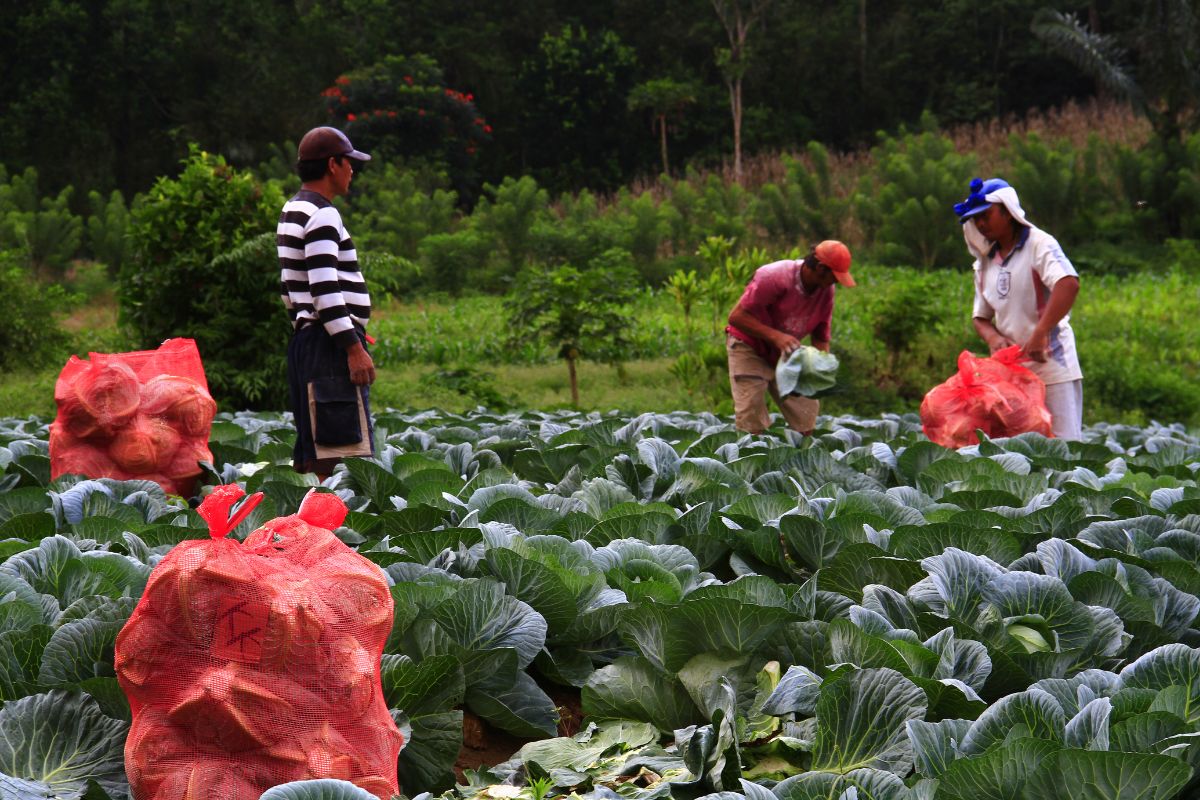
Agriculture provides us not only with food but also with employment and economic stability. Therefore, it is called the backbone of human civilization. However, modern farming practices, which rely heavily on chemical fertilizers, pesticides, and genetically modified crops, have raised serious concerns about soil degradation, water pollution, and declining biodiversity. Over time, these methods have harmed both the environment and human health. As a result, organic farming is emerging as a sustainable alternative that promotes natural soil fertility, reduces chemical usage, and ensures healthier food production.
Organic farming is not just about avoiding chemicals; it is a holistic approach that improves soil health, conserves water, and encourages biodiversity. It plays a crucial role in future food security by making land more productive in the long run. Additionally, as consumers become more aware of food quality and safety, the demand for organic produce is rising. However, despite these benefits, transitioning to organic farming is not easy for most farmers.
Many farmers who want to switch to organic methods face practical difficulties such as a lack of awareness, limited technical knowledge, temporary yield reductions, financial struggles, and market-related challenges. Without proper support, these barriers prevent them from adopting organic practices. Addressing these issues through awareness programs, financial aid, policy changes, and better market systems is essential. By overcoming these challenges, we can help farmers transition smoothly to organic farming, ensuring a healthier environment and a more secure food future for generations to come.
Challenges in Transitioning to Organic Farming
1. Lack of Awareness among Farmers and Consumers
Many farmers are unaware of the benefits and techniques of organic farming. They lack knowledge about organic fertilizers, natural pest control, and soil management. Similarly, consumers often do not understand the value of organic produce, leading to less demand in the market.
2. Lack of Proper Training and Technical Guidance
Organic farming requires a different approach compared to conventional farming. Farmers need technical knowledge about crop rotation, composting, biological pest control, and organic certification processes. However, structured training programs and expert guidance are often unavailable in rural areas.
3. Temporary Yield Reduction
During the initial years of transitioning to organic farming, crop yields may decrease because the soil needs time to regain fertility without synthetic fertilizers. This discourages many farmers, as they fear losing income during this transition period.
4. Higher Expenses and Investment Costs
The cost of organic farming is initially higher. Farmers need to invest in organic seeds, natural fertilizers, and biological pest control. Additionally, organic farming requires more labor for activities like composting, mulching, and manual weeding. These costs discourage small-scale farmers from adopting organic methods.
5. Lack of Specific Markets for Organic Products
Even if farmers successfully grow organic produce, they often struggle to sell their products. Most markets mix organic and conventional produce, making it hard for farmers to get better prices. Without exclusive organic markets, farmers cannot fully benefit from their efforts.
6. No Proper Organic Certification System
Organic farming requires certification to prove that the produce is genuinely organic. However, obtaining certification is complicated and expensive. Many small farmers cannot afford it, and there is no easy system to support them. As a result, their organic produce is treated as conventional, reducing its value.
7. No Special Rates for Organic Produce
Despite the higher effort and cost involved in organic farming, farmers do not get fair prices for their produce. Many middlemen and traders buy organic crops at the same rates as conventional produce, making it unprofitable for farmers.
8. Lack of Government Support and Policies
Governments do not always support organic farming with the necessary policies. There are no strong incentives, subsidies, or easy loans for organic farmers. Without government support, many farmers hesitate to transition.
9. Lack of Confidence in Commercial Success
Farmers are unsure whether organic farming can be profitable in the long run. They fear the risks involved, such as uncertain yields, market instability, and the inability to compete with conventional farmers. This lack of confidence prevents them from taking the first step toward organic farming.
10. Limited Availability of Organic Inputs
Organic farming requires natural fertilizers, bio-pesticides, and organic seeds, which are not always easily available. In many areas, farmers struggle to find the necessary inputs, making it difficult for them to transition successfully.
Solutions to Overcome These Challenges
1. Awareness and Training Programs
- Governments and agricultural organizations should conduct awareness campaigns to educate farmers and consumers about the benefits of organic farming.
- Training programs should be introduced at the village level, where farmers can learn organic techniques.
- Experienced organic farmers should be encouraged to train others.
2. Support for Yield Transition
- Farmers should receive financial support or subsidies to help them through the period of low yield.
- Crop insurance schemes should be provided to reduce financial risks during the transition.
3. Financial Assistance and Subsidies
- Governments should offer financial incentives, subsidies, and low-interest loans to farmers who transition to organic farming.
- Cooperative societies and self-help groups can help farmers pool resources and share costs.
4. Establishing Exclusive Organic Markets
- Special markets should be created where organic farmers can sell their produce directly to consumers.
- Supermarkets and online platforms should have dedicated sections for organic products.
5. Simplified and Affordable Certification Process
- The organic certification process should be made simpler and more affordable for small farmers.
- Governments should provide free or subsidized certification programs.
6. Fair Pricing and Premium Rates for Organic Produce
- Special pricing mechanisms should be introduced to ensure that organic farmers get fair prices for their produce.
- Government agencies should help regulate the organic market to prevent exploitation by middlemen.
7. Government Initiatives and Policy Support
- Governments should implement strong policies to promote organic farming, such as tax benefits and organic farming zones.
- Research institutions should be encouraged to develop and promote organic farming techniques.
8. Building Farmer Confidence and Community Support
- Success stories of organic farmers should be widely shared to inspire others.
- Farmers’ cooperatives should be formed to create a support system for new organic farmers.
9. Ensuring Availability of Organic Inputs
- Local production of organic fertilizers, pesticides, and seeds should be promoted.
- Governments should support the manufacturing of organic inputs and ensure easy distribution to farmers.
Conclusion
Transitioning to organic farming is challenging, but with the right support and policies, it can be made easier for farmers. Awareness, training, financial assistance, and proper market systems are key to ensuring successful organic farming. Governments, agricultural institutions, and consumers all have a role to play in supporting farmers on this journey. By overcoming these challenges, we can move towards a more sustainable and healthier agricultural system.