


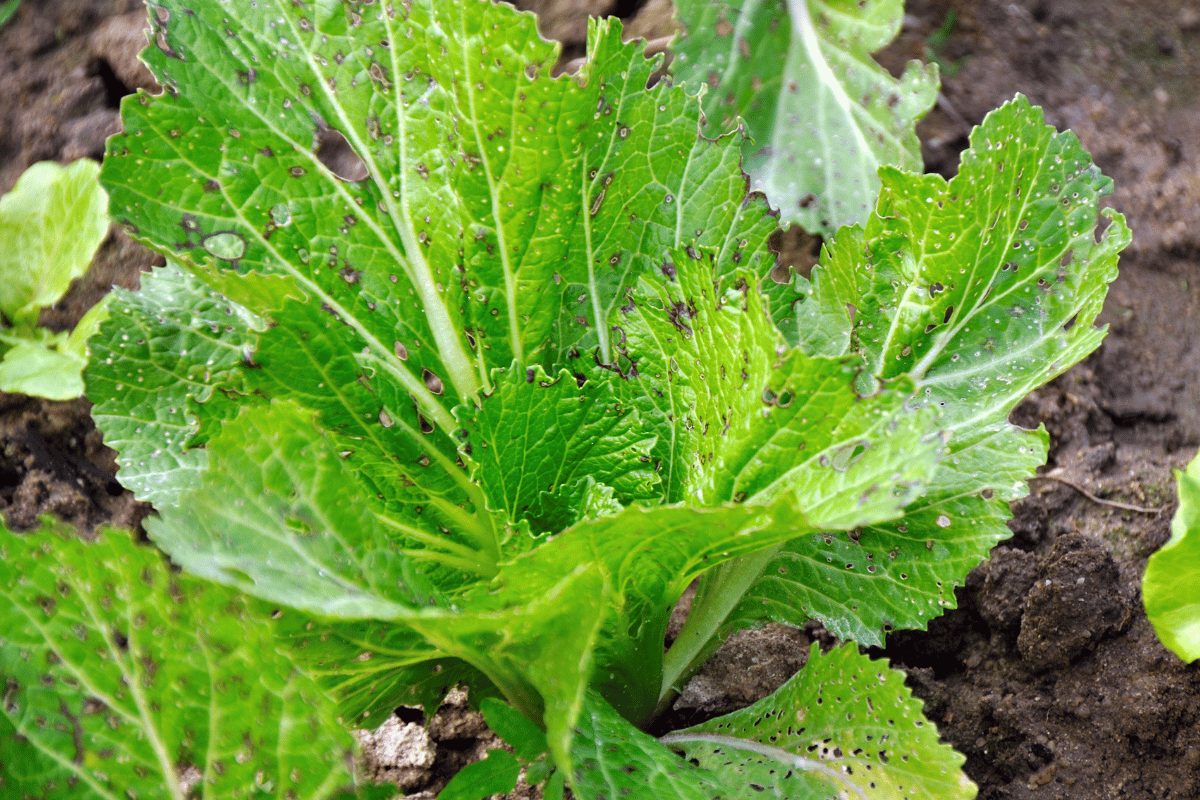
Why timing matters more than spraying in short-cycle crops
Lettuce reaches harvest maturity in 50 to 60 days. In that narrow window, a green peach aphid (Myzus persicae) colony can go from a single foundress to several thousand individuals, since each female produces 50 to 80 offspring across her lifetime and generations can turn over every 7 to 10 days at temperatures between 20 and 25 degrees Celsius. By the time aphid damage becomes visible to the naked eye, leaf curling, sticky honeydew deposits, or sooty mold, the colony has typically been established for two to three weeks. For a crop sold almost entirely on visual appearance, that delay between infestation and detection is where most economic losses actually occur.
This article covers the practical timing of pest monitoring in lettuce, leafy greens, and culinary herbs, with emphasis on when during the day and the crop cycle to look, what to look for, and why structured scouting outperforms calendar-based spraying in both hydroponic and open-field systems.
Why pest timing matters in short-cycle crops
The relationship between crop duration and pest risk is not linear. Short-cycle crops like lettuce, spinach, baby kale, and arugula face a particular vulnerability: their rapid growth rate means that pest populations and plant tissue develop on roughly the same timeline. A thrips infestation that would be a minor nuisance on a 120-day pepper crop becomes a market-grade problem on a 55-day butterhead lettuce precisely because there is no time to recover lost leaf area or outgrow cosmetic damage.
This timing pressure explains why integrated pest management in leafy greens centers on monitoring rather than treatment schedules. The economic injury level, the point at which pest damage exceeds the cost of control, arrives faster in short-cycle crops than in most other agricultural contexts. Field trials across major lettuce-producing regions in California and Florida have consistently shown that twice-weekly scouting programs reduce insecticide applications by 25 to 40% compared to calendar spray programs, with no loss in marketable yield. The University of California's Statewide IPM Program recommends scouting-based decision-making as the standard approach for lettuce pest management, specifically because it targets interventions to actual pest pressure rather than assumed risk. The monitoring-based approach catches infestations earlier, when spot treatments or biological controls can still work.
Historical crop losses that shaped modern pest monitoring
Two episodes from agricultural history illustrate why reactive pest control fails and structured monitoring succeeds.
Brown planthopper outbreaks in Asian rice
Nilaparvata lugens outbreaks in Southeast Asian rice paddies during the 1970s and 1980s caused yield losses up to 60% in severely affected fields. The critical insight that emerged was that broad-spectrum insecticide applications were making the problem worse by killing the planthoppers' natural predators, particularly wolf spiders and mirid bugs. The FAO's Inter-Country Programme for IPM in Rice, launched in 1980, trained millions of Asian farmers in field scouting techniques and economic threshold concepts. By the 1990s, participating farmers in Indonesia and Vietnam had reduced insecticide use by over 50% while maintaining or improving yields, a result documented across multiple FAO programme evaluations. The lesson applies directly to lettuce and leafy greens: observation-based decisions consistently outperform calendar spraying.
Whitefly-transmitted viruses in vegetable production
Bemisia tabaci, the silverleaf whitefly, transmits over 300 plant viruses, including begomoviruses that cause devastating losses in tomato, pepper, and cucurbit crops worldwide. In lettuce production, whitefly populations serve as both direct pests and virus vectors, making early detection doubly important. The European Food Safety Authority (EFSA) has flagged Bemisia tabaci as a priority quarantine pest, and resistance to multiple neonicotinoid and pyrethroid compounds has been documented in southern European greenhouse populations, making monitoring and biological control the primary management tools in those regions.
Identifying the main sucking pests of lettuce
Correct identification is the foundation of pest management, because control methods differ substantially among pest groups. In both hydroponic and field-grown lettuce systems, four sucking pest groups account for the majority of economic damage.
Green peach aphid (Myzus persicae) is the most common aphid species on lettuce globally. Colonies establish on the underside of outer wrapper leaves and progressively move inward toward the heart. Aphids feed by inserting stylets into phloem tissue, extracting sugars and amino acids, and excreting honeydew that supports sooty mold growth. Beyond the direct feeding damage, M. persicae transmits lettuce mosaic virus (LMV), a potent pathotype that can render entire crops unmarketable.
Western flower thrips (Frankliniella occidentalis) causes silvery feeding scars on leaf surfaces through a rasping-sucking feeding mechanism. Thrips are particularly difficult to scout because adults are only 1 to 2 millimeters long and tend to shelter in leaf folds and between emerging leaves in the lettuce heart. In hydroponic lettuce systems, thrips populations can build rapidly due to the absence of soil-dwelling predators that would normally suppress numbers in field production.
Silverleaf whitefly (Bemisia tabaci) causes direct feeding damage, honeydew contamination, and virus transmission. Adults are attracted to yellow surfaces, which is the basis for yellow sticky trap monitoring, one of the most cost-effective early detection tools in both greenhouse and open-field settings.
Two-spotted spider mite (Tetranychus urticae) becomes problematic primarily under hot, dry conditions. Spider mites feed on mesophyll cells rather than phloem, creating a distinctive stippled appearance on leaf surfaces. Infestations intensify rapidly above 30 degrees Celsius and when relative humidity drops below 50%, conditions that are increasingly common in Mediterranean and subtropical growing regions due to shifting climate patterns.
All four pest groups reduce photosynthetic capacity, compromise leaf appearance, and can trigger secondary infections. Recognizing their feeding symptoms early, before populations reach damaging thresholds, is the core objective of structured scouting.
When to scout: timing within the day
Pest activity follows predictable daily rhythms governed primarily by temperature, light intensity, and humidity. Scouting at the wrong time of day means missing active pests entirely.
Morning scouting (6:00 to 9:00 AM)
Early morning is the most productive scouting window for most sucking pests. Aphids and thrips are less mobile in cooler temperatures and are easier to spot on leaf surfaces before they retreat into protected positions. Dew on leaf surfaces can also make honeydew deposits and spider mite webbing more visible. Commercial scouting protocols from the University of California IPM Program and Wageningen University Research both recommend early morning as the primary scouting window for sucking pests, noting that pest detectability drops substantially during the heat of the day when insects move into concealed feeding positions within the canopy.
Evening scouting (5:00 to 7:00 PM)
A second scouting window opens in the late afternoon as temperatures decline. Certain pest species, particularly adult thrips and whitefly, become more active during this period. In greenhouse production, evening scouting can also reveal nocturnal pests such as fungus gnats and certain caterpillar species that are inactive during daylight hours.
Temperature thresholds that affect scouting reliability
Aphid reproduction peaks between 18 and 25 degrees Celsius. Above 30 degrees, many aphid species enter a quiescent phase with reduced surface activity. Thrips are most active between 20 and 25 degrees Celsius. Scheduling scouting sessions outside these ranges means underestimating actual pest pressure. In practical terms, this means that midday scouting in warm climates is the least reliable time to assess pest populations.
When to scout: timing within the crop cycle
Beyond daily timing, the stage of crop development determines both pest risk and scouting priorities.
Transplant and early establishment (days 1 to 15)
The transplant stage is when aphid and whitefly colonization typically begins. Winged aphid morphs and adult whiteflies arriving from neighboring crops or weed hosts establish founding colonies during this window. Scouting at this stage should focus on the undersides of outer leaves and the stem base, using a 10x hand lens for early nymph detection. In lettuce cultivation, catching a founding colony of 5 to 10 aphids is far easier to manage than dealing with thousands two weeks later.
Rapid vegetative growth (days 15 to 40)
Canopy closure creates sheltered microclimates within the crop that favor pest buildup. Increased leaf layering provides hiding spots for thrips and aphids. Scouting frequency should increase to twice weekly during this phase, with particular attention to inner leaves and growing points. Yellow sticky traps placed at canopy height provide a useful supplementary monitoring method that captures flying adults between manual scouting sessions.
Pre-harvest and harvest (days 40 to 60)
The final phase matters for two reasons. First, pest populations that have built gradually may reach economically damaging levels just as the crop approaches market. Second, the physical handling of plants during harvest and grading exposes leaf layers that were concealed during routine scouting. Harvest workers become, in effect, the final line of pest detection.
Observations during harvest and grading provide valuable feedback on scouting effectiveness. Consistent pest presence at grading suggests that earlier scouting intervals were too wide, thresholds too generous, or that a specific area of the field was being missed during routine walks. This feedback loop, where harvest observations refine the next crop's scouting protocol, is one of the most underused tools in short-cycle vegetable production.
Practical scouting methods and tools
Effective scouting does not require expensive technology. The core toolkit is straightforward.
A 10x hand lens is non-negotiable for leafy greens scouting. Aphid nymphs in their first instar are under 1 millimeter long and nearly translucent. Thrips eggs, inserted into leaf tissue, are invisible without magnification. Extension entomologists consistently report that field scouts without magnification underestimate aphid populations significantly compared to scouts using a hand lens on the same plants, a finding confirmed across multiple university IPM programs, including UC Davis, Cornell, and the University of Florida.
Yellow sticky traps detect flying adults of whitefly, winged aphids, and leaf miners. The standard protocol in commercial lettuce production is one trap per 50 to 100 square meters, positioned at crop canopy height and replaced weekly. Trap counts provide early warning of immigration events before pests establish feeding colonies.
Indicator plants are an emerging technique that deserves wider adoption. Placing a few highly susceptible plants, such as pepper or eggplant transplants, at field margins can attract sucking pests before they colonize the main lettuce crop. These sentinel plants function as an early alarm system and can be inspected quickly during routine field walks.
Digital scouting records, even in the form of a simple spreadsheet or phone-based app, allow growers to track pest pressure across seasons and identify field zones that consistently show higher infestation levels. The pattern recognition that accumulates over two to three crop cycles is often more valuable than any single scouting session.
The role of beneficial insects in lettuce pest management
Monitoring is only half the equation. What growers do with the information determines whether scouting translates into better yields. In lettuce and leafy greens, the short crop cycle limits the effectiveness of slow-acting biological controls, but several biocontrol agents have proven reliable when timed correctly.
Parasitoid wasps in the genus Aphidius (particularly A. colemani and A. ervi) can suppress aphid colonies within 7 to 10 days of release if introduced when populations are still below 5 aphids per plant. At higher densities, parasitoids cannot keep pace with aphid reproduction. This is precisely why monitoring matters: the window for effective biocontrol is narrow and detection-dependent.
For thrips, the predatory mite Amblyseius (Neoseiulus) cucumeris has become standard in many European and North American greenhouse lettuce operations. Sachets of predatory mites are hung in the crop at transplant or shortly after, providing continuous release over several weeks. The EU's Regulation (EC) No 1107/2009 on plant protection products has accelerated the shift toward biological control in European horticulture by restricting several conventional insecticides previously used on leafy greens, making biopesticide and biocontrol approaches not just preferable but necessary.
Economic impact of scouting versus calendar spraying
The economic argument for structured monitoring over routine spraying is well documented across the major lettuce-producing regions of California, Spain, and Australia. Scouting-based pest management programs consistently show lower per-hectare pest control costs than calendar spray programs, with savings driven almost entirely by reduced insecticide purchases and fewer application passes. Scouting labor costs, typically USD 25 to 40 per hectare per week for commercial operations, are more than offset by spray savings. The UC IPM Program's cost estimates for lettuce pest management in the Salinas Valley indicate that threshold-based programs reduce total pest control expenditure by roughly 30 to 40% compared to prophylactic approaches.
For hydroponic lettuce growers, the economics are even more favorable. Enclosed or semi-enclosed growing environments reduce pest immigration rates, meaning that when scouting detects a problem early, targeted interventions such as biological control releases or spot applications of insecticidal soap can resolve it without blanket treatments. The hydroponic lettuce sector in the Netherlands, the world's largest greenhouse horticultural exporter, relies almost entirely on biological control backed by intensive scouting, with chemical treatments reserved as a last resort.
The agronomist's role in scouting oversight
In larger operations, field workers perform the routine scouting walks. The limitation is consistency: labor turnover, time pressure during peak harvest periods, and unfamiliarity with early pest symptoms can lead to missed detections. This is where agronomist or farm manager involvement adds a layer of quality control.
The most effective model, based on practice in commercial vegetable operations across Southeast Asia, California, and southern Spain, involves the agronomist conducting a full independent scout at four points during the crop cycle: at transplant, at mid-vegetative growth, one week before harvest, and during the first grading session. These four touchpoints catch issues that routine scouting may have missed and calibrate the team's detection accuracy for subsequent crops.
Conclusion
Pest monitoring in lettuce and leafy greens is fundamentally a question of timing. Scouting in the early morning, when pests are visible and sluggish. Scouting twice weekly during rapid vegetative growth, when canopy density creates the conditions for population explosions. Scouting at harvest, when physical handling reveals what routine inspections missed.
In a 55-day crop where cosmetic damage directly determines market value, the difference between a profitable harvest and a rejected load often comes down to whether someone looked at the underside of a leaf, with a hand lens, three days earlier than they otherwise would have. Structured monitoring programs cost less than calendar spraying, preserve beneficial insect populations, and produce the kind of clean, residue-free lettuce that wholesale buyers and consumers increasingly demand.
References
- Bourke, P. M. A. (1964). Emergence of Potato Blight, 1843-46. Nature, 203, 805-808.
- Dixon, A. F. G. (1998). Aphid Ecology: An Optimization Approach. 2nd Edition. Chapman & Hall.
- EFSA Panel on Plant Health. (2013). Scientific opinion on the risks to plant health posed by Bemisia tabaci species complex. EFSA Journal, 11(4), 3162.
- Navas-Castillo, J., Fiallo-Olive, E., & Sanchez-Campos, S. (2011). Emerging virus diseases transmitted by whiteflies. Annual Review of Phytopathology, 49, 219-248.
- Pathak, M. D., & Khan, Z. R. (1994). Insect Pests of Rice. International Rice Research Institute (IRRI).
- Pedigo, L. P., & Rice, M. E. (2009). Entomology and Pest Management. 6th Edition. Pearson.
- University of California Statewide IPM Program. (2024). UC IPM Pest Management Guidelines: Lettuce. UC Agriculture and Natural Resources.
- Van Emden, H. F., & Harrington, R. (2017). Aphids as Crop Pests. 2nd Edition. CABI.