


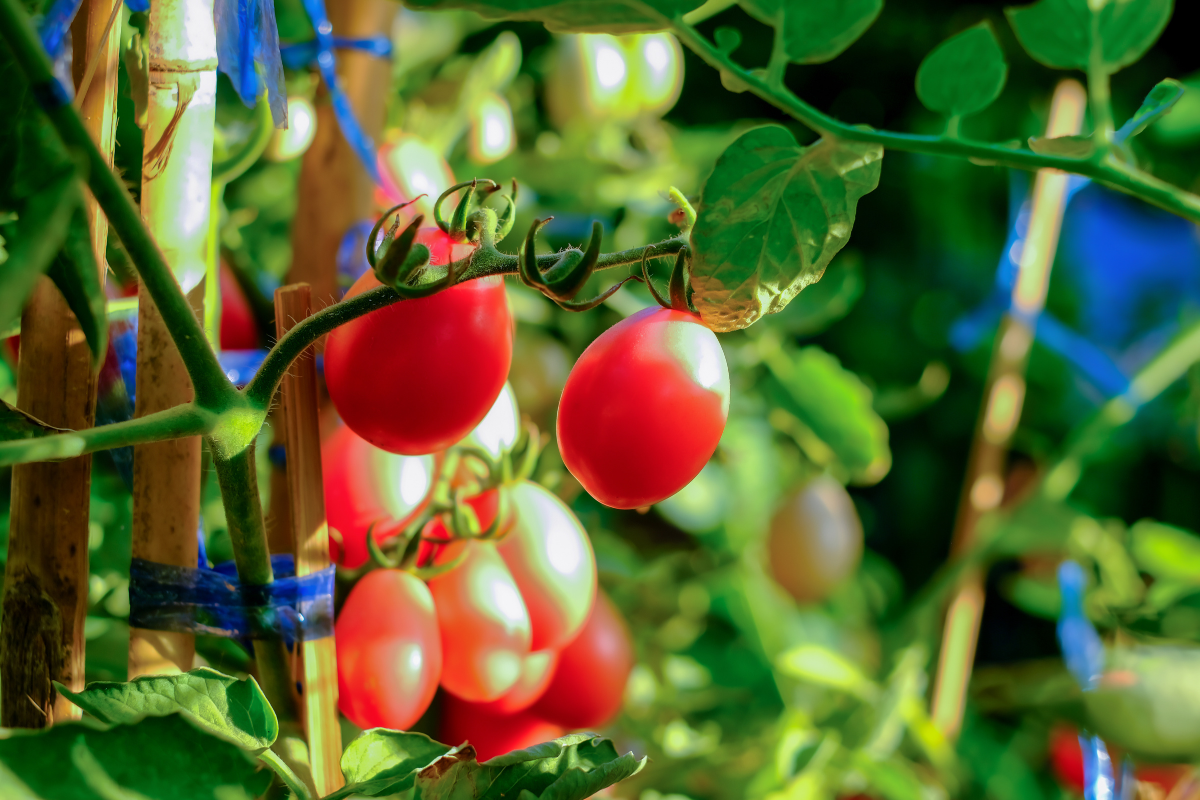
Organic tomato production is becoming increasingly popular as farmers and gardeners seek chemical-free methods to grow healthy, high-yielding crops. This guide provides practical, step-by-step instructions on how to grow tomatoes organically in both tropical and temperate regions. It covers soil requirements, nursery management, organic fertilizer options, spacing, pruning, irrigation, and organic pest control.
Climate and soil requirements
Climate
Tomatoes grow best in warm conditions. The optimum temperature range is between 20–30 °C. If the temperature falls below 15 °C, plant growth slows. If it rises above 35 °C, fruit set becomes poor. In tropical regions, choose heat-tolerant, disease-resistant varieties. For tomato production in temperate regions, select early-maturing varieties to avoid frost.
Soil
Tomatoes prefer a well-drained loam or sandy-loam soil high in organic matter with a pH between 6.0 and 6.8. Meeting these soil requirements is essential for strong root development and high yield. Before planting, incorporate compost or well-decomposed manure to improve fertility.
Variety selection
Choosing the right variety is key to successful organic tomato cultivation. A 2025 study published in Horticultural Plant Journal noted that despite growth in Europe's organic sector, the number of tomato varieties bred specifically for organic farming remains limited, since breeding efforts have focused primarily on high-input conventional conditions. Varieties chosen for conventional systems may not maximize nutrient uptake in organic settings where fewer external inputs are provided.
For tropical regions, look for heat-tolerant varieties with resistance to bacterial wilt, early blight, and nematodes. Examples include Roma VF, Tropimech, Tylka, and Cobra.
For temperate regions, select early-maturing varieties tolerant to cool conditions. Examples include Early Girl, Glacier, Stupice, and Brandywine. Some of my other favorite varieties include Moneymaker and Marmande tomatoes, but you must give them a head start by sowing seeds indoors or in the greenhouse and transplanting when the soil warms up in spring. In Hungary, for instance, I generally sow seeds indoors by late January or early February and then plant in the field between March and April. This ensures the plant has enough time to mature and ripen for harvest before winter frost sets in. This season, I am also going to experiment with Harfeuzer and Black Cherry varieties.
When purchasing seeds, look for varieties with strong disease resistance, good fruit firmness, and high yield potential.
Raising healthy seedlings
Healthy seedlings are essential for high-yield tomato farming.
Use clean seed trays or raised nursery beds. Prepare a light growing medium from compost, topsoil, and cocopeat mixed together. Sow seeds 0.5–1 cm deep. Keep the medium moist but not waterlogged, and provide 6–8 hours of sunlight daily.
Seedlings are ready for transplanting at 4–6 weeks, when they have developed 5–7 true leaves. You may transplant directly into the ground, raised beds, or containers. Check the instructions on the seed packaging to inform your decisions.
Hardening. Expose seedlings gradually to outdoor conditions for 5–7 days before transplanting. This helps acclimatize them to the new environment. They may experience some stress from the change, but they will recover. Hardening significantly increases survival rates after transplanting.
Land preparation and transplanting
Form raised beds (20–30 cm high), mounds, or containers. For container gardening, recommended pot sizes depend on the type of tomato you are growing. Five-gallon pots work for cherry tomatoes, 3–5 gallons for bush varieties, and 10–15 gallons for heirloom varieties.
Incorporate compost at 2–3 kg per square meter (roughly 5–10 tonnes per hectare). Apply mulch to conserve moisture.
Spacing. Staked tomatoes do well at 50 cm between plants and 75 cm between rows. Unstaked types need wider spacing at 60 cm by 90 cm. Proper spacing improves airflow and reduces disease pressure.
Organic nutrient management
Tomatoes are heavy feeders and require a consistent nutrient supply throughout the growing season.
Recommended organic fertilizers include compost, vermicompost, compost teas or manure teas, bone meal (for phosphorus), wood ash (for potassium), and seaweed extract (for micronutrients). OMRI-listed organic fertilizer pellets are another option. I used them last season for my tomato plants and got great results.
Feeding schedule. At transplanting, apply compost combined with bone meal. At flowering, switch to compost tea to support fruit development. During fruiting, provide potassium-rich inputs such as wood ash or banana peel tea.
For organic pest prevention at the flowering stage, neem spray is a reliable organic product. Some growers also use potassium bicarbonate sprays to manage powdery mildew.
Irrigation management
Tomatoes require regular, consistent moisture for good fruit set. About 25–50 mm (1–2 inches) of water per week is a reasonable target. Avoid overwatering to prevent root rot. If using containers, make sure there are drainage holes to allow excess water to escape.
Drip irrigation is the recommended method because it saves water, reduces leaf wetness, and minimizes disease pressure. In tropical conditions, watering 3–4 times per week is typical. In temperate regions, 1–2 times per week is usually sufficient, depending on rainfall.
Avoid water stress during flowering and fruiting, as these are the stages when the plant's water demand is highest. Inconsistent watering at this point leads to blossom end rot and fruit cracking.
Staking, pruning, and training
- Staking supports the plant, improves airflow, and reduces fruit rot from soil contact.
- Pruning involves removing side shoots (suckers), which concentrates more of the plant's energy into fruit development. Avoid excessive pruning in hot climates, where the foliage helps protect fruit from sunscald.
- Training systems. Use single or double stem training for indeterminate varieties. Cage systems work well for determinate varieties. Proper spacing and pruning together improve both yield and fruit quality.
Organic pest and disease management
Organic tomato pest control relies on prevention, monitoring, and natural solutions.
- Common pests. Tuta absoluta can be managed with pheromone traps, neem oil, and Bacillus thuringiensis (Bt). Whiteflies respond to yellow sticky traps, neem, and soap sprays. Aphids can be controlled through ladybird beetles and garlic-chili spray. For nematodes, use resistant varieties and marigold cover crops.
- Common diseases. Early blight and late blight are managed with copper-based sprays, mulching, and proper spacing. Bacterial wilt requires resistant varieties and crop rotation. Powdery mildew can be treated with potassium bicarbonate spray.
- General IPM practices. Rotate crops every 2–3 years. Remove infected plant debris promptly. Use clean tools. Encourage beneficial insects to establish populations on the farm.
Harvesting and postharvest handling
Harvest when fruits turn from pink to red, depending on intended use. Pick in the morning when temperatures are cooler, as this helps maintain firmness.
Handle fruits gently to avoid bruising. Store at 12–20 °C and keep away from direct sunlight. For longer shelf life, harvest at the breaker stage (first color change) and allow fruits to ripen at room temperature.
References
- Beyond Pesticides / Horticultural Plant Journal. (2025). Research in traditional plant breeding in organic tomato traits critical to productivity.
- ATTRA – National Center for Appropriate Technology. Organic Tomato Production Guide.
- eOrganic / USDA Organic Research. Field Production of Organic Tomatoes.
- Frontiers in Plant Science. (2025). Integrative approaches to nutrient management in tomato cultivation for improved sustainability and productivity. Vol. 16.