


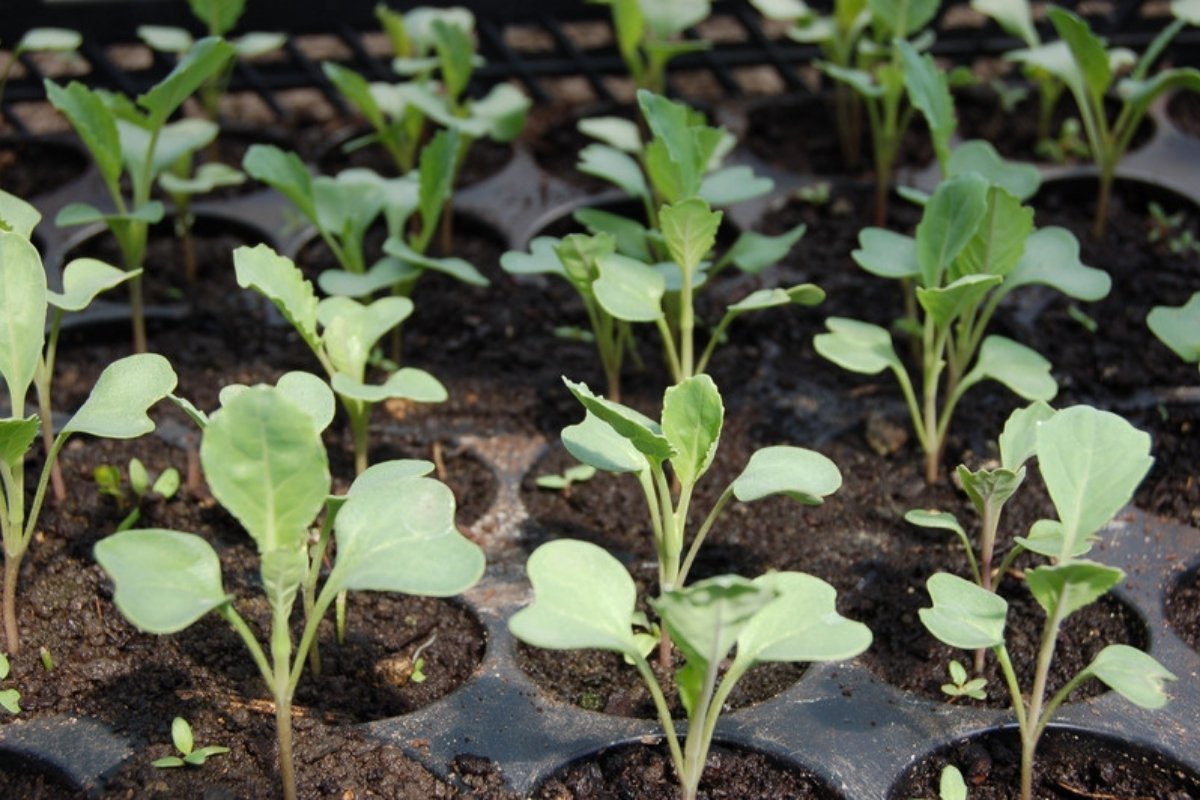
Much of farming is the nurturing of something we cannot see. In livestock it begins with an egg or an embryo that nobody notices until the animal carrying it changes. In crop farming it begins in the nursery, where the life of a plant starts long before anyone can tell what kind of plant it will become.
The nursery stage covers sowing, which means choosing the right variety of seed and the right sowing method, and then managing the seedlings well. As farmers we do not know what the outcome of the seeds we sow will be, but we keep nurturing them with practices that have stood the test of time.
Spacing
In the nursery, spacing means the size of the cells in a seedling tray, or the distance between rows and seeds in a seedbed, usually a matter of a few centimetres. The wider spacing of 20 cm to 1 m applies later, when the seedlings are transplanted to the field, and depends on the crop and the farming system.
Spacing matters at both stages because it sets how much plants compete with each other for nutrients, water, light and air. Seedlings sown too densely grow thin and weak, and crowding also slows drying and raises the risk of disease.
Watering
Seeds and young seedlings are fragile and need gentle watering. A watering can is the most common tool, although some growers use drip or misting systems.
After sowing, trays can be kept covered and in a dark, moist place for the first few days, until the seedlings emerge. As soon as they appear, they need light. Seedlings left in the dark after germination stretch and become weak and leggy, so move them to a bright, warm spot without delay.
How often to water depends on the temperature of the nursery. In a hot nursery this can mean watering two to four times a day, but always lightly. Check the growing medium and water when the surface begins to dry, rather than by the clock. Overwatering saturates the medium and encourages damping-off, a disease that rots seeds before they emerge or makes young seedlings collapse and die. Damping-off is difficult to stop once symptoms appear, so prevention through good drainage, clean growing medium, adequate light and air movement matters far more than any cure.
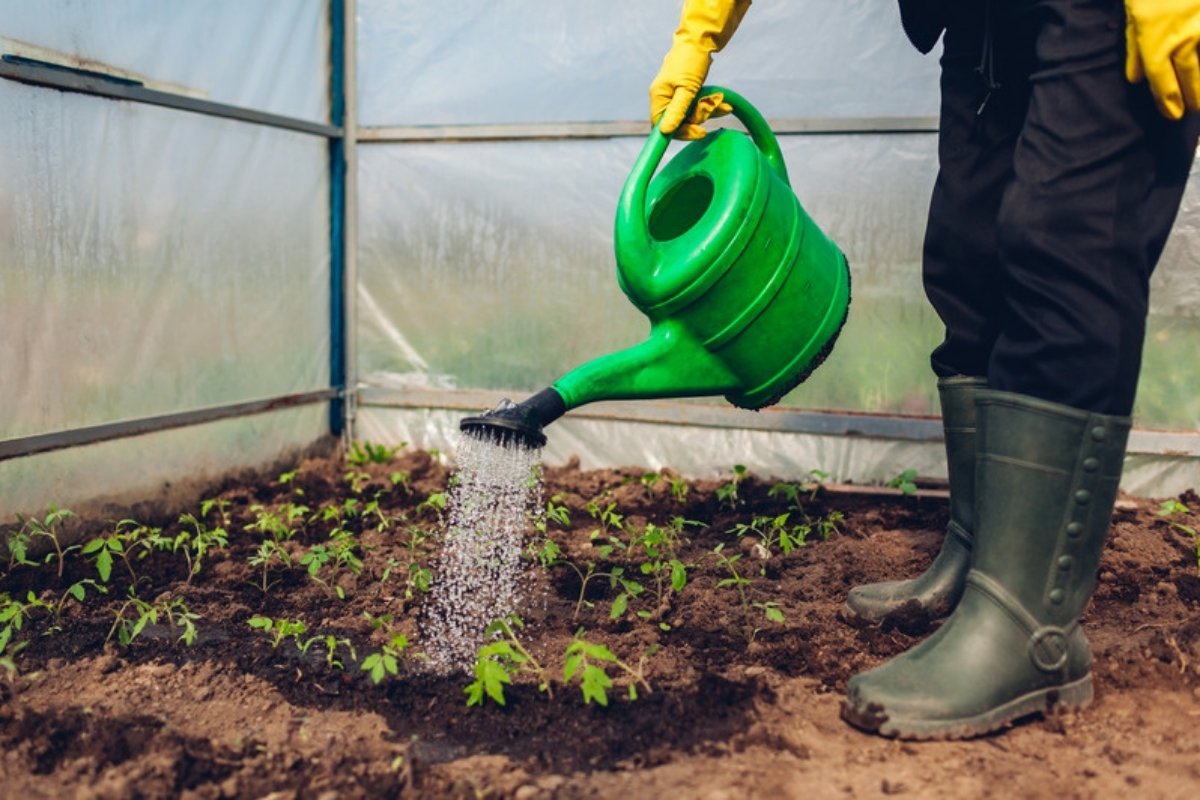
Water seedlings gently and when the surface of the growing medium starts to dry, since a saturated medium encourages damping-off.
Feeding seedlings
Fertigation means feeding plants through the irrigation water, and it suits seedlings because solid fertiliser can easily scorch tender roots.
Seedlings do not need feeding straight away, because the seed and the growing medium carry them through germination. Start once the first true leaves appear, the leaves that look like small versions of the adult plant. A standard rate for transplants is 50 to 100 ppm of nitrogen from a complete water-soluble fertiliser such as 20-20-20, which supplies phosphorus and potassium alongside the nitrogen. A balanced feed like this is safer for seedlings than nitrogen sources such as urea or ammonium sulphate on their own. The common approach is either a dilute feed with every watering or a slightly stronger one two or three times a week.
For organic growers, well-decomposed compost or vermicompost belongs in the growing medium itself, and compost tea can be used as a dilute liquid feed.
Feed in the cool hours, early in the morning or in the evening, never in strong midday heat, and keep to a regular schedule so the seedlings grow evenly.
Protecting seedlings from pests and diseases
Prevention comes first. Use a clean or sterilised growing medium and clean trays, keep the nursery weeded, make sure water drains freely, and remove infected seedlings as soon as you see them, before the problem spreads.
When prevention is not enough, products can help. Organic options include neem-based products. Among synthetic products, mancozeb is a fungicide and cypermethrin an insecticide. Mancozeb is a protectant that works only on the leaf surface before infection, so it prevents disease rather than curing it once it has taken hold. Seedlings are easily damaged, so use any product only at the label rate and only where it is approved for the crop and for use on seedlings.
Wear personal protective equipment whenever you handle crop protection products, and indeed for any farm work where the label or the task calls for it.
Preparing seedlings for the field
The nursery stage ends with transplanting, and the step before it is easy to skip. Seedlings raised in a protected nursery need to be hardened off gradually before they go to the field. That means exposing them over several days to more sun, wind and slightly less water, so that they can cope with field conditions without a setback.
The unseen stage decides the farm
Farming is an act of faith. You never see the roots forming, the embryo breaking through the seed coat or the first cells dividing, yet your daily actions decide whether that life survives. The nursery shows that the unseen does not need to be uncovered to be nurtured. It needs to be understood.
With the right nursery practices, seedlings go into the field healthy and ready to grow. Master the nursery and you have mastered half of crop production, because you are managing life from its most fragile beginning.
Sources
Alabama Cooperative Extension System. Transplant production for hydroponic and greenhouse systems.
Cornell Cooperative Extension. Tips for beautiful vegetable transplants.
UMass Amherst Center for Agriculture, Food and the Environment. Vegetable bedding plant production and pest management.