


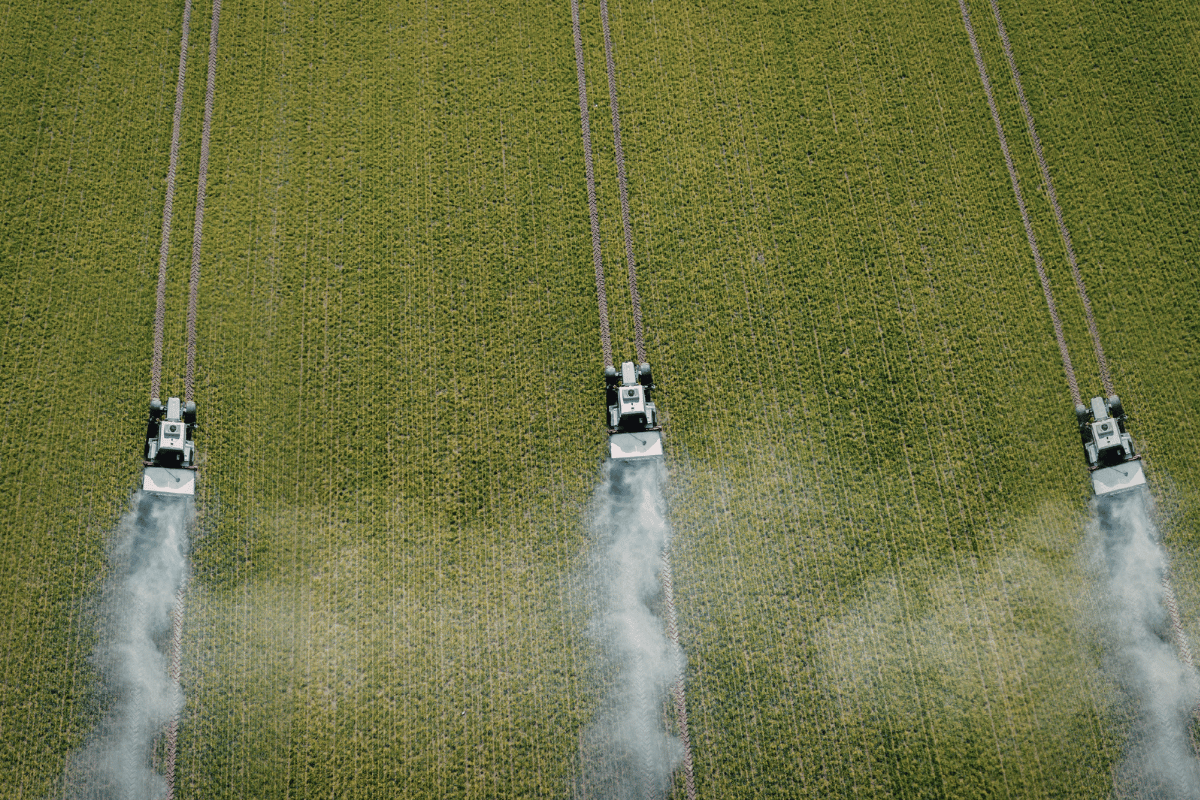
Agriculture is the backbone of Nigeria's economy and a primary source of livelihood for the majority of the country's rural population. From the vast plains of the North where sorghum, millet, and cowpea flourish, to the humid rainforest zones of the South where cassava, yam, cocoa, and oil palm dominate, the country's agricultural landscape is extraordinarily diverse. Every seed represents food on the table, education for families, and the reward for months of hard work.
As plants begin to take root and grow, the farm gradually comes alive. Maize plants rise steadily, cassava leaves open wide under the sun, and rice seedlings spread across the field. Then, without warning, signs of trouble begin to appear. Leaves develop holes, stems weaken, and unusual spots spread across plant surfaces. What was once a healthy field becomes a battlefield. Insects hide within plant whorls and tunnel through stems, while microscopic pathogens invade plant tissue and disrupt the physiological processes on which crop growth depends.
Across Nigeria, pests and diseases continue to threaten agricultural productivity. According to the Food and Agriculture Organization (FAO, 2021), pests and diseases destroy up to 40% of global crop production each year. In Africa alone, billions of dollars are lost annually as a direct result of pest infestations and plant diseases that go undetected or are managed too late to prevent widespread damage. Agricultural studies estimate that farmers in Nigeria lose between 20% and 30% of their crops each year to pests, diseases, and inefficient pest management practices. For smallholder farmers whose livelihoods depend heavily on agriculture, such losses are more than economic setbacks. They threaten household food security and rural stability.
Agriculture employs roughly two-thirds of Nigeria's labour force and supplies food to a rapidly growing population. Despite the country's vast agricultural potential, crop productivity remains below global averages due to pest infestations, plant diseases, climate variability, and limited access to modern technologies. The emergence of smart farming now offers new possibilities. By combining digital technologies, scientific knowledge, and data-driven decision-making, smart farming provides innovative tools for managing crops more efficiently. Through the use of precision agriculture, digital pest monitoring systems, and climate-responsive practices, farmers can improve yields while reducing losses caused by pests and diseases.
To appreciate the urgency of smart farming adoption in Nigeria, it is necessary to understand the current condition of the country's agricultural sector. Despite Nigeria's status as Africa's largest economy and most populous nation, its agricultural system remains predominantly traditional, fragmented, and chronically underfunded. The majority of Nigerian farming households operate on plots of less than two hectares, relying largely on manual labour, hand tools, and rain-fed cultivation methods that have changed very little over generations. This smallholder-dominated structure, while culturally significant, severely limits productivity and leaves farmers highly vulnerable to external shocks such as weather extremes, pest outbreaks, and market fluctuations.
The burden of pests and diseases on Nigerian agriculture
Pests and plant diseases represent some of the most persistent obstacles to agricultural development in Nigeria. Insect pests attack crops by feeding on leaves, stems, fruits, and roots, while plant pathogens disrupt vital physiological processes necessary for plant growth. Several insect species are responsible for major crop damage across Nigerian farms. Aphids feed on sap and transmit viral diseases. The variegated grasshopper (Zonocerus variegatus) is widely known for its destructive feeding habits on vegetables and field crops. Stem borers such as Busseola fusca attack maize by tunnelling into stems, reducing nutrient flow and weakening plant structure.
One of the most destructive pests affecting African agriculture today is the fall armyworm (Spodoptera frugiperda). Since its first detection on the African continent in January 2016, this invasive species has spread rapidly and caused widespread damage to maize fields. The larvae feed aggressively on maize leaves and hide deep within plant whorls, which makes them difficult to detect and control. Severe infestations can destroy entire fields within a short period (Day et al., 2017).
Cassava production also faces significant challenges from viral diseases. Cassava mosaic disease, caused by viruses such as African cassava mosaic virus, and cassava brown streak disease, caused by Cassava brown streak virus, reduce root yield and compromise food supply in many rural communities (Legg et al., 2015). Rice cultivation is equally vulnerable to pest and disease pressures. Rice stem borers such as Chilo suppressalis damage stems and disrupt nutrient transport within the plant. Fungal diseases such as rice blast, caused by Magnaporthe oryzae, attack leaves and reduce grain formation.
According to Oerke (2006), pests, diseases, and weeds collectively cause more than 30% of crop losses globally. In Nigeria, these losses translate into reduced farm income, increased production costs, and persistent food insecurity. In many cases, farmers attempt to combat pests through repeated applications of chemical pesticides. While pesticides can be effective when used properly, excessive or improper application can lead to environmental contamination, health risks, and the development of pesticide-resistant pest populations. These limitations highlight the urgent need for more sustainable pest management strategies.
Smart farming applications for crop yield and pest and disease control
Smart farming, often called precision or digital agriculture, is changing the way farming is done today. Instead of relying on guesswork or doing things the same way across the entire farm, it focuses on using real-time information to guide decisions. Farmers can apply inputs such as water, fertilisers, and pesticides only when they are needed, in the right amount, at the right place, and at the right time. The approach is opening up new ways for farmers to increase yields and manage pests and diseases more effectively. It brings together different tools, from drones and artificial intelligence to better soil management and biological control. Each plays its own role, but the real strength of smart farming is how everything works together. Instead of relying on one method, farmers have a connected system that helps them make better decisions and achieve better results.
One of the biggest advantages of smart farming is early detection. Farmers no longer have to wait until damage becomes obvious before taking action. With drones and satellite images, large areas of farmland can be monitored regularly, which makes it easier to spot areas where crops are under stress. These signs may not be visible to the human eye at first, but the technology can pick them up early enough for farmers to step in before the problem spreads. With the help of artificial intelligence, these images can be analysed quickly to identify specific pests or diseases, helping farmers respond faster and more accurately.
Mobile technology has made this even more practical for smallholder farmers. With just a smartphone, a farmer can take a picture of a damaged crop and get feedback almost immediately. This kind of access to information used to be limited. Early warning systems also play a key role by alerting farmers about possible pest outbreaks ahead of time, giving them a chance to act before the situation gets out of control. This shift from reacting to problems toward preventing them is one of the biggest changes smart farming brings.
Pest management improves as well. Instead of spraying chemicals across the entire farm, farmers can focus only on the areas that are affected. This targeted approach saves money, reduces harm to the environment, and protects helpful insects that naturally control pests. It also helps slow down the problem of pesticide resistance, which is becoming a growing concern. Smart farming supports better farming practices such as Integrated Pest Management. By combining different methods such as biological control, crop rotation, and careful chemical use, farmers can manage pests in a more balanced and sustainable way. With access to real-time data, they can choose the best approach at the right time, which makes these methods even more effective.
Soil management has also improved. Farmers can now understand the condition of their soil more clearly, knowing where nutrients are lacking and where moisture levels are low. This allows them to apply fertilisers more carefully, improving crop growth while reducing waste and environmental damage. Water management is another area where smart farming is making a difference. With smart irrigation systems, farmers can provide crops with the exact amount of water they need, avoiding both overwatering and water stress. When combined with weather information, these systems help farmers plan better and use water more efficiently.
Digital knowledge platforms, including agricultural radio programmes, WhatsApp farmer groups, SMS advisory services, and mobile applications, provide alternative channels through which farmers can access agricultural information, connect with peers and experts, and report emerging pest and disease problems to early warning systems that aggregate these reports into national-scale threat maps. These platforms are particularly valuable in Nigeria's context because they can reach farmers in remote areas where physical extension services are thin or absent, and they can be scaled rapidly and cost-effectively to serve millions of farmers simultaneously.
The significance and transformative potential of smart farming for Nigerian agriculture
The adoption of smart farming technologies in Nigeria has the potential to reshape the agricultural sector. It goes beyond improving yields. It changes how food is produced, how resources are managed, and how farmers prepare for challenges. More importantly, it can transform the relationship between farmers and the land they depend on. Experiences from countries in Asia, Latin America, and other parts of Africa show a clear pattern. When farmers have access to the right information at the right time, supported by practical technologies and strong support systems, the results can be life-changing in terms of productivity, efficiency, and overall livelihood.
In practical terms, smart farming could significantly increase crop yields in Nigeria. For example, cassava yields, which are currently around 8 to 10 tonnes per hectare, could rise closer to their potential of 25 to 40 tonnes per hectare. Maize production could also improve from about 1.5 tonnes per hectare to as much as 6 to 8 tonnes per hectare under better management. This kind of improvement would increase food availability, stabilise prices, and support industries that depend on these crops. Reducing post-harvest losses through better monitoring, storage, and supply systems would mean more food reaches consumers without the need to expand farmland, which helps protect the environment.
The economic impact is equally important. If crop losses from pests and diseases were reduced even by half, farmers could earn significantly more income. This additional income would strengthen rural communities, support families, and improve access to education and healthcare. Using fewer pesticides through more precise application would lower costs, reduce health risks, and protect the natural balance of the ecosystem. A stronger agricultural sector would also benefit the country by reducing food imports, saving foreign exchange, creating jobs, and supporting agro-based industries.
The most meaningful long-term benefit of smart farming is its ability to attract young people back into agriculture. Many young Nigerians leave rural areas because farming is seen as stressful and unprofitable. When agriculture becomes modern, technology-driven, and capable of generating good income, it becomes more appealing. Smart farming changes the image of agriculture from a struggle into an opportunity. It shows that farming can be innovative, rewarding, and respected. This shift could play a major role in securing the future of agriculture in Nigeria.
Building a stronger agricultural future
Nigeria is naturally well-placed for strong agricultural growth. The country has fertile soils, diverse climates across different regions, a large farming population, and generations of agricultural knowledge passed down over time. All of these should be more than enough to feed the population and even support food security beyond its borders. This potential is still far from fully realised. Persistent challenges such as pests, plant diseases, climate change, poor infrastructure, and limited access to modern technology continue to hold the sector back. As a result, many farming families remain trapped in low productivity and income, while the country struggles to meet its growing food demands.
Smart farming offers a practical and sustainable way forward. By bringing together digital tools, precision agriculture, artificial intelligence, climate-smart practices, and integrated pest management, farmers are better equipped to handle the challenges they face. With these tools, they can detect problems earlier, respond more effectively, and use their resources more wisely. This improves crop yield, reduces environmental impact, and helps maintain soil health for the future. From drones that monitor crops, to mobile apps that guide farmers, to improved irrigation systems, these innovations work together to create a more efficient and reliable farming system.
Technology alone will not solve everything. The real success of smart farming depends on how well farmers understand and use these tools. It also relies on strong support from government, research institutions, and agricultural organisations. Good policies, proper training, and collaboration between all stakeholders are essential to make these innovations work on a larger scale. When farmers have access to the right knowledge, tools, and support, managing pests and diseases becomes less of a constant struggle and more of a challenge they can control.
In the end, the future of agriculture in Nigeria will depend less on how much land is available than on how well that land is managed. With the right approach, smart farming can help farmers make better decisions, improve productivity, and build a more stable and sustainable agricultural system. By embracing these innovations, Nigeria has the opportunity to strengthen its food system, improve livelihoods, and position itself as a leading force in African agriculture.
References
Day, R., Abrahams, P., Bateman, M., Beale, T., Clottey, V., Cock, M., Colmenarez, Y., Corniani, N., Early, R., Godwin, J., Gomez, J., Moreno, P. G., Murphy, S. T., Oppong-Mensah, B., Phiri, N., Pratt, C., Silvestri, S., and Witt, A. (2017). Fall armyworm, impacts and implications for Africa. Outlooks on Pest Management, 28(5), 196–201.
Food and Agriculture Organization of the United Nations. (2021). Global Action for Fall Armyworm Control Framework 2020–2022. FAO, Rome.
Legg, J. P., Jeremiah, S. C., Obiero, H. M., Maruthi, M. N., Ndyetabula, I., Okao-Okuja, G., Bouwmeester, H., Bigirimana, S., Tata-Hangy, W., Gashaka, G., Mkamilo, G., Alicai, T., and Kumar, P. L. (2011). Comparing the regional epidemiology of the cassava mosaic and cassava brown streak virus pandemics in Africa. Virus Research, 159(2), 161–170.
Oerke, E. C. (2006). Crop losses to pests. Journal of Agricultural Science, 144(1), 31–43.