

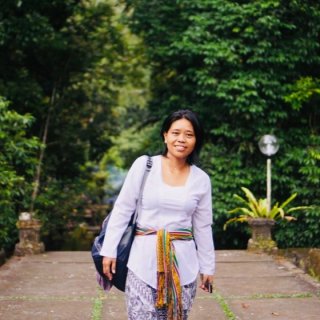
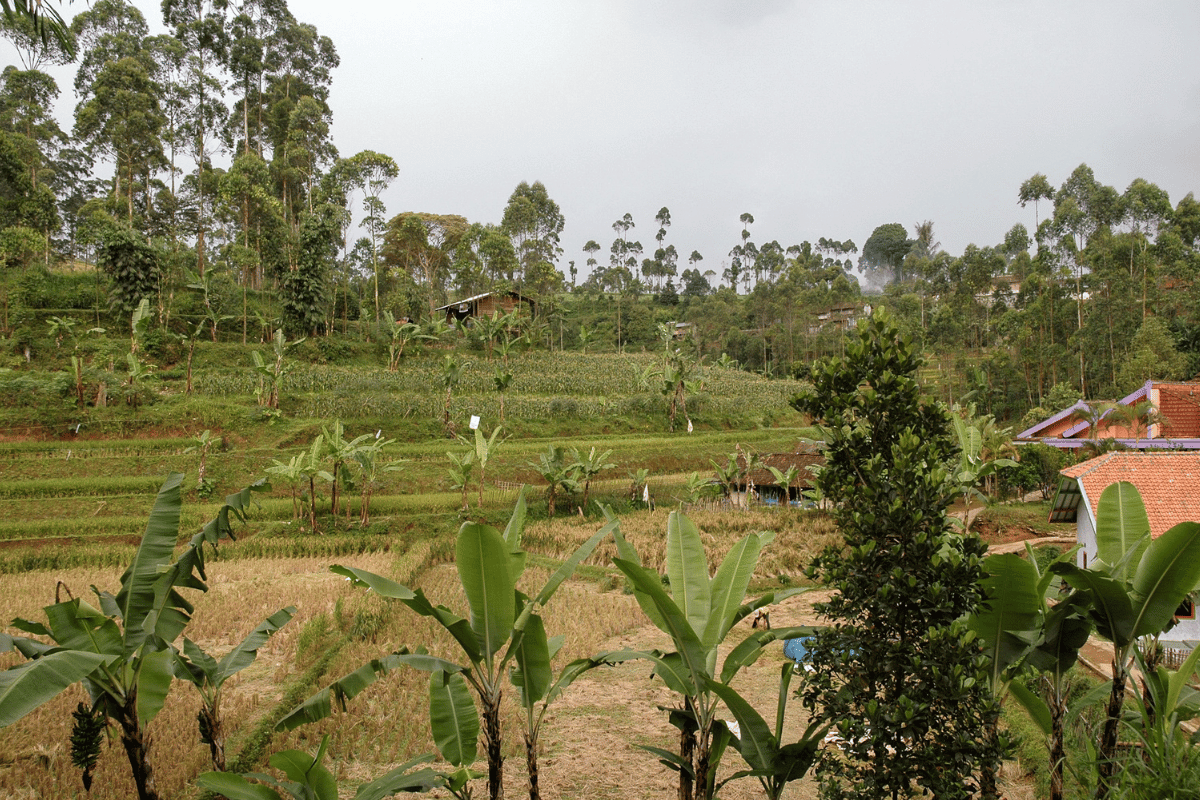
I'm Sayu Komang from Bali, born and raised in a family of Balinese farmers, and deeply passionate about regenerative agriculture. Through my work I have learned and implemented permaculture, syntropic agroforestry, and biodynamics, collaborated with NGOs, and worked closely with indigenous communities across Indonesia. Along the way I've seen how food forests transform lives. Let me share what I've learned about integrating food forest layers into smallholder farms, drawing from my journey with the Slow Food community and ethnobotany-focused initiatives across Sumatra, Kalimantan, Java, Sulawesi, Halmahera, and Papua.
Food as relationship, not just commodity
In indigenous communities, food isn't just something you buy at the market. It's grown with care, harvested with gratitude, and shared with love.
Modern life often disconnects us from nature. We forget where our food comes from, how it's grown, and the hands that nurture it. This disconnection harms our health, our culture, and our planet. How can we reconnect? Grow your own food, buy from local farmers, learn their stories, and understand indigenous practices like subak and the many other systems that have nourished communities for generations.
What a food forest is, in my view
A food forest mimics nature's own ecosystem but prioritises edible and useful plants. It's a multi-layered garden where trees, shrubs, climbers, and ground covers work together to provide food, medicine, shade, habitat, and improved soil health. Food forests carry different names in different regions of Indonesia, but the underlying logic is the same.
Teba, the Balinese food forest
In Bali, the teba is our food forest. Teba is a traditional gem, an age-old system where community members cultivate mixed gardens around their homes or farms. These spaces blend fruit trees (coconut, jackfruit, banana), vegetables, medicinal herbs, and nitrogen-fixing plants. Teba shows how communities can sustain themselves through biodiversity.
In my own house, my backyard is my teba. I grow papaya, pineapples, cassava, taro, ginger, and turmeric under coconut and banana trees. Minimal inputs, maximum output, food, income, and pest resilience all from the same small space.
Slow Food and seed sovereignty in Tabanan
Through the Slow Food network in Bali and Indonesia, we've helped smallholders transform monoculture plots into thriving food forests. Our focus is on local food sovereignty, heirloom varieties, and the community bonds that come from shared knowledge.
In Tabanan, the Slow Food community turned a degraded plot into a forest garden of native fruits (such as sukun, breadfruit, and bamboo, which is widely used for ceremony and traditional building), medicinal plants, and staples like cassava and taro. The community now hosts workshops on traditional cooking and herbal medicine, opening the knowledge to the next generation.
Food forests across Indonesia, local names and shared values
Across the archipelago, food forests carry different names but share the same purpose. In Sumatra, repong or parak systems blend trees with food crops. In Kalimantan, tembawang or simpukng support the needs of Dayak communities. In Java, pekarangan are home gardens rich in herbs and food plants. In Sulawesi, kebun guri mix trees with vegetables and tubers. In Halmahera, hutan adat (customary forests) integrate food species like sago and banana. In Papua, maki gardens blend taro and sweet potato with forest species.
These systems prioritise plants that are tied to community identity in three ways at once, as food, as medicine, and as part of ritual life. They foster nature stewardship by making caretaking part of everyday practice.
When plants and community are deeply connected
From an ethnobotany perspective, food forests aren't just production spaces. They are cultural hubs. Communities identify plants for many overlapping purposes. For food, wild greens like fern, fruits, and starches such as sago and sweet potato. For medicine, ginger, turmeric, and moringa. For cultural use, aren (sugar palm) for ceremonies, and pandan and other palms for weaving materials. In Halmahera, for example, communities harvest sago for food and the leaves for roofing, a skill passed down across generations.
Food forests reconnect us to foraging, the joy of walking through layers of green to find a ripe fruit, harvest fresh greens, or brew a medicinal tea. They remind us that food isn't just grown. It's part of a web of relationships with nature and tradition. Try it yourself. Visit a food forest and forage mindfully. Notice how the plants support each other, and how they support you.
Practical steps for smallholders
Implementation does not need to be ambitious from day one. Start small and add layers gradually, ground covers first, then shrubs, then trees. Choose local plants and prioritise native edible species and heirloom varieties from your own region. Mix functions deliberately, so each plant contributes food, medicine, or habitat for beneficial species. Most importantly, engage your community. Share knowledge, involve neighbours, and let the food forest become a shared project rather than a private one.
A path to resilience and connection
Food forests offer more than food. They offer a path to resilience, culture, and connection. Whether in Bali's teba or Kalimantan's simpukng, these systems show that smallholder farms can be vibrant, multi-functional spaces that nourish both people and ecosystems. By integrating layers and honouring ethnobotany and food sovereignty, we grow communities. When we understand plants and food sources, we respect nature more, and we realise we are part of a larger ecosystem.
Let's nurture this connection.