


Introduction
Climate change is increasingly recognized as a critical challenge for Nepal. Studies, including Nepal’s Initial National Communication (INC, 2004) to the UNFCCC, indicate the country is highly vulnerable to its impacts. Warming, particularly at higher elevations, is expected to reduce snow and ice coverage, increase climate-induced disasters like floods and droughts, and cause uneven rainfall patterns. Recent evidence shows land loss due to floods and erosion, water shortages, threats from Glacial Lake Outburst Floods (GLOFs), forest degradation, invasive species, disease outbreaks, and declining food security, all of which threaten biodiversity and socio-economic development (NCVST, 2009; WFP, 2009).
With around 80% of Nepal’s population reliant on traditional agriculture, projected climate changes are expected to reduce crop productivity. Drought-prone areas may become drier, wet areas wetter, and current crop varieties may no longer be suitable. Extreme weather events further exacerbate food insecurity, affecting millions (WFP, 2009).
In response, Nepal has initiated the National Adaptation Programme of Action (NAPA) to identify priority adaptation measures and access international adaptation funds. Agriculture and food security are key focus areas. This report examines the role of agrobiodiversity in NAPA, assessing its recognition in adaptation strategies, identifying factors that promote or hinder its maintenance, and recommending actions to strengthen its contribution to climate resilience.
Agrobiodiversity in Nepal’s NAPA
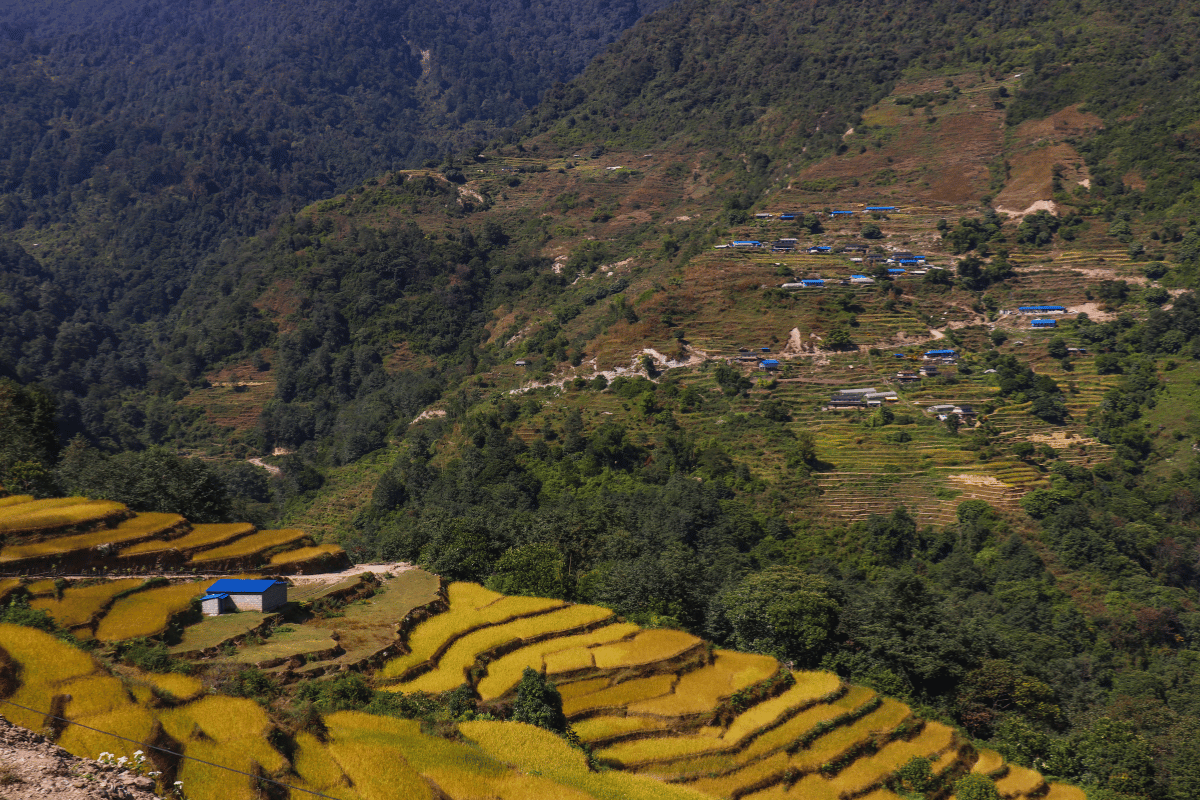
Smallholder farmers in Nepal are often economically marginalized and have limited access to external resources, making them particularly vulnerable to the impacts of climate change. Agriculture in Nepal is largely based on mixed farming systems that integrate crops and livestock, supporting high levels of biological diversity. Forests, home gardens, agroforestry systems rich in fodder trees, and productive agricultural fields all serve as reservoirs of agrobiodiversity, with management practices that enhance resilience and reduce vulnerability.
Communities actively maintain a wide range of crop species and varieties, both to cope with climate variability and to meet their nutritional, economic, and cultural needs (Jarvis et al., 2008). Many farming areas are environmentally marginal and increasingly at risk of land degradation and biodiversity loss due to climate trends. Maintaining and effectively using agrobiodiversity, particularly among smallholder farmers, is therefore crucial for climate adaptation. Integrating agrobiodiversity considerations into the NAPA process will strengthen Nepal’s capacity to develop targeted, locally appropriate strategies for resilient agriculture and sustainable livelihoods.
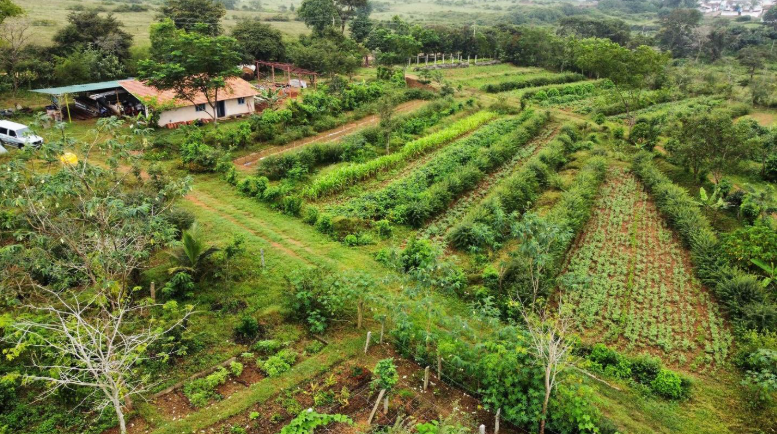
Image: The community beating drought with tree-based farming
Agriculture in Nepal under climate change
Agriculture contributes around 33% of Nepal’s GDP and supports over 86% of the population (CBS, 2007). The sector relies on rich agrobiodiversity, including:
- Over 550 edible plant species
- 200 cultivated crops
- Diverse livestock breeds (MoFSC, 2002)
Staple crops such as rice, wheat, maize, barley, finger millet, and buckwheat vary across production zones, reflecting local adaptation strategies.
Climate projections and risks
Nepal is projected to face a temperature increase of 0.5–2°C by the 2030s and 3–6°C by the 2090s, alongside highly variable monsoon rainfall (NCVST, 2009). These changes are expected to exacerbate existing challenges such as soil degradation, water scarcity, and extreme events, threatening food security for a growing population (WFP, 2009; UNEP & UNFCCC, 2002).
Climate change may have mixed effects on crop production. Simulation models suggest that elevated CO2 and moderate warming could slightly increase rice, wheat, and maize yields in hills and mountains, though yields may decline under higher temperature increases, particularly in lowland areas (Gautam, 2008; Sherchand et al., 2007). Some farmers have observed benefits, such as improved apple size, cultivation of new vegetables without greenhouses, and rice cultivation at higher altitudes (Dahal, 2005; 2006).
However, negative impacts are more widespread. Delayed monsoons disrupt planting and harvesting schedules, reduce crop rotation, and leave farmland fallow. Severe droughts and floods have caused significant crop losses, including a 30% decline in rice production in Eastern Nepal in 2006 (Paudel et al., 2008; Regmi & Adhikary, 2007). Livestock are affected by rising vector-borne diseases, forcing movements to higher altitudes (Practical Action, 2008). Farmers report that shorter rainy seasons have led to the loss of local crop landraces, increased pest pressures, and reduced fodder tree size, impacting nutrition and livelihoods.
The role of agrobiodiversity in community-based adaptation
Farmers in Nepal and across South Asia have long relied on diverse strategies to manage agricultural risks. These include exchanging drought-resistant seeds, cultivating stress-tolerant crop varieties, and adopting soil and water management practices, particularly in marginal environments.
Climate change, however, is increasing both the scale and speed of environmental challenges, creating a need for closer collaboration between farmers, researchers, and policymakers. Scientific evidence highlights that agrobiodiversity is central to maintaining agricultural productivity and adapting to changing conditions.
In countries such as Nepal, India, and Bangladesh, farmers continue to adapt by using traditional seed exchange systems and drawing on local knowledge of stress tolerance to safeguard crop resilience (Jarvis et al., 2007). Farmers’ innovations and day-to-day management practices are thus a vital component of local adaptation, complementing scientific research and national policy efforts (Reid & Swiderska, 2008).
Evidence also shows that diversity provides a buffer against climate shocks. A comparative study found that households in the Terai experienced greater production losses from abnormal rainfall (40%) than households in the hills (11.6%). One reason was the wider use of diverse traditional varieties in the hills (Bhandari, 2009).
Traditional crop varieties function as dynamic genetic systems shaped both by natural selection and farmers’ seed choices. This interaction enables continuous adaptation to shifting growing conditions and evolving social preferences. The Western Terai Landscape Complex Project illustrated this resilience: during the severe 2008 floods, local rice varieties such as Tilki and Shyamjeera survived, whereas modern high-yielding varieties were highly vulnerable. Similarly, short-duration local rice types like Sauthariya have proven to be reliable options when drought or other extreme events cause the failure of longer-duration crops.
Strengthening the inclusion of agrobiodiversity in Nepal's NAPA
1. Enhancing Information and Communication
- Existing information on agrobiodiversity is scattered and not easily accessible.
- Strengthen local, regional, and national information systems with data on crops, livestock, fish, agroforestry, and climate parameters.
- Ensure information reaches policymakers and rural communities to support adaptation decisions.
2. Institutional Mechanisms and Policy Support
- Establish national forums, panels, or think tanks on climate change to provide technical guidance for NAPA.
- Create a climate change cell within the Ministry of Agriculture and Cooperatives (MoAC).
- Strengthen local committees to ensure farmers’ participation in adaptation decision-making.
- Promote farmer-to-farmer networks and support sharing of community-level knowledge and best practices.
3. Research and Development
- Conduct adaptive research to identify effective strategies for smallholders and vulnerable communities.
- Prioritize long-term research on agrobiodiversity conservation and use in changing climates.
- Strengthen the roles of genebanks and community seed banks in participatory breeding and seed exchange.
4. Supporting Farmer Adaptation Strategies
- Promote in situ conservation of crop and livestock genetic resources.
- Maintain local seed systems and improve access to genebanks.
- Encourage cultivation of diverse and underutilized crops.
- Identify adaptive traits for inclusion in participatory breeding programs.
- Incorporate indigenous knowledge and resilient systems such as home gardens.
- Support holistic approaches like Community-Based Biodiversity Management (CBM) to integrate crops, livestock, forestry, and fish for climate adaptation.
Conclusions
Agriculture and food production are central to Nepal’s climate adaptation and mitigation efforts. The sector’s resilience depends on factors such as population pressure, poverty, access to technology and inputs, infrastructure, and the maintenance of agrobiodiversity. While government policies recognize environmental challenges, climate change impacts are not yet fully integrated into agricultural planning.
The NAPA process provides an opportunity to strengthen agrobiodiversity’s role in adaptation. Conserving local crop and livestock varieties, traditional practices, and community-based knowledge can enhance farmers’ capacity to cope with climate risks. Supporting farmers with access to technology, funds, and training, and ensuring participation of civil society, indigenous groups, and vulnerable communities, is essential. Inter-departmental coordination, collaborative research, and capacity building will further improve the effectiveness of adaptation strategies.
References
- Bhandari, B. (2009).Summer rainfall variability and the use of rice varietal diversity for adaptation: farmers’ perceptions and responses in Nepal — ResearchGateSummer rainfall variability and the use of rice (Oryza sativa L.) varietal diversity for adaptation: Farmers perceptions and responses in Nepal. M.Sc. Thesis, Swedish Biodiversity Center, Uppsala, Sweden.
- CBS. (2007). Statistical year book Nepal. Central Bureau of Statistics, National Planning Commission, Kathmandu, Nepal.
- Dahal, N. (2005). Perceptions of climate change in Himalayas. Tiempo Bulletin, Issue 26, 19–24.
- Dahal, N. (2006). Implications of climate change in Nepal: Some observations and opportunities. Paper presented at 23rd Warden Seminar, Pokhara, Nepal.
- Gautam, A. K. (2008). Climate change impact on Nepalese agriculture and strategies for adaptation. Paper presented in NAPA workshop organized by LI-BIRD and Bioversity International, 23 December 2009 (Mimeo, LI-BIRD).
- Jarvis, A., Lane, A., & Hijmans, R. (in press). The effect of climate change on crop wild relatives. Agriculture, Ecosystems and Environment.
- MoFSC. (2002).Nepal National Biodiversity Strategy and Action Plan — CBD (PDF)Nepal biodiversity strategy. His Majesty’s Government of Nepal, Ministry of Forest and Soil Conservation. Supported by Global Environmental Facility and United Nations Development Program.
- NCVST. (2009). Vulnerability through the eyes of vulnerable: Climate change induced uncertainties and Nepal's development predicaments. Institute for Social and Environmental Transition-Nepal. Nepal Climate Vulnerability Study Team (NCVST), Kathmandu, Nepal.
- Paudyal, A., & Regmi, B. (2009, December). Climate change and agrobiodiversity in Nepal: Opportunities to include agrobiodiversity maintenance to support Nepal’s National Adaptation Programme of Action (NAPA). LI-BIRD; Platform for Agrobiodiversity Research; Bioversity International; FAO.
- Paudel, D., Sthapit, B. R., & Shrestha, P. (2008). Stability of social seed networks and nodal farmers in rice seed flow system: Does it matter for on-farm conservation? Agriculture and Human Values (submitted).
- Regmi, B. R., & Adhikari, A. (2007). Climate risk and vulnerability in Nepal. Country case study. Human Development Report 2007/2008 Fighting climate change: Human solidarity in a divided world. Human Development Report Office Occasional Paper, UNDP.
- UNEP & UNFCCC. (2002). Climate change information kit. Sheet 10. United Nations Environment Programme and United Nations Framework Convention on Climate Change. UNFCCC Information Kit 2002 (PDF) (Reviewed April 2009).
- UNFCCC. (2002). Annotated guidelines for the preparation of national adaptation programmes of action. Least Developed Countries Expert Group.
- WFP. (2009). The cost of coping: A collision of crises and the impact of sustained food security deterioration in Nepal. United Nations World Food Programme, Nepal Food Security Monitoring System.