


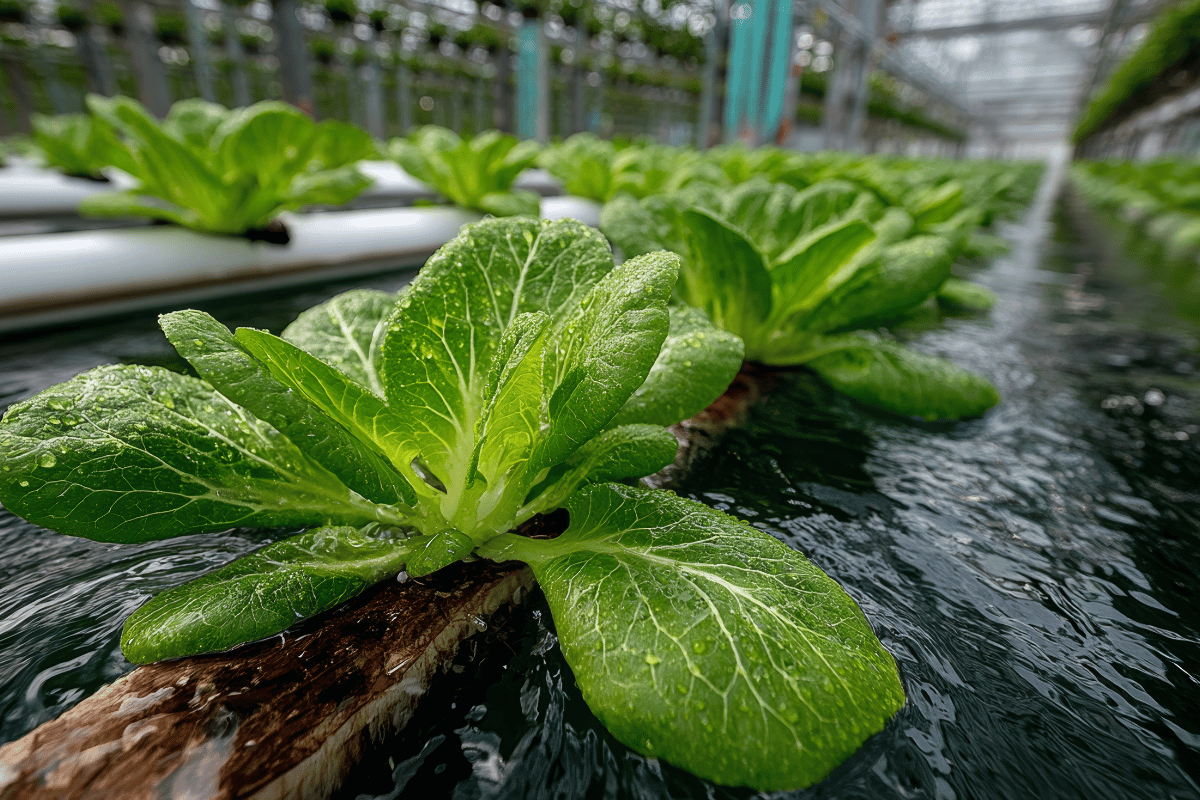
Hydroponic system design for different crops, climates, and production scales
Hydroponic technology is reshaping how we grow food. By cultivating plants in nutrient-rich water rather than soil, growers can reduce water consumption by up to 90% compared to conventional field agriculture while often achieving faster growth and higher yields. Systems such as Nutrient Film Technique (NFT), Deep Water Culture (DWC), Deep Flow Technique (DFT), drip irrigation, and aeroponics give producers the flexibility to grow everything from leafy greens to fruiting vegetables and root crops.
Choosing the right system, however, depends on more than personal preference. Crop type, local climate conditions, and production scale all influence which setup will deliver the best results. This article walks through each of these factors so that growers, whether backyard enthusiasts or commercial operators, can design a hydroponic system tailored to their specific needs.
Matching hydroponic systems to crop types
Not every hydroponic setup works equally well for every crop. Plant size, root structure, nutrient demand, and growth habit all play a role in determining the best system match. The table below provides a general overview.
|
System type |
Best suited crops |
|
NFT (Nutrient Film Technique) |
Leafy greens: lettuce, spinach, herbs |
|
Wick system |
Very small-scale leafy vegetables |
|
Deep Water Culture (DWC) |
Lettuce, basil, some herbs |
|
Drip system |
Tomatoes, cucumbers, peppers |
|
Ebb and flow |
Tomatoes, larger fruiting vegetables |
|
Aeroponics |
Potatoes, strawberries |
|
Aquaponics |
Leafy greens, herbs, some fruiting crops |
Leafy greens and herbs
Leafy greens are among the most common crops in hydroponic production, and for good reason. Fast growth cycles, relatively low nutrient demands, and compact root systems make them well suited to NFT, DWC, and vertical farming tower systems. For optimal results, growers should monitor electrical conductivity (EC), pH, lighting levels, and ambient temperature closely. High plant density and vertical arrangements can significantly boost yield per square meter, making leafy greens a strong choice for urban and space-limited operations.
Crops like lettuce and spinach respond particularly well when root-zone conditions are kept stable, a point that becomes especially important in the climate considerations discussed later in this article.
Fruiting vegetables
Tomatoes, cucumbers, and peppers are typically grown using drip systems or ebb-and-flow setups with a solid growing medium to support their larger root structures. These crops demand higher nutrient concentrations than leafy greens and benefit from precise, individualized drip irrigation control to manage water and nutrient delivery to each plant. The growing medium, whether perlite, rockwool, or coco coir, provides physical support while the nutrient solution handles feeding.
Strawberries and small fruits
Strawberries adapt well to NFT, drip, and aeroponic systems. Growers who invest in automated pH, EC, and moisture monitoring often see measurable improvements in both leaf development and fruit size. AI-assisted control systems represent a newer frontier in hydroponic strawberry cultivation, allowing real-time adjustments that would be difficult to achieve manually.
Root and tuber crops
Crops like potato mini-tubers may seem an unlikely fit for hydroponics, but they can be grown successfully in DWC, ebb-and-flow, NFT, and aeroponic systems. Aeroponics in particular has shown promise for potato production because it exposes tubers to nutrient mist without a substrate, simplifying harvest and reducing disease pressure. However, these systems demand precise oxygen and nutrient management, and the margin for error is narrower than with leafy crops.
Choosing a hydroponic system based on climate
Climate is one of the most influential and often underestimated factors in hydroponic system selection. Temperature and humidity directly affect plant growth, nutrient uptake, and disease risk, so the choice of system should reflect how effectively a grower can manage these variables.
Indoor climate-controlled vs. outdoor systems
Hydroponics performs most reliably inside controlled environment agriculture (CEA) facilities, greenhouses, or indoor grow rooms equipped with heating, cooling, humidity control, and automation. These environments buffer against the temperature swings and humidity spikes that challenge open-field or unprotected hydroponic setups, leading to more consistent yields and better crop quality.
That said, many growers around the world operate hydroponic systems in semi-protected or open-air conditions. In these cases, system selection becomes even more critical because the system itself must compensate for environmental variability.
Why temperature buffering matters
In hydroponic culture, roots sit directly in water or a moisture-saturated medium. This means the nutrient solution temperature essentially determines root-zone temperature, which in turn governs nutrient uptake, dissolved oxygen levels, and overall plant health. Unlike soil-grown crops, where the ground provides a degree of thermal insulation, hydroponic roots are far more exposed to temperature fluctuations.
Solution temperature and crop performance
For leafy greens such as lettuce and spinach, the ideal root-zone temperature generally falls between 18 °C and 22 °C. Within this range, nutrient absorption is efficient and growth rates are strong. When solution temperatures climb above this window, dissolved oxygen drops, root stress increases, and crop quality suffers. In extreme cases, warm root zones can trigger tip burn, bolting, or root pathogens.
System type and thermal stability
In both hot and cold climates, systems with larger nutrient solution volumes offer a meaningful advantage. DWC and DFT systems hold substantially more water than NFT channels or aeroponic misters, and this greater thermal mass slows temperature swings. A large reservoir acts as a buffer: it heats up more slowly during the day and cools more slowly overnight, providing a more stable environment for roots.
For growers in regions with significant diurnal temperature variation, selecting a high-volume system can reduce the need for expensive active cooling or heating equipment. Conversely, NFT and aeroponic systems, with their thin films and fine mists, respond rapidly to ambient temperature changes and may require more infrastructure to maintain optimal conditions.
Advances in temperature management technology
Recent innovation in hydroponic technology has shifted attention toward targeted thermal control rather than simply conditioning greenhouse air. New systems use automated root-zone heating and cooling combined with IoT sensors for real-time temperature monitoring. By stabilizing the root zone directly, these approaches can be more energy-efficient than whole-greenhouse climate control, an important consideration as energy costs continue to rise.
Managing humidity across climates
Humidity management is another climate variable that influences system choice. In high-humidity environments, systems with strong airflow characteristics, such as aeroponics, can help reduce the risk of mold and fungal diseases by keeping foliage drier. In contrast, arid climates call for systems that retain moisture around the root zone. DFT setups and vertical tower systems tend to maintain a humid microclimate around roots, reducing water loss and stress in dry conditions.
Scaling your hydroponic system to match production goals
The appropriate hydroponic system also depends heavily on the scale of production. Budget, available space, labor capacity, and the degree of automation a grower is willing to invest in all factor into the decision.
Household and small-scale systems
For home growers and hobbyists, wick systems and basic DWC setups are popular starting points. They require minimal investment, no pumps or timers in the simplest configurations, and little technical knowledge. These systems work well for growing herbs, lettuce, and other small crops in limited space. The tradeoff is limited scalability and lower yields compared to more sophisticated setups.
Medium-scale operations
At the medium scale, NFT and DWC systems offer a practical balance between cost and productivity. These systems can support meaningful output without the infrastructure demands of fully automated commercial facilities. Increasingly, medium-scale growers are adopting IoT-based monitoring, using smart farming technologies like connected sensors and automated dosing to improve consistency and reduce hands-on labor.
Large-scale commercial farming
Commercial hydroponic operations typically rely on automated NFT, drip irrigation, aeroponics, or aquaponics systems. At this scale, the emphasis shifts toward maximizing resource efficiency, maintaining sustainable farming practices, and reducing labor costs through automation. High-throughput systems with centralized nutrient management, climate control integration, and data-driven decision-making dominate, as the initial investment is justified by yield potential and long-term operating efficiency.
Research consistently shows that the most successful commercial operations balance technical capability with economic reality. The highest-tech system is not always the best choice; rather, the right system is the one that matches a grower's resources, market, and management capacity.
Conclusion
Hydroponic technology offers a flexible and resource-efficient path to productive crop cultivation, but there is no one-size-fits-all system. The best choice depends on what you are growing, where you are growing it, and at what scale.
Crop type determines the physical demands of the system: leafy greens thrive in NFT and DWC, fruiting crops need drip or ebb-and-flow with solid media, and specialty crops like strawberries and potatoes open the door to aeroponics. Climate conditions, particularly temperature and humidity, dictate how much environmental control infrastructure a grower will need and whether high-volume or low-volume systems are more practical. Production scale shapes the economics: simple setups work for households, while commercial viability demands automation and data integration.
By carefully weighing these three factors, growers can design hydroponic systems that optimize resource use, improve yields, and build toward a more sustainable agricultural future.
References
- Food and Agriculture Organization of the United Nations (FAO). (2018). The future of food and agriculture: Alternative pathways to 2050. Rome, Italy: FAO.
- Kumar, S., Singh, M., Yadav, K. K., & Singh, P. K. (2021). Opportunities and constraints in hydroponic production systems: A review. Environment Conservation Journal, 22(3), 401–408.
- Rani, R., Sharma, P., & Kumar, A. (2024). Analysis of the environmental parameters of hydroponic crops grown under polyhouse conditions in different seasons. International Journal of Environment and Climate Change, 14(11), 964–972.
- Rozitawati, R. (2020). Introduction of soil cultivation (hydroponic system) to improve quality and quantity of vegetable horticulture results. International Journal of Agriculture and Environmental Research, 6(1), 1–9. [Direct URL not available]
- Velazquez-Gonzalez, R. S., Garcia-Garcia, A. L., Ventura-Zapata, E., Barceinas-Sanchez, J. D. O., & Sosa-Savedra, J. C. (2022). A review on hydroponics and the technologies associated with medium- and small-scale operations. Agriculture, 12(5), 646.