


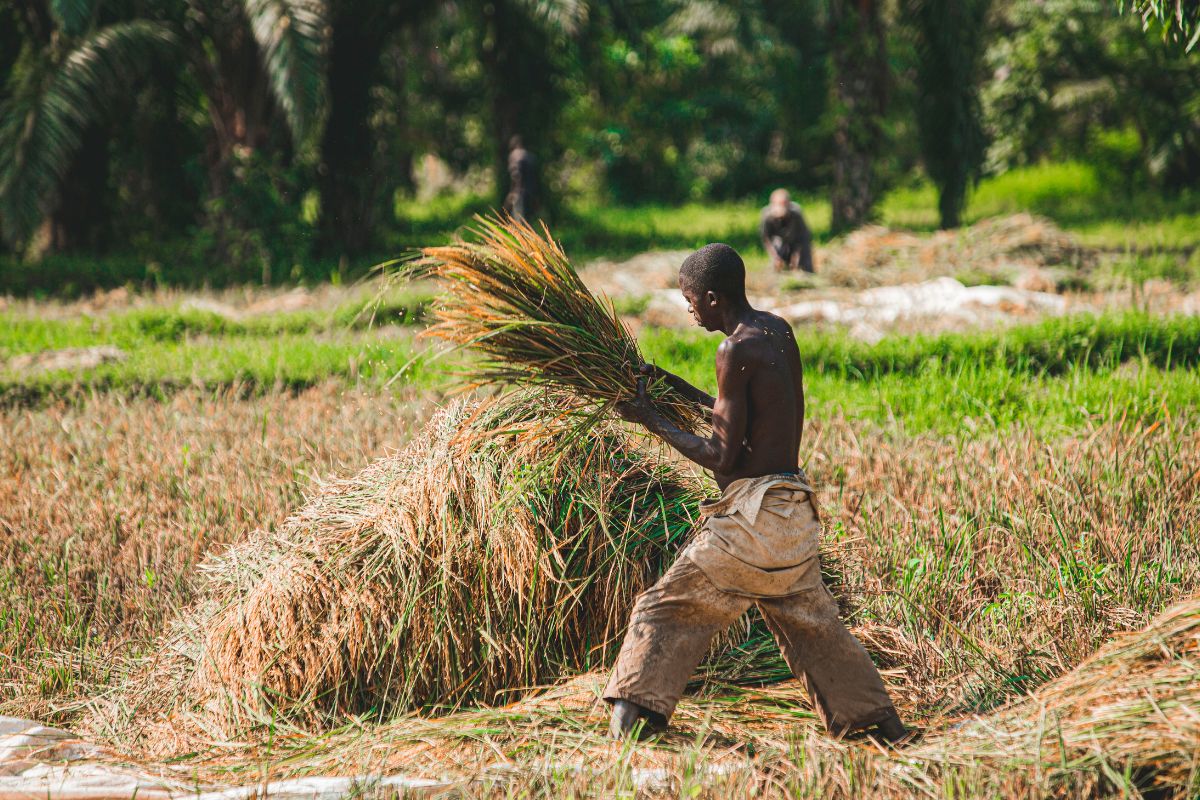
Across rice-growing regions in Nigeria, farmers are facing a climate challenge that affects not only their own harvests and livelihoods but also the food security of millions. For these farmers, adapting to changing weather patterns is a matter of survival.
Rice is a staple crop in Nigerian diets. However, floods, shifting rainfall patterns, droughts, and rising temperatures are putting rice production under strain across the country. For example, the flooding disaster in 2022 (reported by the National Bureau of Statistics) led to the complete destruction of rice farms. As the country strives to increase local rice production to reduce reliance on imports, climate impacts threaten farmer incomes and the national food supply without effective adaptation.
Over the past year, I conducted a systematic review of research on how Nigerian rice farmers respond to climate stress through agronomic practices, that is, how they are adjusting how they manage crops and land to cope with these new realities. The findings offer important lessons for Nigeria and for anyone concerned with building more resilient agrifood systems in a changing climate.
Why rice, and why now?
As mentioned earlier, rice is one of Nigeria's most important crops, grown across all the country's agroecological zones. It is important for rural livelihoods, economic growth, and food security. However, rice farming is highly vulnerable to climate impacts.
- Rainfall patterns are changing: In some regions, the rainy season starts late or ends early, disrupting planting and harvesting.
- Floods are increasing: Heavy rains cause destructive floods in lowland areas, washing away young rice plants.
- Drought is spreading: In drier parts of the country, water shortages threaten yields and limit planting.
- Temperature extremes: Increasing temperatures affect grain quality and growth.
Without effective strategies to adapt to these climate challenges, both farmers and consumers face increasing risks ranging from income loss to rising food prices and reduced dietary diversity.
What are farmers doing to adapt?
While I reviewed 17 studies from across Nigeria, I found a wide range of agronomic adaptation practices already in use. Nigerian rice farmers are not waiting passively for solutions; they are innovative in protecting their crops and maintaining production.
Some of the most common strategies adopted include:
1. Improved rice varieties
One of the most widespread responses is the adoption of improved rice varieties. These include drought-tolerant, flood-tolerant, and early maturing varieties that align better with recent weather patterns.
- Drought-tolerant varieties that can withstand dry periods.
- Flood-tolerant varieties are suitable for lowland areas prone to waterlogging.
- Early maturing varieties that allow farmers to adjust planting calendars to match changing weather patterns.
The International Rice Research Institute (IRRI) has developed and is still developing several ‘climate change-ready' rice varieties. Improved varieties can help farmers manage risks and stabilize yields. However, access to high-quality seeds remains limited and expensive, especially for smallholder farmers.
2. Effective water management
With rainfall becoming less reliable, farmers are turning to various water management techniques:
- Small-scale irrigation systems, where available, help farmers supplement rainfall and maintain crop growth during dry periods.
- Rainwater harvesting and shallow well construction offer low-cost ways to improve water availability.
- Drainage channels are being used in flood-prone areas to protect fields from waterlogging.
Water management is a critical adaptation strategy, but infrastructure and financial constraints limit its widespread adoption.
3. Conserving soil and water
In some cases, farmers are adopting simple but effective techniques to conserve soil and retain moisture:
- Mulching helps reduce evaporation and suppress weeds.
- Direct-seeded rice ensures water and nutrient retention.
- Cover cropping protects soil during off-seasons and improves fertility.
These practices not only help manage water stress but also contribute to longer-term soil health.
4. Adjusting planting schedules
In response to changing rainfall patterns, many farmers employ earlier planting to avoid peak periods of flood or drought. Flexibility in timing is becoming an essential tool for managing risk.
However, adjusting planting dates requires access to reliable climate information, which is often lacking at the local level.
5. Diversifying crops and livelihoods
Crop diversification is another important strategy. By integrating rice with legumes or vegetables, farmers can:
- Improve soil fertility
- Spread production risks and costs across multiple crops
- Increase income options if rice yields are reduced
Diversification is also important for nutritional security, helping maintain dietary diversity even in difficult growing seasons.
Barriers to adaptation
While these strategies show that farmers are actively adapting, several challenges remain:
- Limited access to information: Many farmers (especially local farmers) lack reliable, localized climate forecasts or advice on which adaptation practices work best in their region.
- Financial barriers: Improved seed, irrigation infrastructure, and soil amendments require investment that is not accessible for many smallholder farmers.
- Gaps in extension services: Agricultural extension systems are not always equipped to provide the targeted, climate-smart advice farmers need.
The review also revealed that adaptation is not uniform across regions. The choice of strategies often depends on a mix of agroecological conditions, available infrastructure, and the kind of support farmers can access. For example, farmers in northern Nigeria, where rainfall is more erratic, tend to prioritize early maturing and drought-tolerant varieties. Meanwhile, drainage systems and raised bed planting are more common in flood-prone lowland areas. These differences highlight the importance of local context in shaping adaptation.
In addition, access to information plays a crucial role. In regions where agricultural extension services are stronger or where community-based organizations are active, farmers are more likely to adopt long-term adaptation strategies. In contrast, those with limited support often rely on short-term coping mechanisms that may not be sustainable. This variation underscores the need for targeted investment in farmer education, extension systems, and local field research. Supporting adaptation is not just about making new technologies available; it is about ensuring farmers have the knowledge and confidence to apply them effectively. Without that, even the best innovations may fail to take root where they are most needed.
Addressing these barriers will be essential to scaling up successful adaptation strategies in Nigeria.
Lessons beyond Nigeria
Although this review focused on rice farming in Nigeria, the lessons are relevant for farming communities worldwide. The experience of Nigerian rice farmers highlights several key principles for building climate resilience:
- Farmer knowledge matters: Farmers are already innovating and adapting based on their local experience. This knowledge should be valued, supported, and improved inclusively.
- Information provision is key: Timely, practical information can help farmers make informed decisions about planting, water use, and risk management. This is where accessible weather forecast technology and financial institutions come in to ensure climate and financial resilience.
- Adaptation requires flexibility: Climate-smart farming is not a one-size-fits-all approach, meaning that solutions must be tailored to local contexts.
- Policy support is essential: Farmers need supportive policies that improve access to resources, infrastructure, and extension services.
Moving forward
To protect both farmers' livelihoods and national food security, several actions are needed:
- Strengthen research and monitoring: More field-based research is needed to rigorously assess the effectiveness of adaptation practices under different climate scenarios. In addition, encouraging basic record-keeping among local farmers can also help generate useful data for future research and policy.
- Improve extension services: Extension agents should be equipped with up-to-date climate information and trained in promoting climate-smart practices.
- Enhance access to finance and inputs: Credit facilities, seed distribution, and irrigation support can help make adaptation technologies affordable and accessible.
- Promote farmer-to-farmer learning: Peer networks and participatory learning can accelerate the spread of successful practices.
As climate impacts intensify, building resilience in food systems will be an ongoing challenge. The experience of Nigerian rice farmers shows that adaptation is already happening, but also that more support is needed to ensure that all farmers, regardless of location or resources, can protect their crops and contribute to national food security.
Importantly, the lessons from farmers on the front lines of adaptation will become ever more valuable. These farmers are not only feeding their communities; they are teaching resilience. Whether in Nigeria’s rice fields or in agricultural systems around the world, supporting farmers with the right tools, information, and resources will be critical to protecting crops, livelihoods, and food security for all.
Disclosure: This article is based on selected insights from a systematic review conducted as part of my master’s dissertation at the University of Glasgow. The full academic paper is currently being prepared for submission to a peer-reviewed journal.