


Globally, farmers are faced with the challenge of producing more food while conserving or protecting the ecosystem. By 2050, the global population is projected to exceed 9 billion, communicating the rise in demand for food, fiber, and energy as well. Being able to meet these demands requires not only intensive farming to increase yields but also ensuring that farming practices are sustainable and regenerative.
Amongst the various challenges associated with intensive, the persisting and ubiquitous challenge is managing nutrients especially nitrogen, effectively to promote crop growth by meeting the required crop demands. Nitrogen, an essential nutrient for crop growth, is mostly lost from agricultural fields. This loss not only has negative financial impacts for the farmers, but most importantly pollutes the water bodies and the atmosphere through surface runoff, leaching, and gaseous emissions (Johnson et al., 2024). Smarter nitrogen management can help farmers save costs, increase productivity, and concurrently protect the ecosystem.
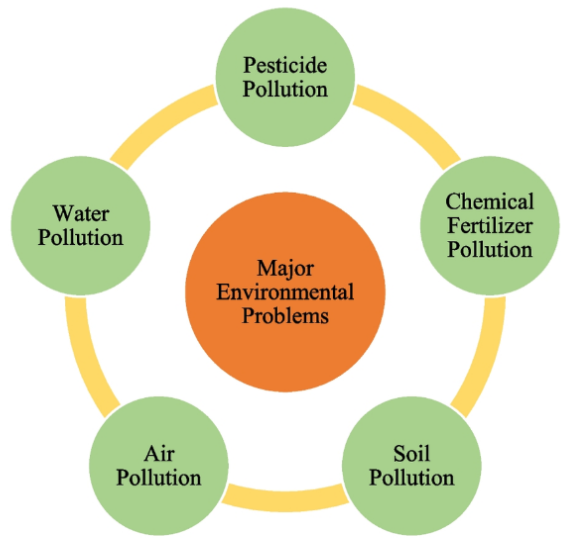
Figure 1: Impacts of agriculture on the environment
The problem with nitrogen losses in agriculture
For decades, intensive farming has boosted production and yield. However, the overreliance on synthetic fertilizers, continuous monocropping, and frequent tillage has drastically degraded soils and increased the risk of nutrient losses (Wilson et al., 2025). Fertilizers when not applied in the appropriate quantities or wrong application timing often results in exacerbated loss of nitrogen via the surface runoff and leaching of nitrate and the emission of nitrous oxide, a greenhouse gas with a global warming potential 273 greater than carbon dioxide (Chadwick et al., 2000), either from the surface of agricultural fields or dissolve nitrous oxide from subsurface drainage (Figure 1).
Conventional tillage changes the soil structure, causing the soil to lose properties such as the water holding capacity, porosity, aeration, and many more, which in turn negatively impacts the soil biome and ecosystem (Sumberg & Giller, 2022), thus drastically reducing the soil fertility. Addressing these challenges requires strategies that maximize production, minimize nutrient losses, and promote soil health and fertility.
Sustainable strategies for smarter nitrogen management
Farmers have a range of practices to build soil resilience, including:
Crop rotation, conservation tillage, cover crop adoption, organic amendments, and integrated nutrient management are just a few examples to help build resilience. Most farmers have recently encouraged and adopted cover crops and organic amendments. These strategies have been touted to alleviate the negative impacts of intensive and conventional agriculture and improve soil health and fertility (Agbede et al., 2017; Blanco-Canqui, 2018; Maeder et al., 2002). Now let's take a look at why these practices are being encouraged.
Cover crops: Capturing nitrogen and protecting soil
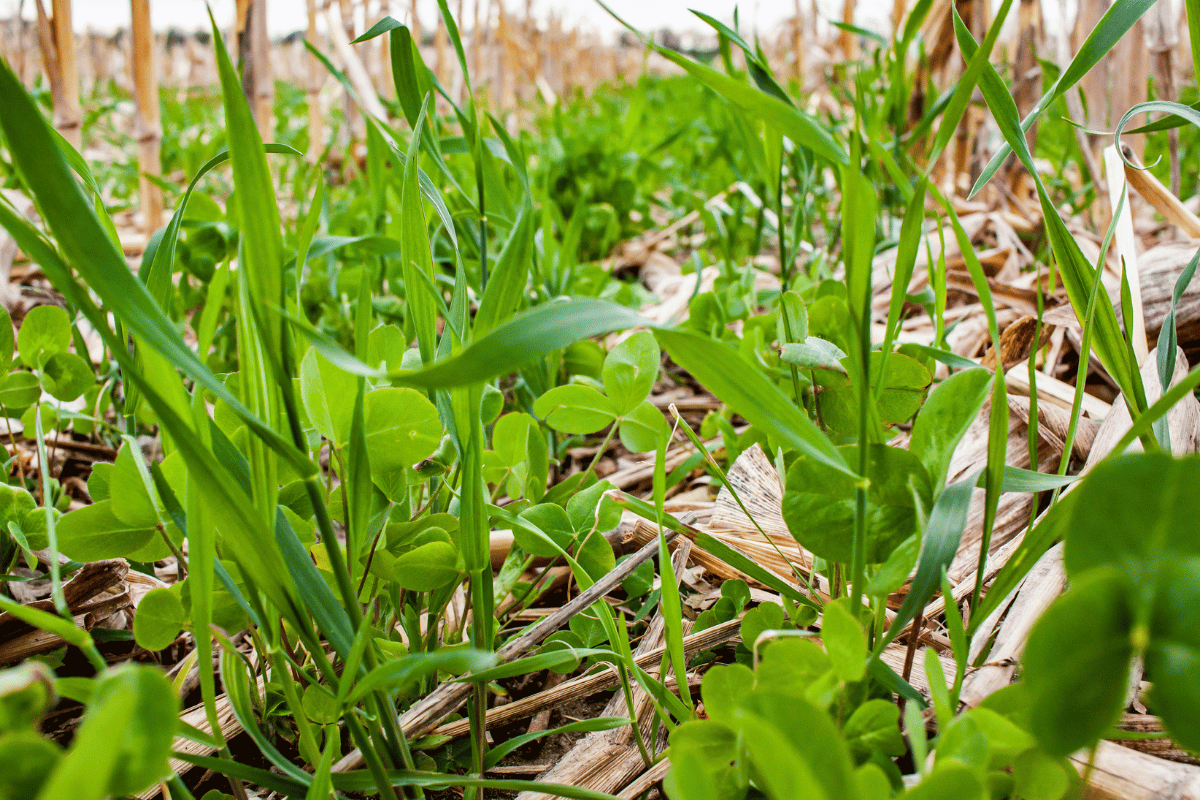
Cover crops, plants not grown for harvest, serve as nature’s living shield by capturing leftover nitrogen that might otherwise leach, protect the soil from erosion, and add organic matter to the soil after decomposition when added to the soil termination (Thapa et al., 2018). Their roots improve soil structure by creating pores that allow the easy movement of water in the soil structure for easy plant root access. At the same time, their biomass provides sustenance for soil microbes and contributes to long-term soil fertility (Figure 2). However, there are various factors that can affect the efficiency of the cover crop. These include the species, timing of planting, and timing of termination.
Organic amendments: Slow-release nutrients and soil improvement
Organic amendments such as animal manure and green manure have been noted to provide an essential pathway for improving plant nitrogen use. Unlike inorganic or synthetic fertilizers, which release nitrogen quickly and can easily be lost to the environment, organic amendments release nutrients gradually, better matching crop needs over time (Diacono & Montemurro, 2011). These also improve the soil structure, enhance water retention, and build up organic matter (Agbede et al., 2017). For better nutrient use efficiency, organic amendments should be incorporated in the soil instead of leaving them on the soil surface after application to minimize surface losses and make the nutrients available to the plant roots. Avoiding application just before heavy rainfall further reduces the risk of runoff and leaching. In this way, organic amendments turn what might be considered waste into a valuable resource that sustains crops and soil health.
Combining cover crops and organic amendments
So what if these practices are used in conjunction with each other? Are there any differences? let's find out! . Cover crops capture nitrogen that might otherwise be lost, while organic amendments provide a steady release of nutrients and improve the soil’s physical and biological properties. This combination creates a cycle where fewer nutrients are wasted, soils become healthier, and crop yields improve (Dai et al., 2025). At the same time, these strategies reduce environmental risks such as nitrate contamination of surface and groundwater and greenhouse gas emissions. Whether implemented on a large mechanized farm or a smallholder plot, these practices can be adapted to local conditions, making them universally useful for farmers seeking to improve productivity while protecting natural resources.
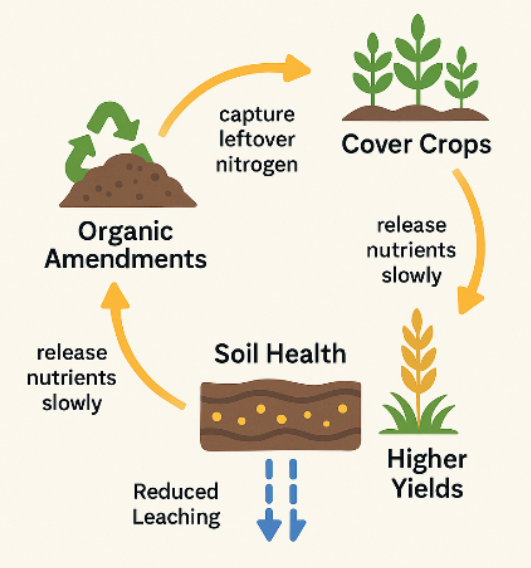
Figure 2: Benefits of cover crops and organic amendments to improve soil health and nutrient losses
A farmer-focused pathway to sustainable agriculture
Smarter nitrogen management is not just about science, but empowering farmers and stakeholders with practical tools. By capturing nutrients, recycling organic waste, and building healthy soils, farmers can reduce input costs, recycle organic waste and contribute to sustainable and resilient environments.
In the face of rising global food demand, smarter nitrogen management offers a pathway for agriculture that is productive, sustainable, and resilient. Cover crops and organic fertilizers are practical, affordable, and effective tools that farmers around the world can use to build healthier soils, reduce waste, and secure the future of farming for generations to come.
References
Agbede, T. M., Adekiya, A. O., & Eifediyi, E. K. (2017). Impact of Poultry Manure and NPK Fertilizer On Soil Physical Properties and Growth and Yield of Carrot. Journal of Horticultural Research, 25(1), 81–88.
Chadwick, D. R., Pain, B. F., & Brookman, S. K. E. (2000). Nitrous Oxide and Methane Emissions following Application of Animal Manures to Grassland. Journal of Environmental Quality, 29(1), 277–287.
Dai, W., Feng, G., Adeli, A., Brooks, J. P., Jeong, C., & Zhang, X. (2025). Impact of winter cover crop and soil amendments on total and aggregate-associated nitrogen in a no-till corn field. Npj Sustainable Agriculture, 3(1), 39.
Diacono, M., & Montemurro, F. (2011). Long-Term Effects of Organic Amendments on Soil Fertility. In E. Lichtfouse, M. Hamelin, M. Navarrete, & P. Debaeke (Eds.), Sustainable Agriculture Volume 2 (pp. 761–786). Springer Netherlands.
Johnson, F. E., Roth, R. T., Ruffatti, M. D., & Armstrong, S. D. (2024). Cover crop impacts on nitrogen losses and environmental damage cost. Agriculture, Ecosystems & Environment, 363, 108859.
Sumberg, J., & Giller, K. E. (2022). What is ‘conventional’ agriculture? Global Food Security, 32, 100617.
Thapa, R., Mirsky, S. B., & Tully, K. L. (2018). Cover Crops Reduce Nitrate Leaching in Agroecosystems: A Global Meta-Analysis. JOURNAL OF ENVIRONMENTAL QUALITY, 47(6), 1400–1411.
Wilson, K. R., Hendrickson, M. K., & Myers, R. L. (2025). A buzzword, a “win-win”, or a signal towards the future of agriculture? A critical analysis of regenerative agriculture. Agriculture and Human Values, 42(1), 257–269.