Integrating trees with crops to boost farm income and climate resilience
Agroforestry, the integration of trees with crops or livestock, is increasingly seen as a practical and climate-smart farming approach. Trees support soil health, protect yields, improve microclimates, and diversify farm income. In recent years, agroforestry has also opened the door to carbon credits, which reward farmers for storing carbon in trees and soils.
This article explains how agroforestry systems work, how they can generate carbon credits, and what farmers, cooperatives, and advisers should carefully evaluate before joining an agroforestry carbon programme.
What agroforestry is
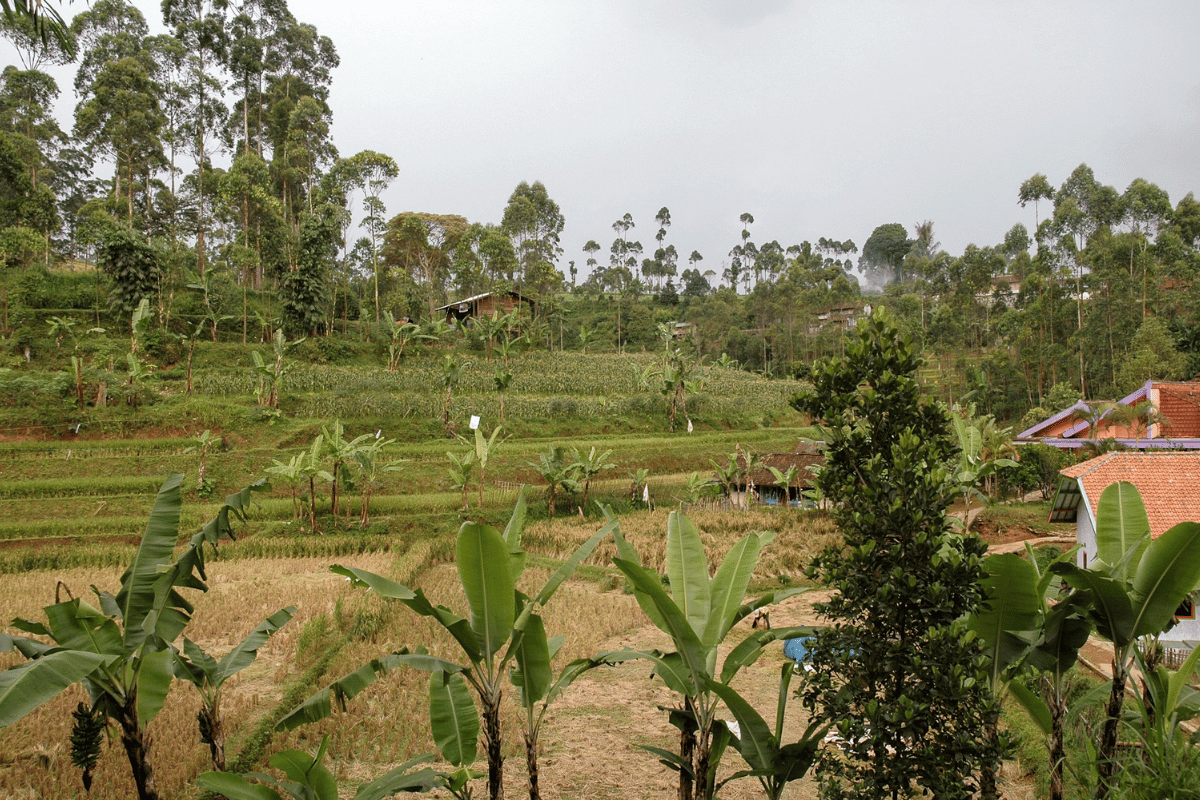
Agroforestry is the intentional integration of trees with annual crops or livestock within the same landscape, designed so that all components interact and benefit one another. Trees improve soil structure and fertility through root activity and organic matter inputs, and they regulate water cycles by reducing erosion and enhancing infiltration. By shading fields and breaking the wind, they stabilize microclimates, which lowers heat stress on crops and animals and reduces climate-related risks. Well-planned agroforestry intercropping with trees can increase biodiversity, provide additional products such as fruit, fodder, or timber, and create more resilient farm livelihoods over the long term.
Common agroforestry systems include alley cropping with rows of trees planted between crop lanes, silvopasture combining trees with grazing livestock, riparian planting along rivers and streams, mixed orchards with understory crops, and windbreaks and shelterbelts. These systems support both short-term productivity and long-term ecosystem resilience.
Common agroforestry systems
Typical agroforestry systems include:
- Alley cropping with rows of trees and crops grown between them
- Silvopasture combining trees and grazing livestock
- Riparian planting along rivers and streams
- Mixed orchards with understory crops
- Windbreaks and shelterbelts around fields
These systems support short-term production while building long-term ecosystem resilience.
Why agroforestry matters for climate-smart agriculture
Agroforestry aligns with climate-smart agriculture because it delivers environmental and economic benefits. Trees absorb CO₂ as they grow, storing carbon in biomass and soil. Roots improve soil structure, organic matter, and water retention, contributing to overall soil health. Trees create habitats and ecological corridors, protecting biodiversity. Shade reduces heat stress on crops and livestock, regulating microclimates. Multiple income streams come from fruit, nuts, timber, fodder, and carbon credits.
Trees store carbon over many years, and agroforestry systems can deliver strong long-term carbon sequestration when properly maintained. While permanence risks exist—as with all nature-based solutions—carbon standards manage them through buffer pools, monitoring, and long-term commitments.
What a carbon credit means in agroforestry
A carbon credit represents one metric ton of carbon dioxide that has been removed from the atmosphere or avoided. In agroforestry projects, credits usually come from carbon removals, since trees absorb and store carbon as they grow.
Carbon is stored in:
- Tree trunks, branches, and leaves
- Root biomass
- Soil organic matter that increases under tree-based systems
These removals are measured, verified, and converted into tradable carbon credits.
How farmers generate carbon credits through agroforestry
To earn carbon credits, farmers need to implement agroforestry systems that are recognised by approved carbon standards and document their practices so carbon removals can be verified.
Common agroforestry practices eligible for carbon credits
|
Practice |
Climate Benefit |
Description |
|
Alley cropping |
Stores carbon in biomass + soil |
Rows of trees planted between crop lanes increase root mass, soil organic matter, and long-term carbon storage. |
|
Silvopasture |
Improves soil and reduces emissions |
Integrates livestock and trees, creating long-term carbon sinks while improving pasture productivity. |
|
Riparian tree planting |
Protects water & sequesters carbon |
Trees planted along streams reduce erosion, protect water quality, and store CO₂ in biomass and soil. |
|
Mixed orchards |
Long-term carbon removal |
Fruit or nut trees generate annual yields while accumulating biomass for decades. |
|
Windbreaks and shelterbelts |
Reduce erosion & support carbon storage |
Lines of trees planted around fields protect crops from wind, improve microclimates, reduce soil loss, and store carbon in above- and below-ground biomass. |
From trees to carbon revenue
The process typically follows several steps.
First, the farmer selects an agroforestry practice that is eligible under an approved carbon methodology. Eligibility depends on land type, tree species, minimum area, and planting design.
Next, additionality and leakage are assessed. The project must show that tree planting goes beyond normal practice and is not already required by law. It must also show that it does not shift deforestation or land-use change elsewhere.
A baseline is then established, describing how the land would be managed and how much carbon it would store without the new agroforestry system.
Farmers plant and maintain trees according to programme rules, which usually include minimum planting densities, eligible species, spacing, and survival thresholds. Long-term commitments are common, often 10 to 20 years or more. A share of credits is often placed in a risk buffer to cover losses from fire, drought, or disease.
Farmers or project developers document tree density, growth, and survival using field data, photos, GPS mapping, and remote sensing. Management practices and social and environmental safeguards are also recorded.
An independent third-party auditor verifies the project. Once verified, carbon credits are issued under a recognised standard and sold to buyers. Revenues are shared according to agreed terms between farmers, cooperatives, and project developers.
Carbon standards covering agroforestry
Several carbon standards and frameworks certify agroforestry and tree-based carbon projects.
- Verra Verified Carbon Standard, covering agroforestry under AFOLU and ARR methodologies
- Gold Standard for the Global Goals, with strong emphasis on smallholders and sustainable development outcomes
- Plan Vivo Standard, commonly used for community-based agroforestry projects
- American Carbon Registry, often used for large-scale or corporate land-use projects
- Climate Action Reserve, mainly applied in North America with protocol-based approaches
- ART TREES, a jurisdictional framework relevant for landscape-level approaches
- Article 6 mechanisms under the Paris Agreement, which may apply where host-country authorisation is required
Each framework differs in scale, monitoring requirements, and market access.

Key requirements and risks to assess
Before joining a programme, farmers and advisers should evaluate several critical factors.
Land tenure must be clear and documented, especially on leased or communal land. Permanence commitments usually require trees to remain in place for many years. Additionality must be demonstrated, and leakage risks must be addressed. Programme costs and revenue sharing should be transparent. Farmers should also understand how and when payments will be made.
Choosing the right standard and project pathway
|
Standard |
What it is commonly used for |
How agroforestry is covered |
When it makes sense |
|
Verra – VCS |
Scalable agroforestry and regenerative agriculture projects |
Afforestation, reforestation, and sustainable agriculture methodologies under the AFOLU framework (including tree biomass and, in some cases, soil carbon) |
When projects target scale, corporate buyers, and high market recognition |
|
Gold Standard for the Global Goals |
Agroforestry projects with strong social and environmental objectives |
Land-use and soil carbon methodologies integrating trees into cropland and pasture systems |
When smallholders, livelihoods, and co-benefits are central to the project |
|
American Carbon Registry (ACR) |
Structurally robust land-use and agroforestry projects |
Forest and land-use methodologies covering tree planting and improved land management |
When conservative accounting and technical rigor are required |
|
Climate Action Reserve (CAR) |
Standardized land-use and forest carbon projects (mainly North America) |
Protocol-based approaches for forest and tree-based systems |
When operating in regulated or highly standardized environments |
Once region, farm size, and project scale are defined, the most suitable pathway can be selected.
Why farmers combine agroforestry with carbon credits
Agroforestry strengthens production systems while opening an additional income stream.
Trees provide products such as fruit, nuts, timber, or fodder. Carbon credits offer separate revenue linked to climate benefits. Soils improve over time, supporting more stable yields. Trees also reduce climate stress by moderating temperature, wind, and moisture conditions. Many buyers increasingly value regenerative practices, which can improve market access.
Constraints farmers should understand
Agroforestry carbon projects require long-term commitments. Monitoring and verification can involve costs. Tree survival thresholds must be met, sometimes requiring replanting. Eligibility rules apply to land history and existing carbon enrolment. Carbon credit prices can vary depending on market conditions and project quality.
Field example from East Africa
In Kenya, Rwanda, and Uganda, agroforestry programmes under the Plan Vivo Standard have expanded through farmer cooperatives and local organisations. Smallholders integrate fruit trees, nitrogen-fixing species, and timber trees into existing cropping systems.
Trees are planted along field boundaries, within crop rows, or on degraded land. These systems generate carbon credits, provide early income from fruit and fodder, reduce erosion, improve water infiltration, and strengthen resilience to heat and drought.
Carbon removals are monitored using field measurements and remote sensing and verified by independent auditors. Payments are made regularly, with part of the revenue reinvested in nurseries, training, and seedling supply.
Conclusion
Agroforestry is both climate-smart and economically practical. By integrating trees with crops or livestock, farmers improve soil health, reduce climate risks, and diversify production.
Carbon credits create an additional opportunity, but they require planning, long-term commitment, monitoring, and collaboration with certified project developers. When well designed, agroforestry systems can deliver lasting ecological benefits while allowing farmers to participate in emerging carbon markets.
Sources
- Plan Vivo Foundation – Plan Vivo Standard and agroforestry project documentation
- FAO – Food and Agriculture Organization of the United Nations – Agroforestry and Climate-Smart Agriculture
- CIFOR–ICRAF (World Agroforestry) – Agroforestry, carbon sequestration, and smallholder resilience
- World Bank – State and Trends of Carbon Pricing
- TechnoServe / CASA Programme (2022) – Carbon finance for smallholder farmers and agribusinesses: Agroforestry solutions
- Integrity Council for the Voluntary Carbon Market (ICVCM) – Sustainable agriculture and high-integrity carbon credits
- Sustainable Agriculture — Integrity Council for the Voluntary Carbon Market
- Gold Standard – Land use, forestry, and agriculture methodologies
- Methodologies — Gold Standard for the Global Goals
- SustainCERT – Overview of Verra and the Verified Carbon Standard (VCS)
- What Are Verra and the Verified Carbon Standard
- EOS Data Analytics – Carbon credits for farmers: How it works