


Introduction
Nigeria is a vast agricultural country endowed with substantial natural resources, including about 79 million hectares of arable land, freshwater resources covering about 12 million hectares, 853 kilometers of coastline, and ecological diversity that enables the production of a wide variety of crops, livestock, forestry, and fishery products. Agriculture has high potential for employment generation, food security, and poverty reduction. However, most of these potentials have remained largely untapped, notwithstanding the numerous programmes and policies of past governments (FGN, 2008).
About 8.4% of the world’s population lived in extreme poverty at the end of 2022, based on the international poverty line of living on less than $2.15 per day. Based on the current trajectory, 7.3% (or 622 million people) are projected to live in extreme poverty in 2030. To enable people living in poverty to benefit more from and contribute to growth, as well as enhance their resilience in the face of increasing shocks, the creation of more and better jobs cannot be over-emphasized. Also, investing in education, infrastructure, and basic services must be embarked upon.
Contributions of Agriculture to Economic Growth and Poverty Reduction in Nigeria
Diverse Climatic Conditions and Crop Production
The relatively diverse variety of climatic conditions in Nigeria makes it possible to raise a wide range of crops across the country. The climate varies from the desert-like and savanna in the north and central regions to the thick rainforests of the southern region. The major crops grown in economic quantities in Nigeria include cowpeas, sesame, cashew nuts, cassava, cocoa beans, groundnuts, kolanut, maize, millet, oil palm, plantain and banana, rice, rubber, sorghum, soybeans, and yams.
Agriculture’s Economic Roles
Agriculture’s contribution to economic growth and poverty reduction in Nigeria can be examined through the roles of the sector in the economy. These roles can be summarized in five inter-sectoral areas: food, labour, market, domestic savings, and foreign exchange.
1. Supply of Food for Domestic Consumption and Export
The most important basic role of the agricultural sector in poverty reduction is, perhaps, the supply of food for both domestic consumption and export. Direct contributions of food production can be through income generated from sales of farm produce and returns from economic activities related to production, or indirectly from increased capacity to partake in any form of economic activity through improved diet. The agricultural sector contributes to economic growth through provision of better caloric intake and food availability.
The attainment of global food security and reduction of hunger hinges largely on this singular role. According to FAO (2005), agriculture can facilitate the attainment of all 8 MDGs through the direct or indirect linkages to food availability and poverty reduction. In 2008, UNDP reported that the 12.6% reduction recorded in the proportion of underweight children between 1990 and 2008 can be attributed largely to growth in the agricultural sector in Nigeria (UNDP, 2008).
2. Provision of Markets
An increase in agricultural growth results in an increase in the income level of the poorest of the population. Results from cross-country regressions among developing countries showed that a $1 increase in GDP results in significantly more poverty reduction when the growth is in agriculture rather than other sectors (Lipton, 2012). This sectoral growth increases the incomes and therefore purchasing power of farmers, resulting in a vibrant domestic market for other sectors, hence growth in the economy.
3. Increased Domestic Savings
Agriculture contributes to economic growth by increasing the incomes of the majority of the population, thereby strengthening their saving capacity. Results from an IFPRI publication on Ethiopia’s growth and transformation plan show that increased domestic savings is imperative to the achievement of higher total productivity (Engida et al., 2011), implying that domestic savings largely influence the growth path of the economy.
4. Foreign Exchange Earnings
After oil, agriculture is the next highest foreign exchange earner for Nigeria (Kareem et al., 2019; Nnoli et al., 2023). Nigeria’s top foreign exchange-earning crops vary from time to time depending on market trends and production levels. The top contenders include sesame, cocoa beans, cashew nuts, and ginger (NBS, 2020).
5. Employment of Labour
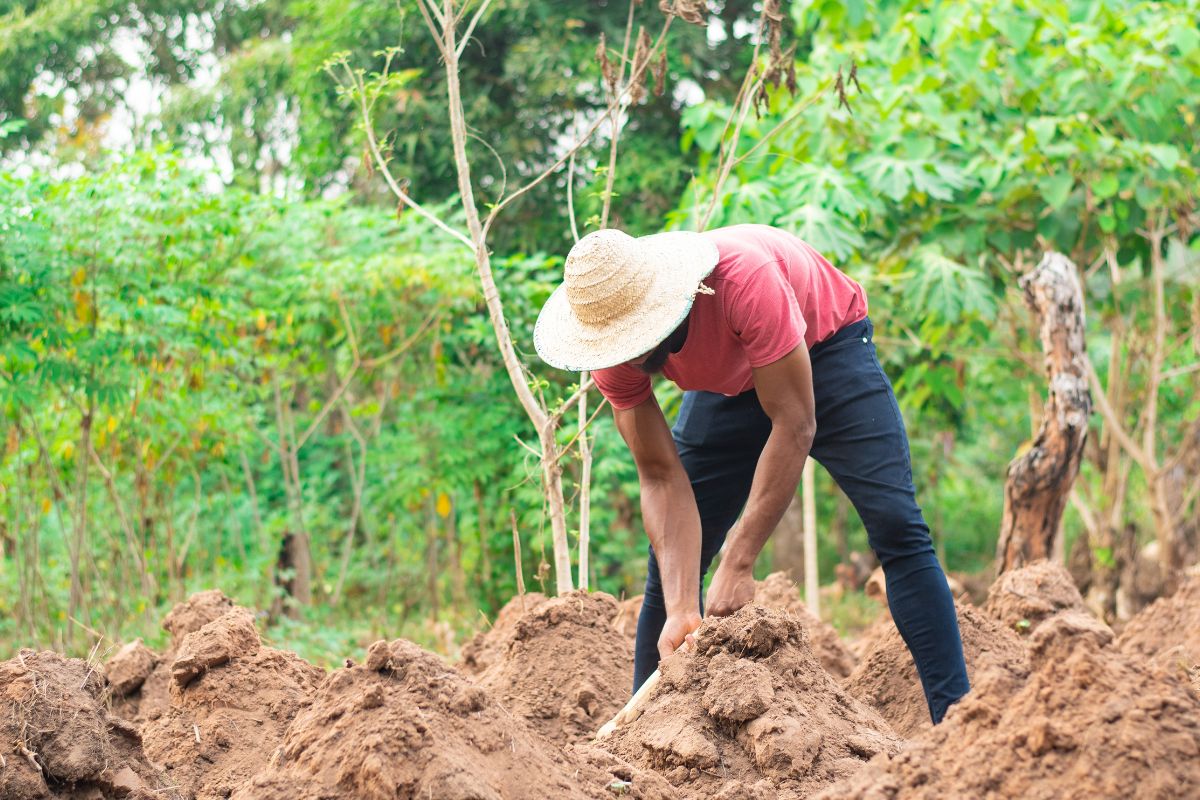
The unemployment rate for youths is currently three times that of adults in all regions of the world (FAO, 2021). In Africa, especially, two-thirds of youths are unemployed or working in vulnerable, low-paying positions. Agriculture is the single highest employer of labour in Nigeria, most especially in the rural areas. Many young people are picking up agriculture as an alternative after leaving school. To unlock the potential of the agricultural sector, the vital contribution of youths in the sector to national development cannot be over-emphasized. Youths in agriculture and food production play an important role in addressing unemployment and food insecurity. For rural youths in particular, new business creation in the agriculture sector can present an important and viable opportunity to earn a decent living.
How Can Technology Help Agriculture?
Young people, especially, can be encouraged to participate in agriculture with the right support. Despite their skepticism, many consider agriculture an accessible means of livelihood important to the nation’s development. Technology is pivotal to transforming agriculture by improving both how it is perceived and its productivity, as it has significant potential to improve efficiency, equity, and environmental sustainability in the food system. A few examples of the use of technology in agriculture include precision agriculture, farm automation, tissue culture, artificial insemination, water management technology, and robotics.
Conclusion
The role of agriculture in bringing Nigeria out of poverty cannot be overemphasized. As it stands now, this role is in the ascendancy because of the current surge in the adoption of technology and climate-smart agriculture. The citizens of Nigeria should focus more on agriculture because it is extremely important, highly sustainable, and, sadly, largely under-explored.
References
FAO (2012). Country Profile Food Security Indicator, Nigeria. www.fao.org/fileadmin/templates/
ess/documents/food_security_statistics/country_profiles/eng/Nigeria_E.pdf
FAOSTAT (2009). Ecowasfta (PDF) – Worldtradelaw
FGN (2008). Federal Government of Nigeria.National Food Security Programme.Federal Ministry
of Agriculture and Water Resources publication, Abuja, Nigeria.
Kareem, R. O., Raheem, K. A., Arije, A. R. Sillah, B. F., Bashir, N. O. and Avovome, H. Y. (2017). Exchange Rate Volatility and Agricultural Exports in Nigeria (1981 - 2016). Moor Journal of Agricultural Research 19: 181-197.
NBS (2012). National Bureau of Statistics.Nigeria Poverty Profile 2012.
www.nigerianstat.gov.pdfuploads/
Sodangi, I.A. (2011). Rural Poverty and Agrarian Reforms. In: Rural, Agricultural and
Environmental Sociology in Nigeria. Adedoyin, S. F. (ed.) pp 298 – 313.
UNDP (2008). United Nations Development Programme Annual Report 2008: Capacity
development: Empowering people and institutions. www.undp.org
World Bank (2024). Poverty, Prosperity, and Planet Report 2024. Pathways out of Polycrisis.
World Bank (2014). Nigeria, third on world poverty index.
Nigeria, third on world poverty index — World Bank | Vanguard News