


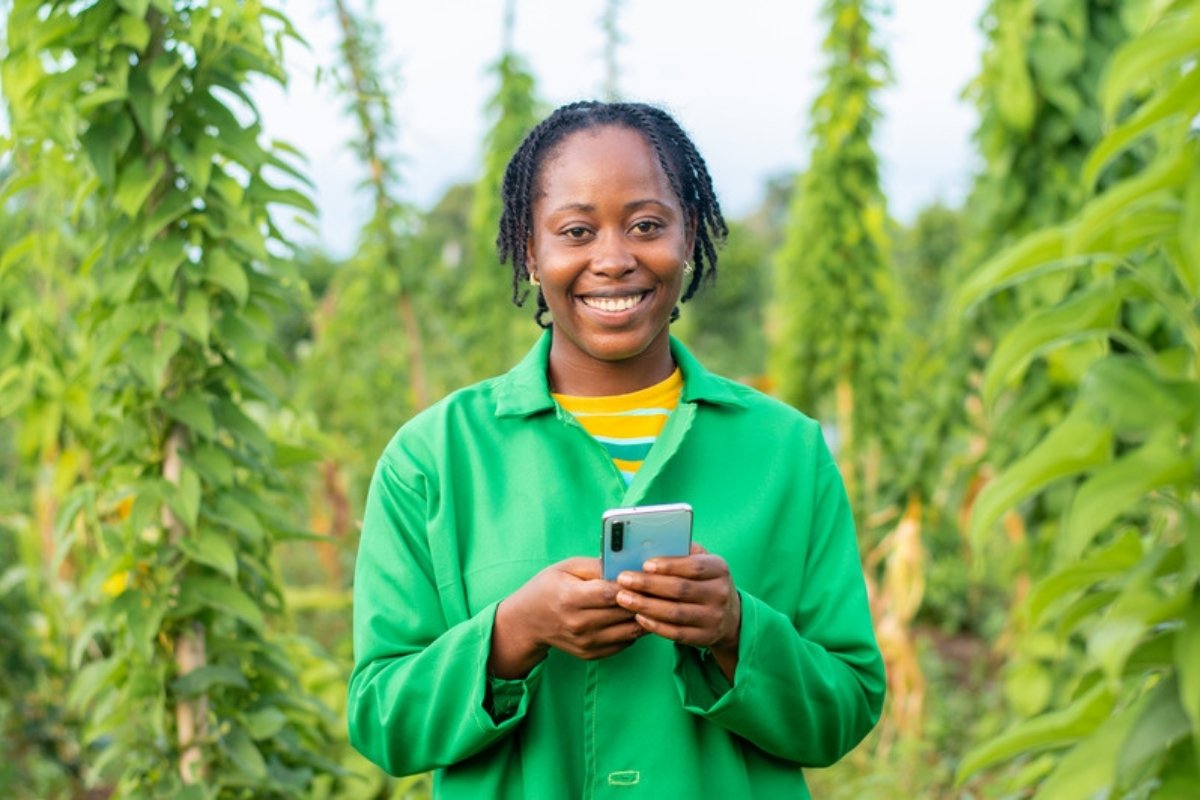
For decades, agricultural development in Africa has focused on raising production, improving access to inputs, strengthening extension and connecting farmers to markets. Those priorities still matter. Alongside them, a new one is becoming critical: the ability of farmers and agribusinesses to generate, manage and use information about their own operations.
Soils, weather, crop performance, livestock, inputs, yields, costs, customers and sales can all now be recorded and analysed with digital tools, from satellite imagery and sensors to mobile platforms and digital payments. The scope in sub-Saharan Africa is large. The region has around 250 million smallholder farmers and pastoralists, and FAO and ITU found substantial room for digital transformation across its agriculture. Technology by itself will not transform anything, though. The value lies where data, business strategy, finance and markets meet.
Precision agriculture is about better decisions
Precision agriculture is usually associated with drones, GPS equipment, sensors and sophisticated machinery. Those are tools, and the objective is better decisions.
Land is rarely uniform. Soil fertility, moisture, crop vigour, pest pressure and yield vary within the same farm, and precision agriculture lets a farmer respond to those differences rather than managing a whole field as though every part were identical. On a coffee plantation, for example, blocks differ in soil, shade, moisture and disease pressure, and combining field observation with mapped data shows management where intervention will pay.
A farmer using these tools can see where crop performance is falling and where water stress is appearing, which areas need more nutrients, where pests or disease are emerging, which parts of the farm earn the most, and where inputs can be cut without losing yield.
FAO's case studies on automation and digitalisation report gains in efficiency, productivity, quality and sustainability, and also the barriers of cost, skills, infrastructure and connectivity. The lesson is to use the right technology to answer the right business question.
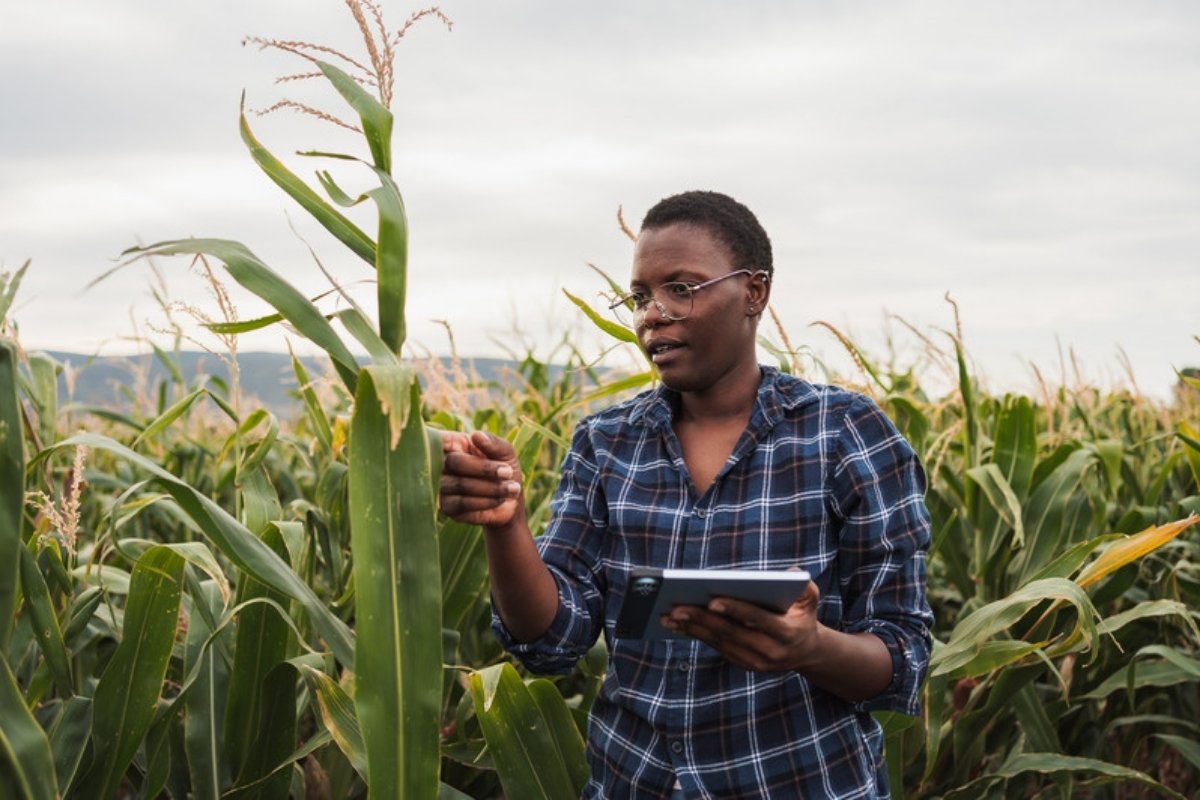
Precision agriculture starts with a clear question about where the crop needs attention.
Start with the business problem
The common mistake is putting technology before strategy. A farmer buys a drone with no capacity to interpret the imagery. A business installs sophisticated software while still running without reliable accounts. A cooperative digitises member records but never uses them to improve aggregation, marketing or financial services.
Digitalisation should begin with one question: what decision needs to improve? If irrigation costs too much, soil-moisture monitoring may pay. If production records are unreliable, farm-management software may come first. If the constraint is market access, a digital marketplace or traceability system may be worth more. If the constraint is finance, digital records and transaction histories may matter most.
From farm records to farm intelligence
Every farm already produces information: land cultivated, animals kept, inputs bought, harvests and sales. In many enterprises it sits scattered across notebooks, receipts, spreadsheets, phones and memory. Brought together, production, inputs, costs, labour, yields, sales and cash flow stop being history and become a management tool.
A farmer can compare seasons. A manager can see which enterprise earns the best margin and where losses occur. An investor can assess performance. A lender can see cash flows and repayment capacity. And a productive farm is not automatically a profitable business, since yields can rise while costs rise faster, or production can expand beyond the working capital to support it. Records are how a farm tells the two apart.
Making farms financeable
This may be the largest opportunity digitalisation offers. The IFC estimates the financing gap for smallholder farmers and agricultural SMEs in sub-Saharan Africa at $117 billion.
A farmer may run a viable enterprise but lack conventional collateral, while a lender willing to finance it has little information on production, sales and cash flow. Digitalisation cannot remove agricultural risk, but it can make the underlying business visible. A digitally managed farm can show its production history, sales volumes, operating costs, cash flow, customers, inventory, assets and repayment capacity.
Lenders would still assess credit and ask for collateral where appropriate, but they could also look at how the business itself performs.
Digital payments leave a trail
Digital payments add a further layer, because every payment becomes a record. In 2017, among people in sub-Saharan Africa who received payments for agricultural products, fewer than one in six received them into an account, whether bank, non-bank or mobile money. The World Bank's survey of agribusinesses across 17 countries found most already making some payments digitally, and some going further. In Uganda and Zambia, the brewer AB InBev pays farmers digitally through the blockchain-based platform BanQu.
A cooperative that records each farmer's deliveries, quantities, quality and payments builds, over a few seasons, a clear picture of that farmer's relationship with the value chain. That history is what banks, microfinance institutions, insurers and fintech companies need before they can serve farmers they have never met.
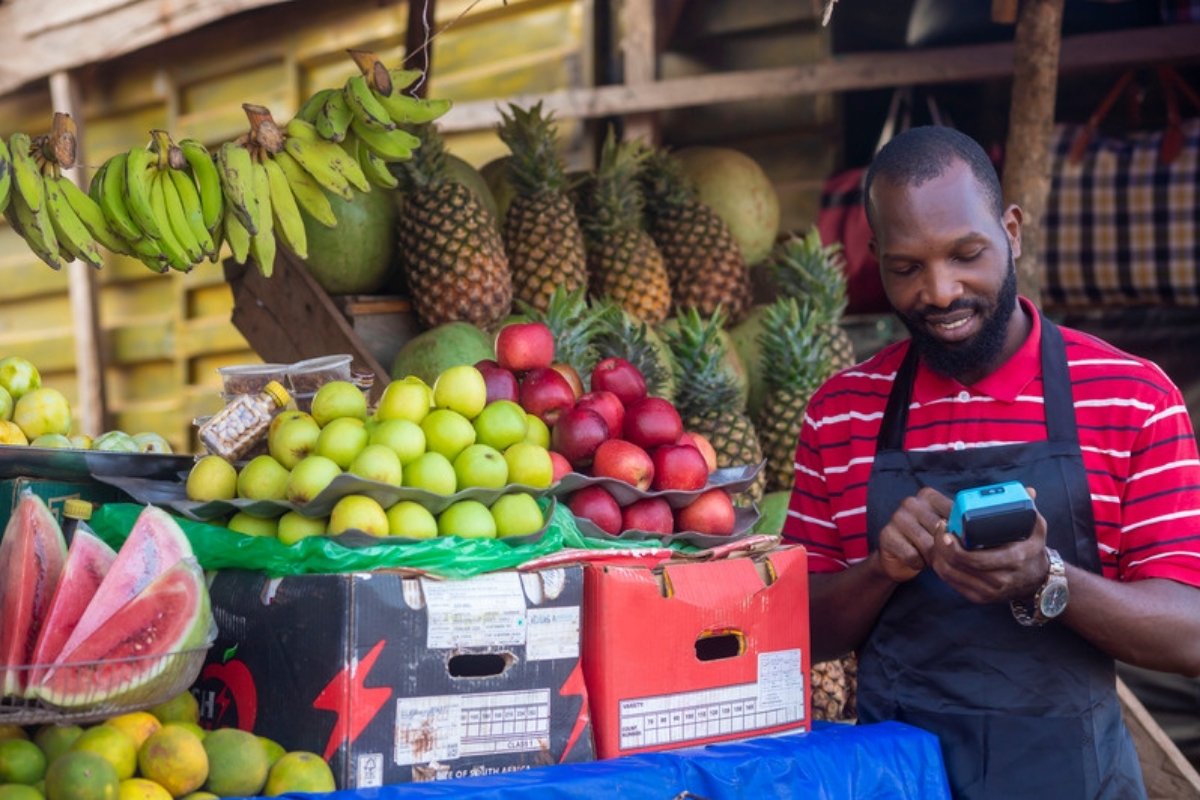
Every digital payment leaves a record that lenders and buyers can use.
Beyond the farm gate
Agriculture is a value-chain business. Farmers depend on input suppliers, aggregators on farmers, processors on aggregators, exporters on processors, and financial institutions on reliable information about all of them. Linking production forecasts to aggregation, processing, traceability, buyers and payment improves planning, procurement and traceability, and speeds up payment. The aim is a digitally connected value chain, with the farm as its first link.
Start small and share the cost
Africa should not simply copy models built for highly mechanised systems elsewhere. For many farmers the first step is a smartphone, mobile payments, reliable production records, weather and market-price information, digital extension, satellite-based advisory services or access to shared machinery, long before any autonomous tractor.
Farmer organisations, cooperatives and agribusinesses can make that step cheaper by providing services collectively rather than leaving every farmer to buy technology alone. A cooperative can run digital farmer registration, satellite crop monitoring, soil testing, mechanisation services, digital payments, aggregation records and traceability, and link members to finance. That creates economies of scale and generates information useful to buyers, lenders and insurers, turning the cooperative from an aggregation point into a platform for services.
What a finance-ready farm can show
A farm that wants to attract investment should be able to answer seven questions clearly.
What it owns: land, livestock, equipment, infrastructure and other productive assets.
What it produces: volumes, yields, quality and production cycles.
What it spends: inputs, labour, transport, finance and other operating costs.
What it sells: customers, prices, volumes and sales channels.
What it earns: revenue, margins and cash flow.
What it needs: working capital, investment capital and growth finance.
How it manages risk: insurance, diversification, contracts and climate-smart practices.
A practical sequence
The change does not need to happen at once. A practical path runs through six stages.
Measure: keep reliable records of production, costs, sales and cash flow.
Digitise: move the critical information from scattered paper into a suitable digital system.
Analyse: use the data to understand productivity, costs, margins, markets and risks.
Target: apply precision tools only where they answer a clearly identified problem.
Finance: use the business information to build stronger investment proposals and lender relationships.
Scale: invest further in technology where measured returns justify it.
Followed in that order, digitalisation becomes a way of running the business better rather than an expensive technology project. Precision agriculture, in the end, is precision in decisions, and that is what makes a farm worth financing.
Sources
FAO and ITU (2022). Status of digital agriculture in 47 sub-Saharan African countries. Rome.
International Finance Corporation (2024). Scaling up farmer financing through agtechs in sub-Saharan Africa.
World Bank (2020). Can digitizing agribusiness payments in Africa build a ramp for financial inclusion of farmers? Africa Can End Poverty blog.