Insights from Research
"Enhancing Family Farmers Livelihoods through Animal Production in Brazil: A Systematic Literature Review
Author: BRUNO DE MORAIS SOUZA VIEIRA"
Animal production has emerged as a crucial element in enhancing the livelihoods of family farmers in Brazil, addressing challenges such as food security, economic stability, and rural development. This article delves into the results of a systematic literature review conducted to explore the potential of animal husbandry in improving the socioeconomic conditions of family farming systems in Brazil. By synthesizing findings from 243 peer-reviewed articles, the study identifies key practices, challenges, and opportunities for integrating animal production into family farming.
Key Findings from the Literature Review
Overview of the Review Process
The systematic review was conducted using the Cronin, Ryan, and Coughlan method, ensuring a rigorous selection of studies relevant to animal production in family farms. A total of 554 articles were initially identified through searches on Web of Science and Scopus, of which 243 met the inclusion criteria. These articles spanned a diverse range of journals, including prominent Brazilian publications like Semina: Ciências Agrárias and Tropical Animal Health and Production.
Central Themes in the Literature
The review revealed a predominant focus on the socioeconomic impacts of animal production, including income generation, employment opportunities, and contributions to food security. However, most studies highlighted challenges such as limited access to credit, infrastructure, and technical assistance. Key findings include:
1.Economic Contributions:
- Animal production provides family farmers with multiple income streams through the sale of meat, milk, eggs, and other products.
- Diversification into livestock mitigates risks associated with crop failures and market fluctuations, ensuring a steadier income for farmers.
2. Food Security and Nutrition:
- Livestock farming enhances food security by supplying protein-rich products, improving the overall nutritional status of rural families.
3. Employment and Community Development:
- The integration of animal production creates jobs in husbandry, feed supply, and processing industries, fostering local economic growth.
4. Environmental and Technological Aspects:
- Integrated crop-livestock-forest (ICLF) systems offer sustainable farming alternatives, improving productivity, profitability, and animal welfare while reducing greenhouse gas emissions (Luiz et al., 2023).
Challenges Identified
Despite its potential, animal production in family farming faces numerous challenges that hinder its widespread adoption and effectiveness:
1. Sanitary and Health Issues:
- Diseases like clostridiosis and worm infestations significantly impact productivity, especially in semi-arid regions.
- Exotic diseases pose a threat to exports, increasing the need for improved veterinary services and disease management practices.
2. Access to Credit and Resources:
- Rural credit programs like PRONAF show uneven distribution, often favoring wealthier regions and larger farms.
- Limited access to financial resources restricts farmers’ ability to invest in sustainable practices and modern technologies.
3. Technical Assistance Deficiencies:
- Regions like the Amazon and semi-arid Northeast suffer from inadequate technical support, limiting productivity and innovation.
- The lack of comprehensive technical assistance prevents farmers from adopting best practices in animal husbandry and integrating advanced technologies.
4. Market and Infrastructure Limitations:
- Poor road infrastructure and limited market access hinder the efficient distribution of animal products.
- Farmers struggle to meet sanitary and quality standards required for institutional and export markets.
Regional Disparities in Animal Production
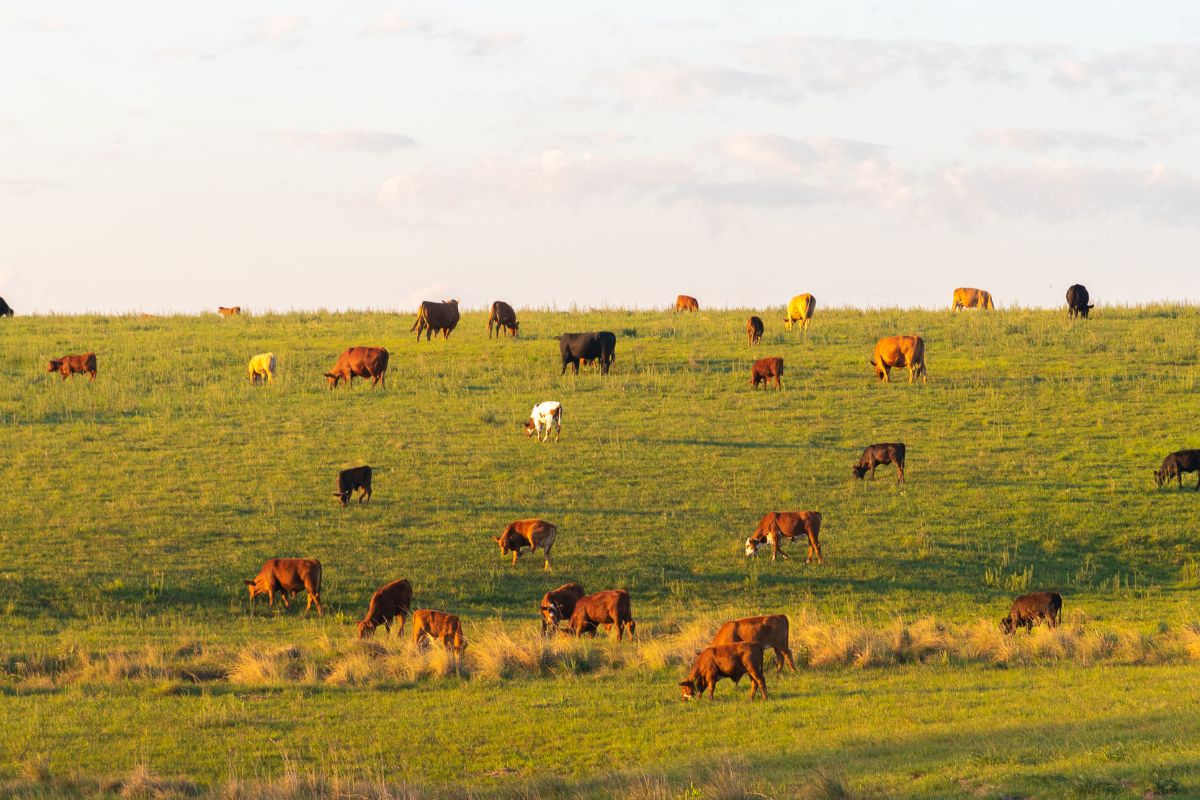
Brazil’s vast geographical diversity significantly influences animal production systems. The temperate climates of the South support large-scale cattle operations, while the semi-arid Northeast relies on specialized goat and sheep farming. These disparities highlight the need for region-specific policies and support mechanisms.
Southern Brazil:
- Farmers benefit from better access to resources, infrastructure, and advanced breeding technologies.
- Cooperative participation has led to higher incomes and better market integration.
Northeastern Brazil:
- Limited infrastructure and financial resources impede productivity.
- Farmers face greater challenges in disease management and technical assistance availability.
Policy Recommendations and Opportunities
To maximize the benefits of animal production for family farmers, the study emphasizes the following strategies:
Enhancing Technical Assistance:
- Expanding access to rural extension services and veterinary support, particularly in underserved regions.
- Promoting education and training programs to improve farmers’ knowledge of best practices in animal husbandry.
Improving Credit Access:
- Reforming rural credit policies to ensure equitable distribution of funds, prioritizing small-scale and vulnerable farmers.
- Encouraging microcredit initiatives tailored to the needs of family farmers.
Encouraging Sustainable Practices:
- Supporting the adoption of ICLF systems and other sustainable farming methods.
- Investing in research and development to make these practices more accessible and cost-effective for family farms.
Fostering Regional Development:
- Addressing regional disparities by tailoring policies and programs to local needs and conditions.
- Strengthening cooperative networks to enhance market access and collective bargaining power.
Conclusion
The integration of animal production into family farming systems presents a viable pathway to economic stability, food security, and rural development in Brazil. However, achieving its full potential requires addressing critical challenges related to credit access, technical support, and infrastructure. By implementing targeted policies and promoting sustainable practices, Brazil can empower family farmers to overcome these barriers and enhance their livelihoods, ensuring the long-term resilience and sustainability of the agricultural sector.
References
- Beker, F.M.; Franca, I.; Tomas, J.; Siqueira, H.A.; Resende Lima, G.F.; Rizzoto, G.; Peripolli, V.; Bianchi, I. Socioeconomic and investment profile of environment control in a swine integration system. Revista Brasileira de Zootecnia. Dispon\u00edvel em: Revista Brasileira de Zootecnia — SciELO. Acesso em: 08 jul. 2024.
- Cronin, P.; Ryan, F.; Coughlan, M. Undertaking a literature review: A step-by-step approach. British Journal of Nursing, v. 17, n. 1, p. 38-43, 2008. Dispon\u00edvel em: Undertaking a literature review: a step-by-step approach — British Journal of Nursing. Acesso em: 01 jun. 2024.
- Ederer, P.; Baltenweck, I.; Blignaut, J.N.; Moretti, C.; Tarawali, S. Affordability of meat for global consumers and the need to sustain investment capacity for livestock farmers. Animal Frontiers, 2023. Dispon\u00edvel em: Animal Frontiers — Oxford Academic. Acesso em: 07 jul. 2024.
- Ferreira, E.L.; Barros, R.A.; Bevilacqua, P.D. Women working in animal husbandry: A study in the agroecological transition context. Ciencia Rural, 2020. Dispon\u00edvel em: Women working in animal husbandry: a study in the agroecological transition context — Ciência Rural. Acesso em: 04 jul. 2024.
- Foguesatto, C.R.; Mores, G.V.; Kruger, S.D.; Costa, C. Will I have a potential successor? Factors influencing family farming succession in Brazil. Land Use Policy, v. 97, 2020. Dispon\u00edvel em: Will I have a potential successor? Factors influencing family farming succession in Brazil — Land Use Policy. Acesso em: 29 jun. 2024.
- Graeub, B.E.; Chappell, M.J.; Wittman, H.; Lederman, S.; Kerr, R.B.; Gemill-Herren, B. The State of Family Farms in the World. World Development, v. 87, p. 1-15, 2016. Dispon\u00edvel em: The State of Family Farms in the World — World Development. Acesso em: 02 jul. 2024.
- Guarnieri, P. S\u00edntese dos Principais Crit\u00e9rios, M\u00e9todos e Subproblemas da Sele\u00e7\u00e3o de Fornecedores Multicrit\u00e9rio. Revista de Administra\u00e7\u00e3o Contempor\u00e2nea (Online), v. 19, p. 1-25, 2015. Dispon\u00edvel em: Síntese dos Principais Critérios, Métodos e Subproblemas da Seleção de Fornecedores Multicritério — SciELO. Acesso em: 02 jul. 2024.
- Guedes, G.R.; VanWey, L.K.; Hull, J.R.; Antigo, M.; Barbieri, A.F. Poverty dynamics, ecological endowments, and land use among smallholders in the Brazilian Amazon. Social Science Research, 2014. Dispon\u00edvel em: Poverty dynamics, ecological endowments, and land use among smallholders in the Brazilian Amazon — Social Science Research. Acesso em: 07 jul. 2024.
- Herrera, G.P.; Lourival, R.; Costa, R.B.; Mendes, D.R.F.; Moreira, T.B.S.; Abreu, U.G.P.; Constantino, M. Econometric analysis of income, productivity and diversification among smallholders in Brazil. Land Use Policy, v. 76, p. 455-459, 2018. Dispon\u00edvel em: Econometric analysis of income, productivity and diversification among smallholders in Brazil — Land Use Policy. Acesso em: 07 jul. 2024.
- Lima, P.R.M.; Peripolli, V.; Josahkian, L.A.; McManus, C.M. Geographical distribution of zebu breeds and their relationship with environmental variables and the human development index. Scientia Agricola, 2022. Dispon\u00edvel em: Geographical distribution of zebu breeds and their relationship with environmental variables and the human development index — Scientia Agricola. Acesso em: 08 jul. 2024.
- Lowder, S.; Sanchez, M.V.; Bertini, R. Which farms feed the world and has farmland become more concentrated?. World Development, v. 142, 2021. Dispon\u00edvel em: Which farms feed the world and has farmland become more concentrated? — World Development. Acesso em: 07 jul. 2024.
- Luiz, V.T.; Nascimento, R.A.; Rezende, V.T.; Almeida, T.F.A.D.; Paz, J.V.; Giannetti, B.F.; Gameiro, A.H. Sustainability Assessment of Intensification Levels of Brazilian Smallholder Integrated Dairy-Crop Production Systems: An Emergy and Economic-Based Decision Approach. Sustainability, 2023. Dispon\u00edvel em: Sustainability Assessment of Intensification Levels of Brazilian Smallholder Integrated Dairy-Crop Production Systems: An Emergy and Economic-Based Decision Approach — Sustainability. Acesso em: 30 jun. 2024.
- Maciel, M.D.A.; Troian, A.; Oliveira, S.V. Brazil of the agro, country of hunger: Thinking strategies for sustainable development. Espacio Aberto, v. 31, n. 3, 2022. Dispon\u00edvel em: Brasil do agro, país da fome: pensando estratégias para o desenvolvimento sustentável — Redalyc. Acesso em: 26 jun. 2024.
- Martinez, P.; Gomes, M.L.S.; Marini, F.S. Public policies strengthen the relationship between family farming and food security in Brazilian schools \u2013 A case study of Para\u00edba state. Heliyon, v. 9, n. 10, 2023. Dispon\u00edvel em: Public policies strengthen the relationship between family farming and food security in Brazilian schools – A case study of Paraíba state — Heliyon. Acesso em: 01 jul. 2024.
- Medina, G.S.; Gosch, M.S.; Del Grossi, M.E. Development pathways for family farmers: Lessons from Brazil on the need for targeted structural reforms as a means to address regional heterogeneity. Geoforum, v. 118, p. 14-22, 2021. Dispon\u00edvel em: Development pathways for family farmers: Lessons from Brazil on the need for targeted structural reforms as a means to address regional heterogeneity — Geoforum. Acesso em: 26 jun. 2024.
- Moreira-Dantas, I.R.; Martinez-Zarzoso, I.; Henning, C.; Santos, M.A.S. Rural credit acquisition for family farming in Brazil: Evidence from the Legal Amazon. Journal of Rural Studies, 2023. Dispon\u00edvel em: Rural credit acquisition for family farming in Brazil: Evidence from the Legal Amazon — Journal of Rural Studies. Acesso em: 29 jun. 2024.
- Novo, A.; Jansen, K.; Slingerland, M. The novelty of simple and known technologies and the rhythm of farmer-centred innovation in family dairy farming in Brazil. International Journal of Agricultural Sustainability, 2015. Dispon\u00edvel em: International Journal of Agricultural Sustainability — Taylor & Francis. Acesso em: 10 jul. 2024.
- Oliveira, A.S.; Soares-Filho, B.S.; Costa, M.A.; Lima, L.; Garcia, R.A.; Raj\u00e3o, R.; Carvalho-Ribeiro, S.M. Bringing economic development for whom? An exploratory study of the impact of the Interoceanic Highway on the livelihood of smallholders in the Amazon. Landscape and Urban Planning, 2019. Dispon\u00edvel em: Bringing economic development for whom? An exploratory study of the impact of the Interoceanic Highway on the livelihood of smallholders in the Amazon — Landscape and Urban Planning. Acesso em: 01 jul. 2024.
- Pannell, D.J.; Llewellyn, R.S.; Corbeels, M. The farm-level economics of conservation agriculture for resource-poor farmers. Agriculture, Ecosystems & Environment, 2014. Dispon\u00edvel em: The farm-level economics of conservation agriculture for resource-poor farmers — Agriculture, Ecosystems & Environment. Acesso em: 07 jul. 2024.
- Relic, R.; Staric, J.; Jezek, J. Management practices that influence the welfare of calves on small family farms. Journal of Dairy Research, 2020. Dispon\u00edvel em: https://www.cambridge.org/core/journals/journal-of-dairy-research/article/management-practices-that-influence-the-welfare-of-calves-on-small-family-farms/6C4EDB4E6057F5584A2621BB985FDB8E. Acesso em: 10 jul. 2024.
- Silva, I.C.M.; Bremm, B.; Teixeira, J.L.; Costa, N.S.; Barcellos, J.O.J.; Braccini, J.; Cesconeto, R.J.; McManus, C. Spatialization of Brazilian pig production: Relationship between productive, physical, environmental, and socioeconomic variables. Tropical Animal Health and Production, v. 49, p. 951-958, 2017. Dispon\u00edvel em: Spatialization of Brazilian pig production: relationship between productive, physical, environmental, and socio-economic variables — Tropical Animal Health and Production. Acesso em: 07 jul. 2024.