

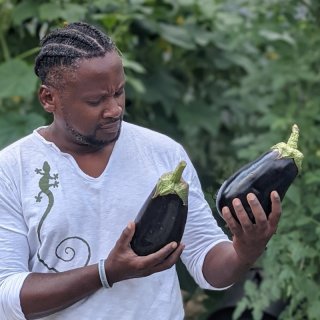
By Jessey Njau, Founder, Zawadi Farm and Zawadi Connections
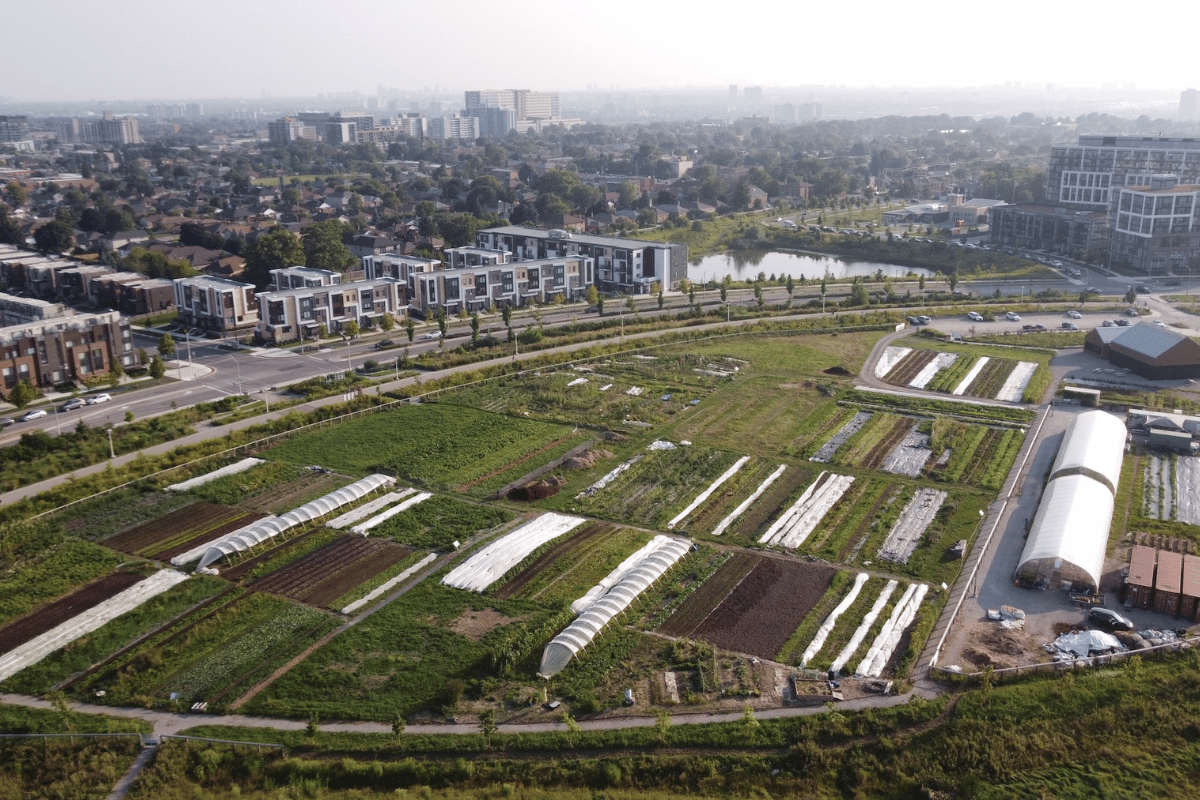
When we signed our 20-year lease at Downsview Park in Toronto, the math on a single-revenue urban farm was already broken. Land is expensive, cold seasons are long, and yields per square foot, no matter how regenerative the practice, do not on their own pay for the infrastructure a farm needs to keep its people housed, its soil alive, and its relationships with the community intact. Diversification was not an optional growth strategy. It was the structural condition for the farm to exist at all.
Today, Zawadi Farm runs four interlocking lines of work. A CSA, a café, an events venue, and an education program. They are not four businesses bolted together. They are one operation organised around three pillars, Grow, Learn, Gather, that share land, infrastructure, staff, and story. What follows is what we have learned about making that integration work.
The CSA, our relationship engine
We sell CSA shares through an online platform, with members picking up weekly throughout the growing season. Financially, the CSA is our most predictable source of revenue, paid in advance and tied directly to what we grow. Its real value sits upstream of the bank account, however. CSA members become regulars at the café, book their children's birthdays at our venue, and forward our newsletter to their employers, which often leads to corporate CSR programs. The CSA is the front door to every other revenue stream we run.
The lesson we have taken from this is to avoid optimising the CSA for margin alone. We treat it as the relationship engine, and we price the rest of the business to reflect what those relationships make possible.
The café, an everyday touchpoint
A café on the farm changes who walks through the gate. Not everyone wants to commit to a 20-week vegetable share, but they will come for a coffee and a sandwich and end up walking the rows. The café also lets us close the loop on production. Seconds and overflow that would otherwise be donated or composted go onto the menu instead. During a Toronto winter, the café keeps a small team on the payroll while keeping the farm's identity present in people's daily routines.
The honest tradeoff here is that a café is a hospitality business with its own labour, regulatory, and equipment demands. We chose to access an industrial kitchen through a partnership, including sourcing sustainable coffee, rather than build our own initially. That kept capital costs manageable while still letting us produce value-added goods at scale.
Events, the high-margin stabiliser
Our event venue, The Barn, is a unique space in Toronto, both in the city and on the farm. It holds up to 210 guests across roughly 1,900 square feet and hosts weddings, corporate retreats, and community gatherings. Events are by far the highest-margin revenue per square foot we generate, and they make use of infrastructure that would otherwise sit idle on weekends.
Events also force a level of operational discipline, around washrooms, parking, accessibility, and insurance, that benefits the rest of the farm's operations.
The thing to watch is that an events line can quietly take over a farm's identity. We made an early decision that the venue serves the mission, not the other way around. Event revenue is used to subsidise programs that do not pay for themselves.
Education, the long game
Through Zawadi Connections, our nonprofit arm, we run workshops, school programs, and institutional partnerships. Education is currently our slowest revenue line, moving on bureaucratic timelines and requiring intensive labour. It is also what makes the rest of our work defensible. When partners ask why an urban farm should hold a long-term lease on public land, the answer is the students who learn to grow food each year and the curricula we deploy across the region.
Our education team, partnered with the Toronto District School Board, manages community-led programs and student planting workshops. Education turns a farm into a piece of essential public infrastructure.
The integration, one operation rather than four
The temptation with diversification is to treat each line as its own profit-and-loss centre. In our experience this is a mistake. The CSA may carry weeks where it loses money, and the café may only break even in shoulder seasons, but events carry the rest.
|
Revenue stream |
Role in the ecosystem |
Economic impact |
|
CSA |
Relationship engine |
High predictability |
|
Café |
Everyday touchpoint |
Brand presence |
|
Events |
Margin stabiliser |
High profit per square foot |
|
Education |
Mission defender |
Long-term trust |
What matters is the integrated unit. Soil health from regenerative practices shows up on café menus, which show up in event marketing, which builds the trust that secures multi-year curriculum contracts with school districts.
What it actually takes
Infrastructure. Shared kitchen access, a venue building, washrooms, parking. Where possible, partner rather than build. Our collaboration with Meza Group for venue management is one example.
The right team. We operate with a dedicated Farm Manager, an Operations and Client Relations Manager, and a seasonal crew. Specialized roles prevent founder burnout and protect quality across all four lines.
A mission specific enough to attract the right alignment. Zawadi means gift in Swahili. Every line of our business is meant to extend that gift to the soil, our members, and the next generation of farmers.
If you are an urban farmer considering diversification, do not start with the revenue projection. Start with the relationships you already have, the infrastructure you can share, and the mission that connects it all. Diversification works when the lines are not parallel, but a single piece of work told four different ways.
About the author
Jessey Njau is the founder of Zawadi Farm and Zawadi Connections, a regenerative urban farm and food justice nonprofit operating at Downsview Park in Toronto, Canada. Originally from Kenya and a former IT consultant, he transitioned to full-time farming after being inspired by the work of Vancouver urban farmer Michael Ableman. Learn more at zawadi.farm and zawadiconnections.org.