


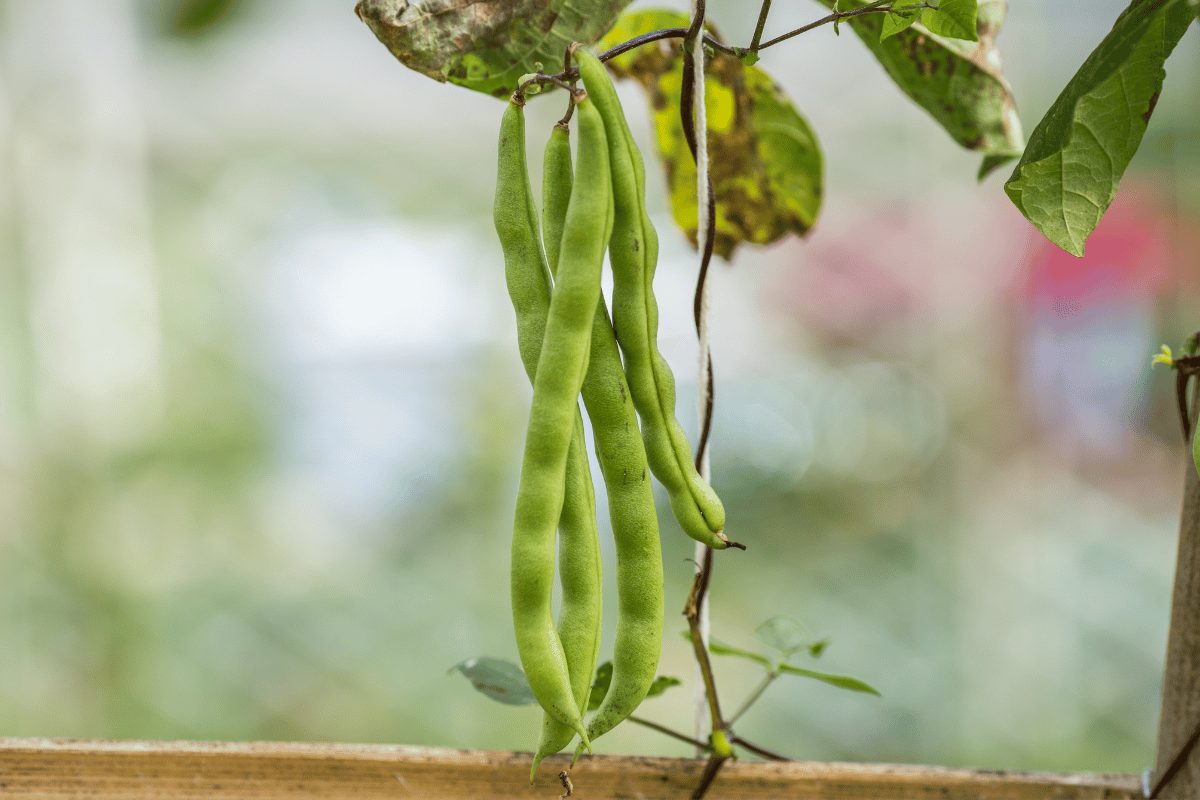
Cowpea, also called black-eyed pea or niébé, is more than a crop. It is a lifeline for millions of families across West Africa. The grains are rich in protein, up to 25%, the leaves can be eaten as a vegetable, and the leftover vines make excellent animal feed during the dry season.
Here is what makes cowpea truly special. It does not need much nitrogen fertiliser. Like other legumes, cowpea works with soil bacteria to pull nitrogen from the air and leaves some behind for the next crop. Growing cowpea can actually improve your soil for the maize or sorghum planted later.
In this guide you will learn how to choose the right variety, prepare your land, control pests, and store your harvest, all using practical, field-tested methods.
Site selection and land preparation
Cowpea does not like wet feet. Select a well-drained sandy loam soil and avoid low-lying areas that become waterlogged after heavy rain. If you want to grow a dry-season crop using residual moisture, look for land near lakes or inland depressions.
For clearing the field you have two options. Manual clearing uses a hand hoe or cutlass to remove shrubs and stubble. Chemical clearing uses glyphosate sprayed at 4 litres per hectare, after which you wait at least 10 days before planting so the weeds die completely.
Plough or hoe the soil deeply enough that there is no hard layer blocking the cowpea taproot. Well-prepared land gives good germination and fewer weeds. Ridges are optional but can help in heavier soils.
Choosing the right variety
Not all cowpeas are the same. Your choice depends on your rainfall, your soil, and whether you want grain, fodder, or both.
| If you need | Choose varieties like |
|---|---|
| Early maturity (55 to 65 days) | UAM09 1055-6 (Dan hajia), IT97K-499-35 |
| Striga resistance | IT99K-573-1-1, IT99K-573-2-1, Komcalle |
| Drought tolerance | IT99K-573-2-1, TN5-78 |
| Good for intercropping | Semi-prostrate types like TN121-80 |
| Large white seeds (market preference) | SAMPEA 11, SAMPEA 14, Yiisyande |
Always buy seeds from a recognised seed company, research institute, or agro-dealer. Do not use seeds from the open market for planting.
Seed preparation and planting
Before sowing, treat your seeds with a fungicide to prevent rot and seedling diseases. Use Apron Star at 10 g per 8 kg of seeds, or Benomyl or Thiram at 3 g per kg of seeds. This simple step protects your seedlings just after they emerge.
When to plant
Planting time is critical. The best window depends on your agroecological zone.
| Zone | Best planting window |
|---|---|
| Sahel zone | 14 to 28 June |
| Sudan savanna | 25 June to 24 July |
| Northern Guinea savanna | 25 July to 8 August |
| Southern Guinea savanna | 25 to 30 August |
For photoperiod-sensitive local varieties, plant from mid-July to mid-August, when days are getting shorter. For photoperiod-insensitive improved varieties, you can plant anytime there is enough rain or irrigation. A useful tip is to plant so that your cowpea matures in dry weather, which gives cleaner, higher-quality grain.
Spacing and sowing depth
| Cowpea type | Row spacing | Plant spacing | Seed per hectare |
|---|---|---|---|
| Erect (early) | 50 cm | 20 cm | 30 kg |
| Semi-erect | 75 cm | 25 to 30 cm | 20 kg |
| Prostrate (creeping) | 75 cm | 40 to 50 cm | 15 kg |
Sow 3 seeds per hole and later thin to 2 healthy plants per stand at 2 weeks after planting. Planting depth should be 2.5 to 5 cm. Do not plant deeper than 5 cm, or the seeds may rot and emergence will be uneven.
Intercropping with cereals
If you intercrop cowpea with maize, millet, or sorghum, use a shade-tolerant variety, usually a semi-prostrate type. Plant the cowpea 4 to 6 weeks after the cereal, at a spacing of 75 cm between rows and 25 cm within rows. For strip intercropping, use 2 rows of cereal to 4 rows of cowpea.
Fertilizer: Less is more
Cowpea fixes its own nitrogen. Too much nitrogen fertiliser will give you plenty of leaves but very few grains.
| What to apply | How much | When |
|---|---|---|
| NPK 15:15:15 | 2 bags per hectare (15 kg N) | At planting |
| Single super phosphate (SSP) | 4 bags per hectare (30 kg P) | Before planting or at sowing |
Phosphorus is very important for good nodulation. Place the fertiliser where the roots can reach it, not on top of the soil. If you can afford only one soil test in your life, do it for phosphorus and pH.
Weed management
Weeds are a serious problem in cowpea, especially in the first 5 to 8 weeks, because cowpea does not compete well with weeds during early growth.
Manual weeding is the most common approach. Do the first weeding 2 weeks after planting, the second at 4 to 5 weeks after planting, and a third just before flowering if needed. Delaying weeding by even one week can cut your yield drastically.
For larger farms, chemical weeding is an option.
| Herbicide mixture | Rate per 20 L knapsack | When to apply |
|---|---|---|
| Paraquat + Pendimethalin | 350 ml + 350 ml | Immediately after planting |
| Paraquat + Butachlor | 350 ml + 450 ml | Immediately after planting |
On sandy soils, use the lower rates. On clay soils, use the higher rates. One herbicide application at planting plus one hand weeding at 4 to 5 weeks is often enough.
Major pests and simple solutions
Cowpea faces many pests, but you do not need to spray for all of them. The key is to spray at the right time.
Before flowering, the main pests are aphids, small black insects on young leaves and stems that also spread viruses, and whiteflies, tiny white-winged insects that cause yellowing and spread mosaic virus. For aphids, spray once at 14 to 21 days after planting if they appear, using cypermethrin or dimethoate.
The flowering and pod stages bring the most damaging pests. Thrips are tiny black insects that destroy flower buds, and if they are not controlled you may get no pods at all. Maruca, the pod borer, is a caterpillar that bores into flowers and pods, leaving holes and webbing. Pod-sucking bugs suck sap from green pods and cause shrivelled, empty pods.
The recommended spraying regime targets these stages in turn.
| Spray | Timing | Target pests |
|---|---|---|
| First spray | 30 to 35 days after planting (when flower buds appear) | Thrips, early Maruca |
| Second spray | 10 days later (full flowering) | Maruca, sucking bugs |
| Third spray | 10 days after the second (if needed) | Pod-sucking bugs |
Use lambda-cyhalothrin or cypermethrin plus dimethoate, and always follow the label. When spraying, work in the early morning or late evening and avoid the hottest part of the day, never spray in strong wind, wear long sleeves, a hat, and cover your mouth and nose, and wash your hands and clothes thoroughly afterwards.
Diseases and what to do
| Disease | Symptoms | Best control |
|---|---|---|
| Fusarium wilt | Yellowing, wilting, brown streaks inside the stem | Plant resistant varieties (e.g., IT99K-573-1-1) |
| Cercospora leaf spot | Brown spots on leaves with yellow halos | Resistant varieties, rotate with cereals |
| Bacterial blight | Water-soaked spots on leaves, cracked stems | Resistant varieties, clean seed |
| Cowpea yellow mosaic | Yellow patches, stunted plants | Control whiteflies, rogue out infected plants |
The most cost-effective solution for most diseases is to plant a resistant variety. Ask your local extension officer which varieties work in your area.
Harvesting
Harvest when the pods are fully dry and brown. If you wait too long, pods may split open, and if you harvest too early, the seeds will not store well. Erect, early varieties may need only one picking, while prostrate, late varieties are picked 2 to 3 times as the pods mature.
After picking, sun-dry the pods on a mat or tarpaulin, thresh to remove the seeds, winnow to separate seeds from chaff, and clean out broken or damaged seeds. Only store seeds that are completely dry. Safe moisture is 7 to 8%, which you can test by biting a seed. It should crack, not squash.
Storage, protecting your grain from weevils
The cowpea weevil (Callosobruchus maculatus) is your biggest enemy after harvest. It begins attacking pods in the field and continues in storage.
For small farmers, the methods that need no chemicals are the best place to start. PICS bags, the triple-layer plastic bags, seal cowpea inside so that the lack of air kills adult weevils within days, which is safe, cheap, and effective. Airtight containers such as sealed oil drums, plastic bottles, or clay pots with tight lids work on the same principle. The groundnut oil method, mixing 5 ml of groundnut oil per 1 kg of grain, coats the seeds and prevents weevil eggs from hatching.
Chemicals should be used only with extreme care. Phosphine (Phostoxin) is used at 1 tablet per 100 kg sack, wrapped in paper first so it does not touch the grain directly, in an airtight container. Actellic dust (pirimiphos-methyl) is mixed at 200 to 500 g per 1,000 kg of grain. After using any chemical, expose the grain to open air for 1 to 2 hours before eating or selling it, and never store chemically treated grain in a living room.
Key takeaways
Cowpea improves your soil, so use it in rotation with maize or sorghum. Choose the right variety for your area, whether early, Striga-resistant, or drought-tolerant. Treat seeds with fungicide before planting, and do not over-fertilise with nitrogen. Weed early, within the first 2 weeks. Spray for pests at flowering, from 30 to 35 days after planting. Harvest dry, and store in airtight containers or PICS bags.
Cowpea can give you good grain, animal feed, and healthier soil, all from the same field. Start with one or two improved varieties, follow the steps above, and you will see the difference.