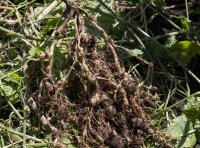
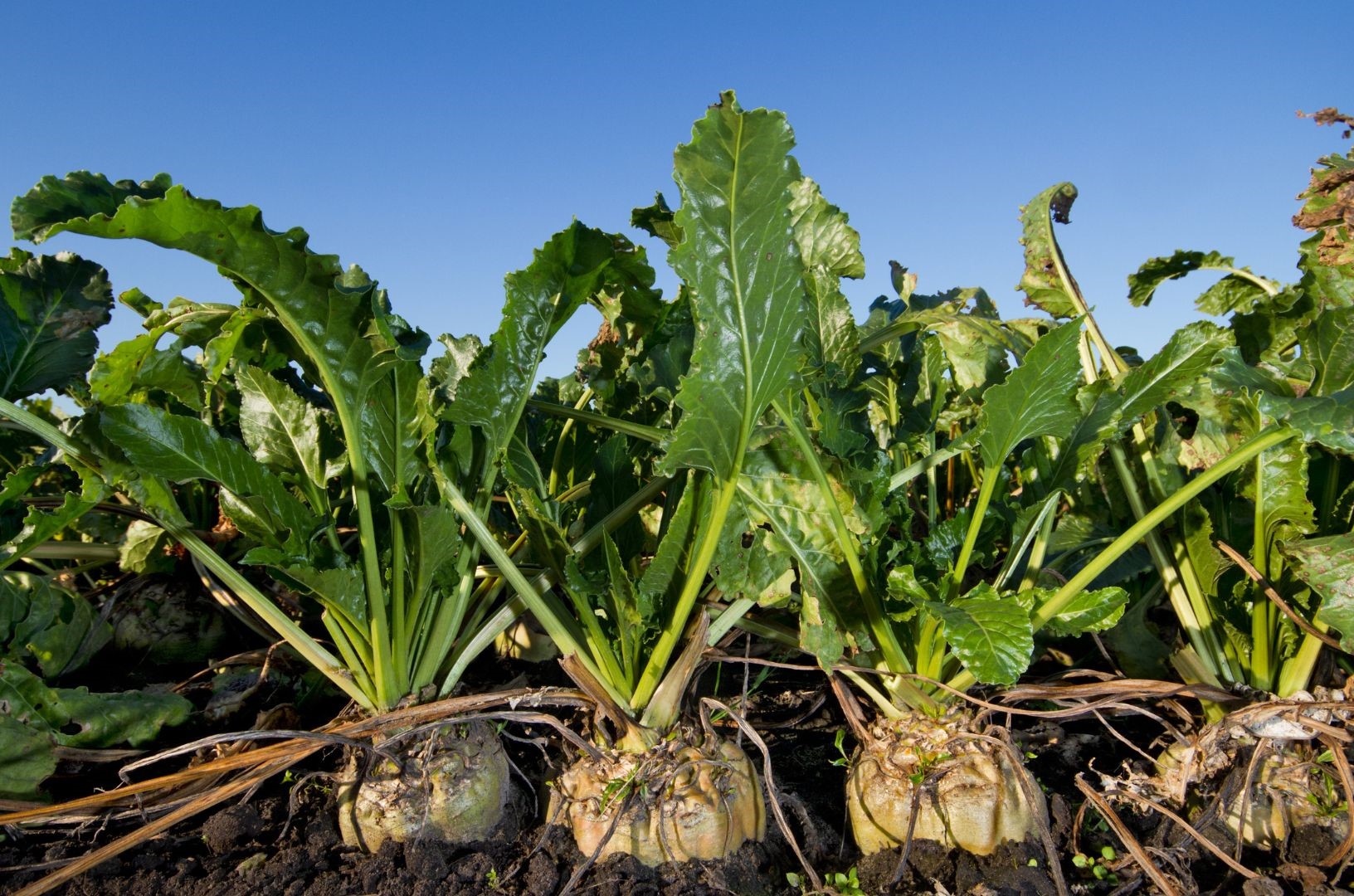
Common Sugar Beet Diseases: Pathogens, Symptoms and Management
Sugar beet (Beta vulgaris L.) is an economically important sugar-derived crop accounting for approximately 30-35% of the world's sucrose requirement (Iqbal & Saleem, 2015; Zicari et al., 2019) as an alternative to sugar cane (Saccharum officinarum). As opposed to sugar cane, which is largely cultivated in the tropical and subtropical regions, sugar beet is grown in the colder temperate regions with latitudes between 30o and 60o N, such as Europe, Northern America, Africa, and Asia, with a total estimate of 50 sugar beet producing countries (Biancardi et al., 2010).
Sugar beet is grown for many purposes, the most important of which is the production of sugar, which serves multiple uses, especially for many of us who like tea. By-products like molasses are important components used in catering, and pulp can be incorporated for animal consumption. Lime can be used as a soil amendment, and recently, there have been studies exploring sugar beet as an alternative source of biobutanol, which is really fascinating.
The global sugar beet industry has always been challenged by general agronomic limitations and biotic factors such as weeds and insects, with diseases being the most prominent and challenging. There are over 20 diseases affecting the production of sugar beet worldwide, including oomycetes, viruses, bacteria, nematodes, and most importantly, fungal pathogens. The most common root diseases of sugar beet include Cercospora leaf spot, Rhizoctonia crown and root rot, Rhizomania, Southern Sclerotium Root Rot, Fusarium yellows, Aphanomyces root rot, Alternaria leaf spot, Ramularia leaf spot, powdery mildew, beet curly top disease (Asher & Hanson, 2006).
In this article, we will discuss in depth some common diseases limiting sugar beet production, their causative pathogens, and how to proactively manage them.
-
Cercospora Leaf Spot (CLS) Disease of Sugar Beet
CLS is the most destructive disease of sugar beet caused by Cercospora beticola, a fungal pathogen. This is an epidemic foliar disease that significantly impacts the economic value of sugar beet worldwide (Skaracis et al., 2010). According to Rossi et al. 2000, sugar beet fields with high CLS disease severity can result in a complete yield and economic loss. A significant event was the CLS epidemic outbreak in 2016, which resulted in an approximate loss of $100 million in the Red River Valley region of North Dakota and Minnesota, a prominent location for sugar beet production in the United States (Khan, 2018). The profitability of the sugar beer industry is significantly compromised due to the severe tonnage reduction and high sugar impurities in CLS-infected sugar beet roots.
Pathogen and Disease Cycle
Cercospora beticola is the pathogen responsible for CLS disease of sugar beet. This is a hemibiotrophic fungal pathogen known to affect a wide range of crops due to its polycyclic nature, resulting in a repeated disease cycle that cumulatively increases the inoculum density in sugar beet fields (Weiland and Koch, 2004; Rossi et al., 2000). Under optimum conditions, the overwintering pseudostromata of C. beticola from previous growing seasons sporulates, producing conidia that penetrate the stomata of sugar beet leaves, producing toxins (cercosporin and beticolin) that kill the leaf tissues (Tan et al., 2023). These dead tissues form circular tan spots with dark-brown borders, a distinctive characteristic of CLS.
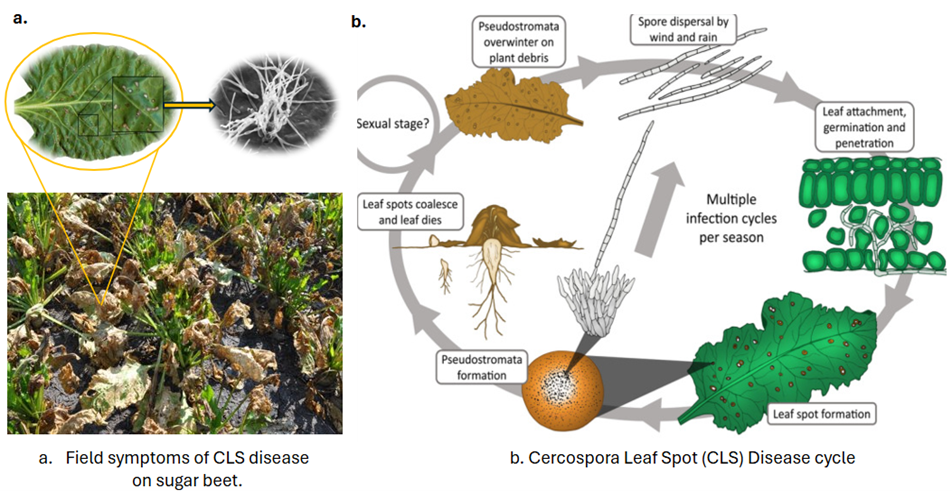
Figure 1. Disease cycle and symptoms of CLS on sugar beet (adapted from Rangel et al. 2020)
Symptoms of CLS
- Enlarged necrotic lesions develop into tan spots which spread across the leaf surface.
- Continual regrowth of new green leaves at the expense of stored root energy.
- Reduced yield tonnage after harvesting
- Increased impurities and low sucrose after sugar beet processing.
(Franc, 2010)
Management of CLS
The sugar beet industry's economic production and continuous boom require a proactive and integrated management approach for controlling CLS disease. This includes;
- Timely application of the right combination of fungicides (DMIs, SDHIs, MBCs, QoIs)
- Resistant sugar beet (CR+) varieties with qcr1 and qcr4QTLs
- Rotation with non-host crops such as corn, wheat, and soybeans for about 3 years to reduce C. beticola inoculum density in infected sugar beet fields.
- Fall cultivation and deep tillage by burying inoculum deep in the soil provide unfavorable conditions that discriminate the survival of C. beticola in sugar beet fields.
- Avoid fields with a previous history of CLS disease outbreak.
(Jacobsen, 2010)
-
Rhizoctonia Crown and Root Rot (RCRR) Disease of Sugar Beet
RCRR is a major soilborne disease affecting sugar beet production. This disease is widely spread across sugar beet producing regions in Asia, Europe, and North America (McGrath et al., 2015). RCRR is caused by Rhizoctonia solani, also a fungal pathogen. The impact of this disease could vary from 5 to 100% loss in sugar beet fields depending on the disease severity, geographical location, and environmental conditions (Jacobsen, 2007). Over the years, this has become a significant constraint for sugar beet production across the globe, resulting in reduced quantity and quality of sugar beet.
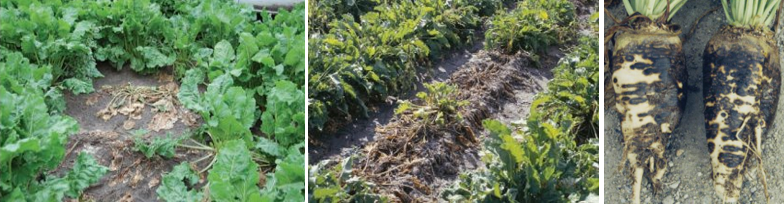
Figure 2. Fields symptoms of RCRR on sugar beet fields (adapted from UNL NebGuide-G1841bulletin)
Pathogen and Disease Cycle
Rhizoctonia solani is a widespread necrotrophic soilborne pathogen with a devastating impact on sugar beet production and various other crops (Harveson et al., 2009). R. solani overwinters as sclerotia on plant debris from the previous growing season and is activated by chemotaxis, which stimulates mycelia growth and eventual colonization of the cells of sugar beet plants. Depending on the plant age or point of infection, R. solani could cause damping off (seedlings are infected and eventually die off), crown rot (infection starts from the rim of the sugar beet roots), and root rot (infection proceeds internally and eventually destroy the whole plant completely) on mature plants (4-8 leaf stage).
Symptoms of RCRR
- Host tissues and cells are completely damaged
- Defoliation and accumulation of decayed leaf mass
- Plants appear stressed and stunted
- Necrotic petiole, dark lesions, and cracks on the root as infection progresses.
- Rosette formation with brown-purple mycelium outgrowth
- Sclerotia formation and eventual death of sugar beet plants in fields with high disease severity.
(Neher and Gallian, 2011)
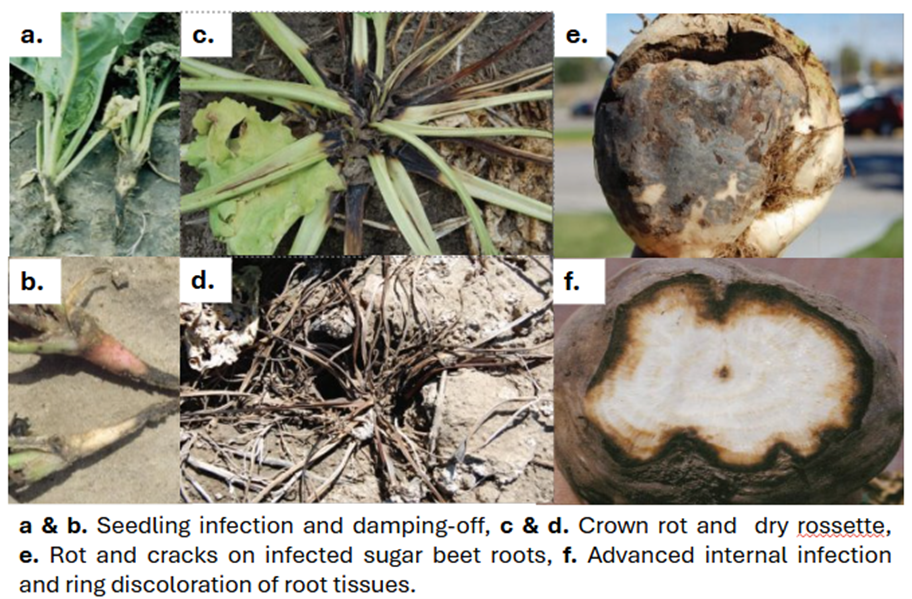
Figure 3. Key symptoms of RCRR disease of sugar beet (adapted from UNL NebGuide-G1841bulletin)
Management of RCRR
The general management of diseases caused by R. solani in sugar beet field requires a combined approach by leveraging;
- Seed treatments prior to planting.
- Proactive application of fungicides at the right time combined with an optimized fungicide program based on many factors.
- Tolerant sugar beet varieties (not as effective yet due to compromised productivity).
- Cultural approach by rotating with non-host crops like rye, barley and brassica plants helps to reduce inoculum accumulation in the soil.
(Markell and Khan, 2012; Bolton et al. 2010; Koch et al. 2018)
-
Rhizomania Disease of Sugar Beet
Rhizomania disease is known by many names (crazy beetroots, root madness, etc.) attributed to its Latin origin and Greek interpretation, rhizome (meaning = roots) and mania (meaning = madness). Rhizomania is a soil-borne disease, highly damaging in sugar beet fields across Europe, the United States, and other sugar beet-producing countries (Rush et al., 2006), making headlines as one of the most devastating diseases attributed to sugar beet. This is even more disturbing due to the difficulty in controlling the causative viral pathogen because there are limited effective control measures for its management.
Rhizomania is caused by the Beet Necrotic Yellow Vein Virus (BNYVV). The European Food Safety Authority (EFSA) on Plant Health reported in 2020 that BNYVV was the most devastating sugar beet pathogen, causing a serious reduction in yield tonnage, sugar content, and quality. Yield loss is estimated at up to 70% with significant sugar content between 2-4%, resulting in reduced profitability by sugar beet growers (Biancardi et al., 2002).
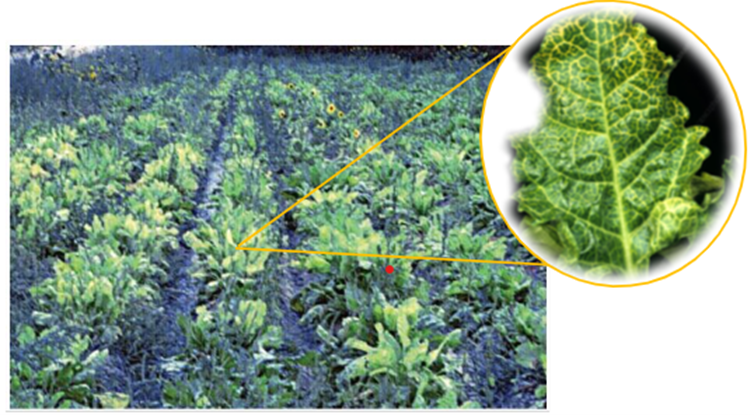
Figure 4. Fields showing chlorotic yellow patches (adapted from UNL NebGuide-G1842 bulletin)
Pathogen and Disease Cycle
Beet Necrotic Yellow Vein Virus, the causative organism of Rhizomania, is widely distributed across major sugar beet producing countries. BNYVV was first reported in Italy in the 1950s around Po Plain and Adige Valley by a scientist named Canova. In the United States, BNYVV was first reported in California in 1983 (Dufus et al., 1984). Within 2 years (1992-1994), subsequent reports were made in Colorado, Nebraska, Idaho, Minnesota, and Wyoming (Neher & Gallian, 2011), and now it has spread across every major state producing sugar beet (Rush et al., 2006). BNYVV, sometimes called "Beet Rhizomania Virus," is a multipartite (+sense) single-stranded RNA virus that is widely transmitted by Polymyxa betae (a fungal-like vector).
P. betae is an obligate root-infecting protist that forms overwintering/resting spores, which become activated zoospores under favorable conditions. The viruliferous zoospores infect the epidermal cells of the root hairs, transmitting BNYVV into the root, followed by the replication of the virus throughout the sugar beet plant (Acharya et al., 2017; Rush et al., 2006). This cycle can continue for a very long time, allowing BNYVV and its vector (Polymyxa betae) to survive and reproduce continuously (Harveson, 2008) for up to 20 years or more, becoming a constant limitation to sugar beet production in affected sugar beet fields.
Symptoms of Rhizomania
- Yellow patches and wilting on sugar beet fields
- Interveinal leaf yellowing and vein banding
- Bearded/Crazy looking root with proliferated tiny rootlets
- Wine glass-shaped roots
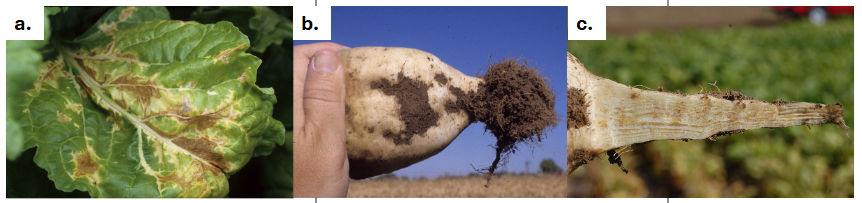
Figure 5. Characteristic symptoms of Rhizomania disease of sugar beet. (a) Yellow/chlorotic veins, (b) Wine glass-shaped sugar beets with bearded/crazy (mania) roots (rhizo), (c) Tan/light brown necrotic vascular tissues in the tap root. (adapted from UNL NebGuide-G1842 bulletin)
Management of Rhizomania
Proactive management of rhizomania disease involves a combined effort to simultaneously control both BNYVV and its vector (P. betae); such management approach includes;
- Limit movement of P. betae contaminated soils to healthy fields
- Reduce flooding, controlled irrigation, and effective drainage
- Eradicate secondary weeds that can serve as an alternative host for P. betae
- Early planting to avoid the infection cycle of P. betae
- Proper field sanitation
- Use clean machinery for agronomic activities
- Soil fumigation or solarization
- Use BNYVV resistant or tolerant cultivar
(Harveson, 2008; Harveson, 2021)
-
Aphanomyces Root Rot (ARR) Disease of Sugar Beet
Aphanomyces root rot, also known as Aphanomyces black root, is a disease of sugar beet caused by Aphanomyces cochliodes. ARR is one of the damaging diseases affecting seedlings, causing post-emergence damping off and sometimes root rot of adult sugar beet plants. It is widespread across major sugar beet producing regions, notably in the United States, Europe, Canada, Japan, and Chile (Jacobsen, 2006). In sugar beet fields with high disease severity of ARR, yield loss can be estimated up to 90% and above under optimum environmental conditions favorable for disease development.
ARR also affects the quality of sugar after harvesting, reducing the purity of processed sugar by approximately 25-27% (Olsson et al., 2011). This disease is even more economically damaging as it compounds the deterioration of stored sugar beet after harvesting, significantly reducing profitability for sugar beet growers. In monetary terms, a report made by American Crystal Sugar Company in the United States stated that on an annual basis, ARR causes an economic loss of approximately $10 million (Botkin et al., 2022).
Pathogen and Disease Cycle
Aphanomyces cochliodes Drechsler is the causative organism of Aphanomyces root rot (ARR) of sugar beet. A. cochliodes is caused by a soil-borne fungal-like pathogen (an oomycete), which affects the below-ground roots of seedling and mature sugar beet plants (Windels, 2000). Similar to P. betae, which was previously discussed, A. cochliodes also overwinters as oospores in the soil or on the debris of plants left on the field during the previous growing season. Under conducive conditions, the disease develops in moist soil with very warm temperatures, approximately between 20-35°C for seedling damping off and up to 35°C for root rot (Harveson et al., 2009).
The oospores are activated in response to root exudates in the new growing season resulting in zoospores liberation, which is further spread across the field aided when there is a large amount of free water to dispatch the released zoospores. A. cochliodes exhibit chemotaxis, which aids the movement of the infective motile zoospores towards the root, penetrating the roots (Jacobsen, 2006), then causing severe damage post-emergence on seedlings or at the later stage on mature sugar beet roots.
Symptoms of ARR
- Leaves appear scorched
- Inconsistent wilting during the hot sunny days with overnight recovery when the weather is cool
- Brown/Yellow lesions become visible on the surface of seedling roots and sometimes root tissues as the disease progresses.
- Seedlings appear threadlike, leading to the eventual damping-off of seedlings 7-21 days post-emergence.
- In more severe cases, necrotic dark/brown lesions appear on the roots of older sugar beet plants.
- Yellowing of lower leaves, stunting, and sometimes eventual death of older plants
- Scabby lesions on harvested roots
- Harvested roots appear distorted and malformed, reducing the eventual yield and sugar quality after processing.
(Farhaoui et al. 2023)
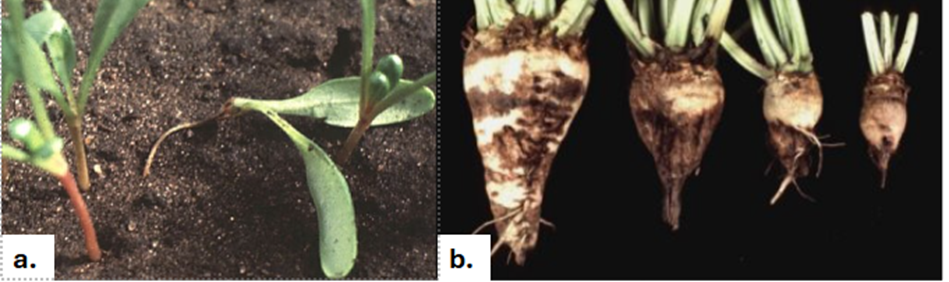
Figure 6. (a) Seedling damping-off and (b) Black rot of older sugar beet roots (Plant Health Progress - Windels, 2000)
Management of ARR
- Eradication of weeds that could serve as alternative hosts for A. cochliodes outside the sugar beet growing season.
- Plant Tachigaren treated seeds and Aphanomyces (Aph) resistant varieties.
- Early planting is necessary before oospores activate and develop into infectious zoospores.
- Plant in well-drained fields to limit available free water for the dispersal of zoospores.
- Lime can be applied to infested soil to affect oospore and zoospore production, thereby reducing infection by A. cochliodes on sugar beet fields.
(Arabiat et al. 2021)
Stay tuned for...... One Pathogen, Three Diseases: Sclerotinia sclerotiorum, an emerging pathogen of Sugar Beet.
Recently, Sclerotinia sclerotiorum has been termed an emerging pathogen in sugar beet. Generally known as white mold, Sclerotinia sclerotiorum is known to be a notorious hemi-biotrophic cosmopolitan pathogen affecting over 500 plant species, and more interestingly, this pathogen is capable of causing leaf blight, damping off as well as root necrosis in sugar beet. Hence, "One pathogen, three diseases.”........... read more in the upcoming article.
References
Iqbal, M. A, Saleem, A. M. 2015. Sugar beet potential to beat sugarcane as a sugar crop in Pakistan. Am Eurasian J Agric Environ Sci 15:36–44.
Draycott A.P. (Ed.), Sugar beet. Blackwell, Oxford, UK.
Asher, M.J.C., and Hanson, L. E. 2006 Fungal and Bacterial diseases. pp. 286-315. In: Draycott A.P. (Ed.), Sugar beet. Blackwell, Oxford, UK.
Skaracis, G. N., Pavli, O. I., and Biancardi, E. 2010. Cercospora leaf spot disease of sugar beets. Sugar Tech. 12:220-228.
Khan, M. F. R. 2018. Sugar beet Production Guide. A1698. NDSU Extension Service and University of Minnesota Extension Service.
Weiland, J. and Koch, G. 2004. Sugarbeet leaf spot disease (Cercospora beticola Sacc.). Mol. Plant Pathol. 5: 157-166.
Rossi, V., Battilani, P., Chiusa, G., Giosue, S., Languasco, L., and Racca, P. 2000. Components of rate-reducing resistance to Cercospora leaf spot in sugarbeet: Conidiation length, spore yield. J. Plant Pathol. 82:125-131.
Tan, W., Li, K., Liu, D., and Xing, W. 2023. Cercospora leaf spot disease of sugar beet. Plant Signal Behav.18(1):2214765.
Rangel, L. I., Spanner, R. E., Ebert, M. K., Pethybridge, S. J., Stukenbrock, E. H., de Jonge, R., Secor, G. A., Bolton, M. D. 2020. Cercospora beticola: The intoxicating lifestyle of the leaf spot pathogen of sugar beet. Mol Plant Pathol. 21:1020-1041.
Franc, G. D. 2010. Ecology and epidemiology of Cercospora beticola. In R. T. Lartey, J. J. Weiland, L. Panella, P. W. Crous, and C. E. Windels (Eds.), Cercospora Leaf Spot of Sugarbeet and Related Species (pp.7–19). American Phytopathological Society, St. Paul, MN, USA.
Jacobsen, B. J. 2010. Integrated management of Cercospora laef spot. In R. T. Lartey, J. J. Weiland, L. Panella, P. W. Crous, and C. E. Windels (Eds.). Cercospora Leaf Spot of Sugarbeet and Related Species (pp. 275-284). The American Phytopathological Society, MN, USA.
McGrath, J.M., Townsend, B.J. 2015. Sugar Beet, Energy Beet, and Industrial Beet. In: Cruz, V.M.V., Dierig, D.A. (eds) Industrial Crops. Handbook of Plant Breeding, vol 9. Springer, New York, NY.
Jacobsen, B. J., and Franc, G. 2007. Cercospora leaf spot In Compendium of Beet Diseases and Insects, 2nd ed. R. Harveson, L. Hanson, and Gary L. Hein. St. Paul, MN: American Phytopathological Society Press.
Harveson, R. M., Hanson, L. E., and Hein, G. L. 2009. Compendium of Beet Diseases and Pests. American Phytopathological Society, St. Paul, MN, U.S.A.
Neher, O. T. and Gallian, J. J. 2011. Rhizoctonia on Sugar beet. PNW 629. University of Idaho, ID, USA.
Rush, C. M., Liu, H. Y., Lewellen, R. T. and Acosta‐Leal, R. 2006. The continuing saga of Rhizomania of sugar beets in the United States. Phytopathology. 90: 4–15.
Markell, S. G., and Khan, M. 2012. 2013 North Dakota field crop fungicide guide. NDSU Extension Service and NDSU North Dakota Agricultural Experiment Station, Fargo, USA.
Bolton, M. D., Panella, L., Cambell, L., and Khan, M. R. 2010. Temperature, moisture, and fungicide effects in managing Rhizoctonia root and crown rot of sugar beet. Phytopathology. 100:689-697.
Harveson, R. M. 2008. Rhizoctonia Root and Crown Rot of Sugar Beet. NebGuide, G1841. University of Nebraska-Lincoln Extension, NE, USA.
Koch, E., Ole Becker, J., Berg, G., Hauschild, R., Jehle, J., Köhl, J., et al. 2018. Biocontrol of plant diseases is not an unsafe technology! Journal of Plant Diseases and Protection. 125:121–125.
Harveson, R.M. 2021. Rhizomania of Sugar Beet. Plant Health Instruct., 21:1.
Harveson, R. M. 2008. Rhizomania of Sugar Beet. NebGuide, G1842. University of Nebraska-Lincoln Extension, NE, USA.
Biancardi, E., Lewellen, R. T., De Biaggi, M., Erichsen, A. W., and Stevanato, P. 2002. The origin of rhizomania resistance in sugar beet. Euphytica. 127: 383-397.
Dufus, J. E., Whitney, E. D., Larse, R. C., Liu, H. Y., and Lewellen, R. T. 1984. First report in the western hemisphere of rhizomania of sugar beet caused by beet necrotic yellow vein virus. Plant Dis. 68: 251.
Rush, C. M., Liu, H. Y., Lewellen, R. T., and Acosta-Leal, R. 2006. The continuing saga of rhizomania of sugar beet. Plant Dis. 90: 4-15.
Acharya, L., Hota, S., and Pramanik, K. 2017. Rhizomania – a review. Int. J. Curr. Microbiol. App. Sci. 6: 358-367.
Jacobsen, B. J. 2006. Root rot diseases of sugar beet. Zbornik Matice srpske za prirodne nauke 110:9–19.
Botkin, J. R., Hirsch, C. D., Martin, F. N, Chanda, A. K. 2022. DNA-based detection of Aphanomyces cochlioides in soil and sugar beet plants. BioRxiv.
Olsson, A. A., Persson, L., Olsson, S. 2011. Variations in soil characteristics affecting the occurrence of Aphanomyces root rot of sugar beet—Risk evaluation and disease control. Soil Biol Biochem 43:316–323
Windels, C. E. 2000. Aphanomyces root rot on sugar beet. Plant Health Prog 1:8.
Harveson, R. M., Hanson, L. E., Hein. G. L. 2009. Compendium of beet diseases and pests. American Phytopathological Society (APS Press).
Arabiat, S., Liu, Y., Khan, M. F. 2021. Sensitivity of Aphanomyces cochlioides from Sugar Beet to selected Fungicides. J Sugar Beet Res 57:40–50.
Farhaoui, A., Tahiri, A., Khadiri, M., El Alami, N., Lahlali, R. 2023. Fungal Root Rots of Sugar Beets: A Review of Common Causal Agents and Management Strategies. Gesunde Pflanzen 75: 1411–1440.
Zicari, S., Zhang, R., Kaffka, S., 2019. Sugar Beet. In: Pan Z, Zhang R, Zicari S (eds) Integrated Processing Technologies for Food and Agricultural By-Products. Elsevier, Amsterdam, pp 331–351.
Biancardi, E., McGrath, J. M., Panella, L. W., Lewellen, R. T., Stevanato, P. 2010. Sugar beet. In: Bradshaw JE (ed) Root and tuber crops. Springer, New York, pp 173–219.
Further reading
Plant Parasitic Nematodes: Species, Diagnosis and Control
Regenerative Sugarcane: Sustainable Farming with Organomineral Fertilizers and CBIOs
Sustainable Use of Bagasse: Harnessing the Potential of Sugarcane Waste