


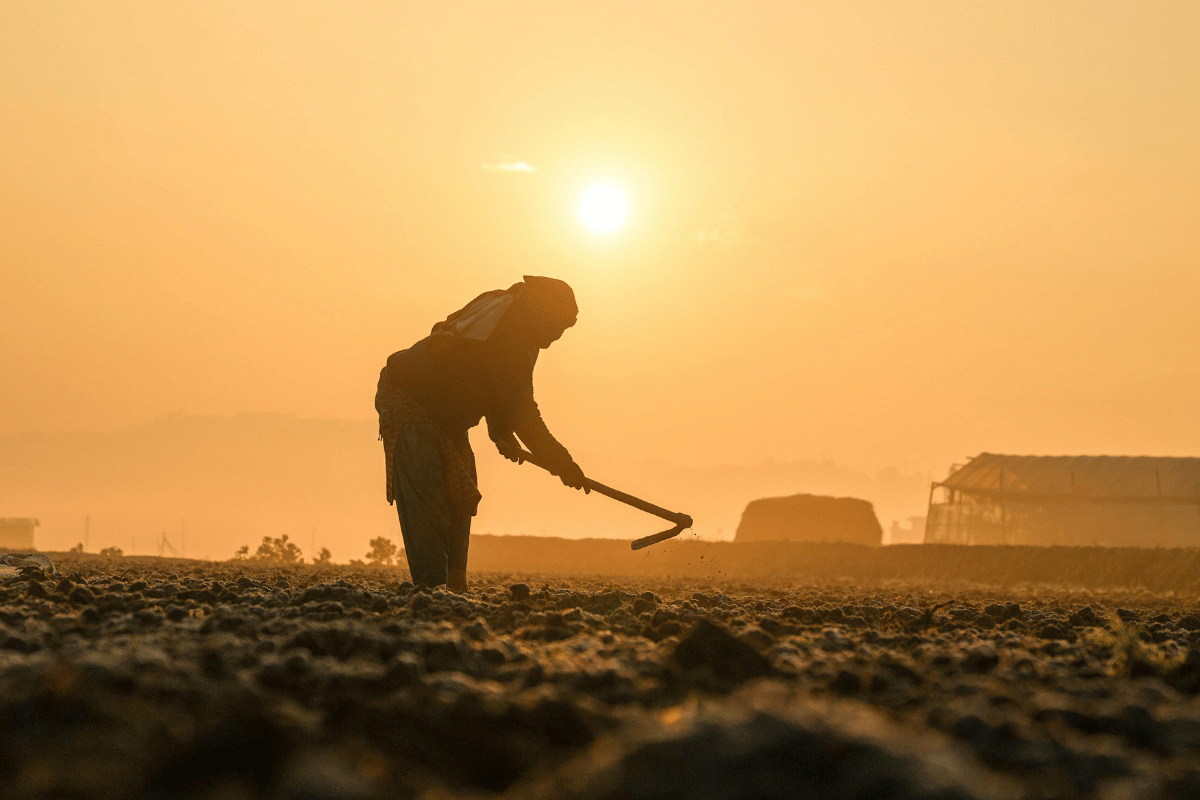
Climate change is increasingly affecting smallholder farmers, especially in tropical regions. Unpredictable rainfall, rising temperatures, and longer dry seasons are making traditional farming practices less reliable. The IPCC's Sixth Assessment Report confirms that heatwaves and dry spells in Africa are becoming more frequent and longer, with maize yields projected to decline by up to 17% under 1.5°C of warming and up to 33% under 4°C. A 2025 review in Food Science & Nutrition projects that staple crop yields in Sub-Saharan Africa could fall 10–20% by 2050 under current climate trends, with nearly 60% of smallholders still lacking access to climate adaptation technologies.
To cope with these changes, farmers are adjusting their methods to reduce risks and maintain productivity. This article highlights practical adaptation strategies that smallholder farmers are already using, the challenges they face, and recommendations to strengthen resilience and climate-smart agriculture on their farms.
Changing planting dates to match rainfall patterns
Adjusting planting dates is one of the most common and low-cost adaptation strategies. Farmers who previously planted in March often now delay planting until April or later because the rains arrive late. This reduces seed loss from early dry spells, improves germination and crop establishment, and aligns crop growth with available soil moisture.
Delayed planting does shorten the growing season, so farmers increasingly pair it with early-maturing varieties. The IPCC notes that crop diversification, changing planting dates, and planting drought-tolerant varieties are the dominant adaptation responses across Sub-Saharan Africa, though they may not be sufficient under the more extreme climate events projected in the coming decades.
Mulching for soil moisture conservation
Mulching is widely used in vegetable production to conserve soil moisture and improve soil health. Farmers apply dry grass, crop residues, and leaves. The practice reduces water evaporation from the soil, suppresses weeds, improves soil structure over time, and helps crops survive dry periods.
Mulching is a low-cost and effective intervention, although the availability of suitable mulch material can be a limitation in some settings. The yield evidence is strong. In Rwanda, the combined adoption of minimum tillage and mulching has raised potato yields from around 5,240 kg/ha to 14,000 kg/ha, a 35% improvement on earlier trials, while reducing synthetic fertiliser and pesticide costs. More general guidance on using plant cover for soil and water conservation applies directly to this context.
Shade nets in nurseries
High temperatures and excessive sunlight can damage young seedlings. Some farmers protect their nurseries with shade nets, which reduce heat stress, limit water loss, and produce more uniform seedling growth.
Where shade nets are not affordable, local alternatives work well. Palm fronds and woven covers can cut direct sunlight and lower nursery temperatures significantly. These low-cost solutions are particularly valuable where cash for inputs is scarce.
Dry season farming
Because rainfall is unreliable, many smallholders are shifting attention to dry season farming, especially for vegetables. The benefits are practical. Prices are higher during the dry season because supply is limited, water can be controlled more precisely through irrigation, and production is not at the mercy of erratic rains.
Dry season farming is more feasible where farms have access to rivers, streams, or wells. It also requires investment in irrigation equipment and additional labour, which is part of why uptake varies widely across regions.
Challenges that limit adaptation
Despite these efforts, several constraints keep smallholders from adapting as fully as they would like.
Access to inputs is often the first obstacle. Improved seeds, irrigation equipment, and quality farming materials are not reliably available in many rural markets, and even when they are, cost is a barrier. Technologies such as shade nets, drip lines, and pumps remain expensive relative to typical farm incomes.
Knowledge gaps compound the problem. Extension services in many regions are under-resourced, so farmers often lack current guidance on best practices. The Tanzania and Ghana case studies in recent adaptation research point repeatedly to weak extension coverage as a barrier to uptake of otherwise proven techniques.
Finally, climate uncertainty itself continues to deepen. Droughts and floods are becoming more frequent and less predictable, which makes any single adaptation strategy less reliable on its own.
Practical recommendations
The most effective approach is to combine multiple strategies rather than rely on any one of them. A farm that uses adjusted planting dates alongside mulching, improved seeds, and diversified crops is far more resilient than one that uses a single technique.
On water, farmers should consider simple irrigation systems such as small drip kits, rainwater harvesting structures, and basic efficient-use practices like irrigating early in the morning or in the evening to reduce evaporation. Where cash is constrained, affordable local alternatives often do most of the job. Organic mulch from crop residues, locally-made shade structures from palm fronds or woven materials, and hand-dug water storage pits can deliver much of the benefit of more expensive commercial solutions.
Access to information matters more than it is often given credit for. Farmer groups, radio-based agricultural services, and mobile-phone-based advisory platforms all help farmers stay informed about seasonal forecasts and improved practices. Finally, crop diversification spreads risk and stabilises income across seasons of unpredictable weather.
Conclusion
Smallholder farmers are actively adapting to climate change by modifying their practices. Shifting planting dates, mulching, using shade nets, and moving into dry season farming all help reduce risk and maintain productivity in the face of less reliable rainfall and rising temperatures.
But adaptation at the farm level is not enough on its own. The IPCC notes that smallholders tend to deploy coping responses rather than transformative adaptations, largely because they lack the capital, knowledge, and institutional support to do more. Stronger extension services, better access to inputs and credit, and investment in climate information services would go a long way toward turning short-term coping into long-term resilience. With the right support, smallholder farmers can build farming systems that sustain both their productivity and their livelihoods through the decades of climate change ahead.
References
IPCC. (2022). Climate Change 2022: Impacts, Adaptation and Vulnerability. Working Group II Contribution to the Sixth Assessment Report. Chapter 9: Africa. Chapter: Chapter
Abebaw, T. A., & Belayneh, A. (2025). A global review of the impacts of climate change and variability on agricultural productivity and farmers' adaptation strategies. Food Science & Nutrition. A Global Review of the Impacts of Climate Change and Variability on Agricultural Productivity and Farmers' Adaptation Strategies — Food Science & Nutrition
FAO. Climate-Smart Agriculture.
Nyambe, A., Chabala, L. M., Liersch, S., et al. (2025). Climate change adaptation, resilience and mitigation challenges in African agriculture. Regional Environmental Change, 25, 72. Climate change adaptation, resilience and mitigation challenges in African agriculture — Regional Environmental Change