Authors: Bonzheim A., Eisenbach, J., Gieseke, A., Hammelehle, A.
The Biocyclic Vegan approach to sustainable fertilisation
Embracing Circularity in Agriculture
Biocyclic vegan agriculture emphasizes the importance of healthy soil for equally healthy plants, and ultimately healthy humans by promoting closed-loop systems that exclude animal-based products in fertilisation. Instead, focus lies on the recycling of plant-based organic matter. Humus, the nutrient-rich component of soil, is central to biocyclic vegan practices, as its high content prevents nutrient leaching, soil erosion, and degradation. Contrary to popular belief, animal husbandry is not necessary for building humus. Instead, soil fertility increases through the use of cover crops, small-grain legumes, and methods like mulching and composting.
Utilizing Legumes in Crop Rotation
Legumes, known for their symbiotic relationship with nitrogen-fixing bacteria, play a crucial role in biocyclic vegan fertilisation. By improving nitrogen levels, soil fertility, and overall soil structure, legumes act as excellent preceding crops to promote crop health and productivity.
Green Manuring and Catch Crops
To maintain soil fertility year-round, biocyclic vegan practices advocate for green manuring and catch crops. These crops protect the soil from weather-related damage, nutrient leaching, and pest invasions while also increasing humus content, water retention, and biodiversity.
The Cut & Carry Method
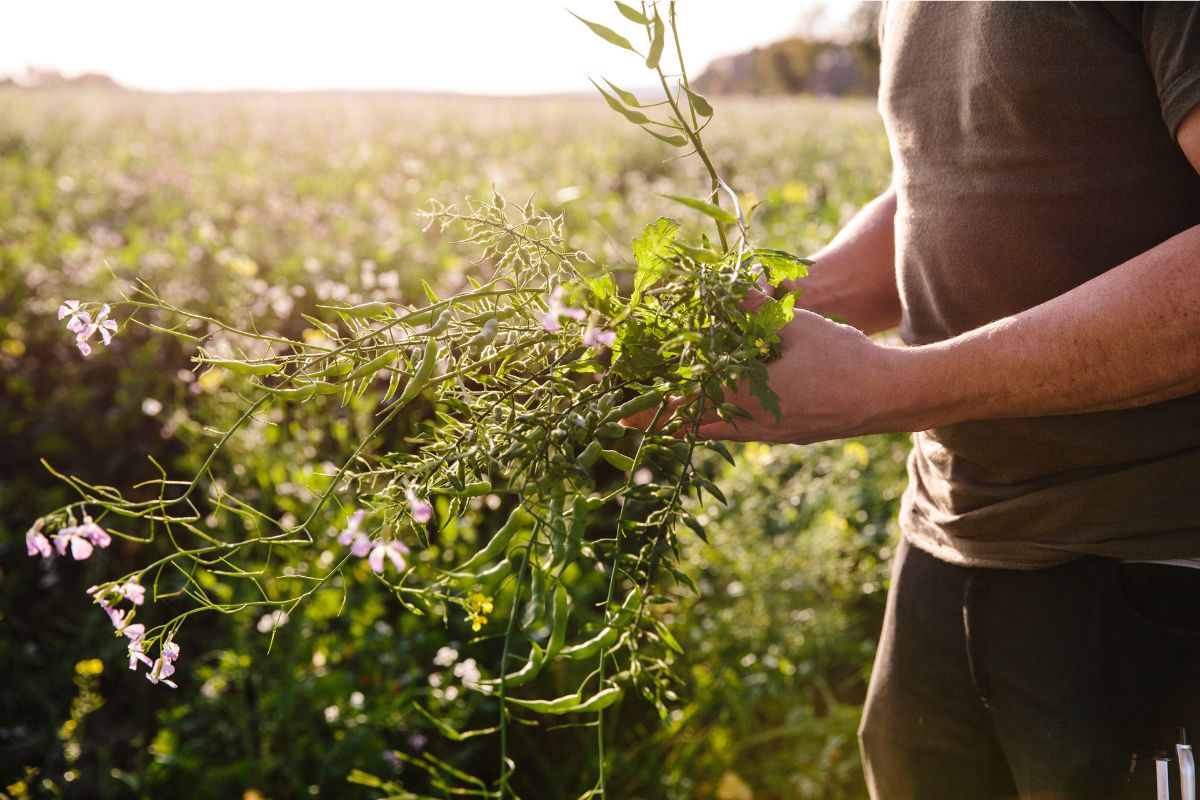
The "cut-and-carry" method offers biocyclic vegan farms a way to utilise crops like clover or lucerne grass for nitrogen-rich fertilisation. This method involves cutting biomass from a donor field and distributing it onto a recipient field. This not only enhances nutrient availability but also aids in weed suppression and moisture retention, and promotes humus formation.
Biogas Substrate as Fertiliser
Fermentation residues from biogas production can also be used for fertilisation, provided they are strictly plant-based. These digestates, rich in organic matter, improve soil structure and humus content. However, care must be taken to prevent nitrogen losses through volatilisation.
The Role of Compost
Quality composting is fundamental in this approach, transforming locally sourced biomass into vital soil amendments. Properly ripened compost not only revitalizes soil life but also enhances microbial activity, contributing to overall soil health.
To achieve optimal fertilisation, fully ripe high-quality compost is required. In biocyclic vegan farming, composting can take place on-site or externally, depending on local resources. Compost is crucial for supporting the circularity of materials on various scales—farm-level, local, regional, and even global.
From Compost to Biocyclic Humus Soil
An innovative process is prolonging the maturation of a plant-based compost so that it can be cultivated in hill beds (windrows) without adding soil, peat, or other ingredients. This highly productive material is called Phytoponic Culture Substrate (PCS) and serves as the base for generating Biocyclic Humus Soil, which is the result of cultivating preferentially vegetables on PCS during a 5-year refinement period.
Biocyclic humus soil itself is a carbon stabilised fertility booster with a high percentage of carbon structures that originate from root exudates when plants react on the absence of water-soluble nutrients in the substrate and start activating natural nutrient intake mechanisms based on interaction with soil living microorganisms like nitrogen fixing bacteria, fungi, mycorrhizae and organelles (phagocytosis, pinocytosis and receptor mediated endocytosis).
There is evidence that these "photosynthetic" carbon structures in Biocyclic Humus Soil may substitute almost entirely the original soil organic matter from microbial degradation of plant material, as it can be found in humus-rich soils, compost, and the initial stages of PCS. As a result, Biocyclic Humus Soil, through the interaction of the extremely large molecular surface of these new carbon structures with nutrient complexes, enhances plant growth, improves yields, and boosts plant resistance to diseases. Generating Biocyclic Humus Soil can take up to five years and requires specialised knowledge.
The Terra Plena project, an initiative that aims to globally scale up Biocyclic Humus Soil production, recommends establishing partnerships between PCS providers (composting plants) and Biocyclic Humus Soil refiners (agricultural or horticultural production units) in the frame of local "Terra Plena hubs" supported by the Terra Plena fund. There is ongoing research to investigate whether plants that grow in PCS and Biocyclic Humus Soil show a higher concentration of nutrients and biologically active substances than plants cultivated with the common organic cultivation methods.
Plant-Based Commercial Fertilisers
In addition to on-farm solutions, biocyclic vegan agriculture permits the use of commercial plant-based fertilisers to ensure sufficient nutrient availability when necessary. This supplementation ensures that high-yielding crops receive adequate nutrients, thereby supporting robust agricultural productivity. The compatibility of a fertilizer with the Biocyclic Vegan Standard can be checked in the German Input List published by FibL.
The biocyclic vegan approach to fertilisation emphasizes sustainability and ecological balance, ensuring that agricultural practices contribute positively to the environment while promoting healthy crops and soil. By focusing on closed nutrient cycles and innovative soil management techniques, this model presents a viable pathway for the future of agriculture.
Further and more detailed information can be found in the Biocyclic Vegan Growers’ Guide, a comprehensive introductory guide to biocyclic vegan agriculture, as well as on the website of Biocyclic Vegan International.