


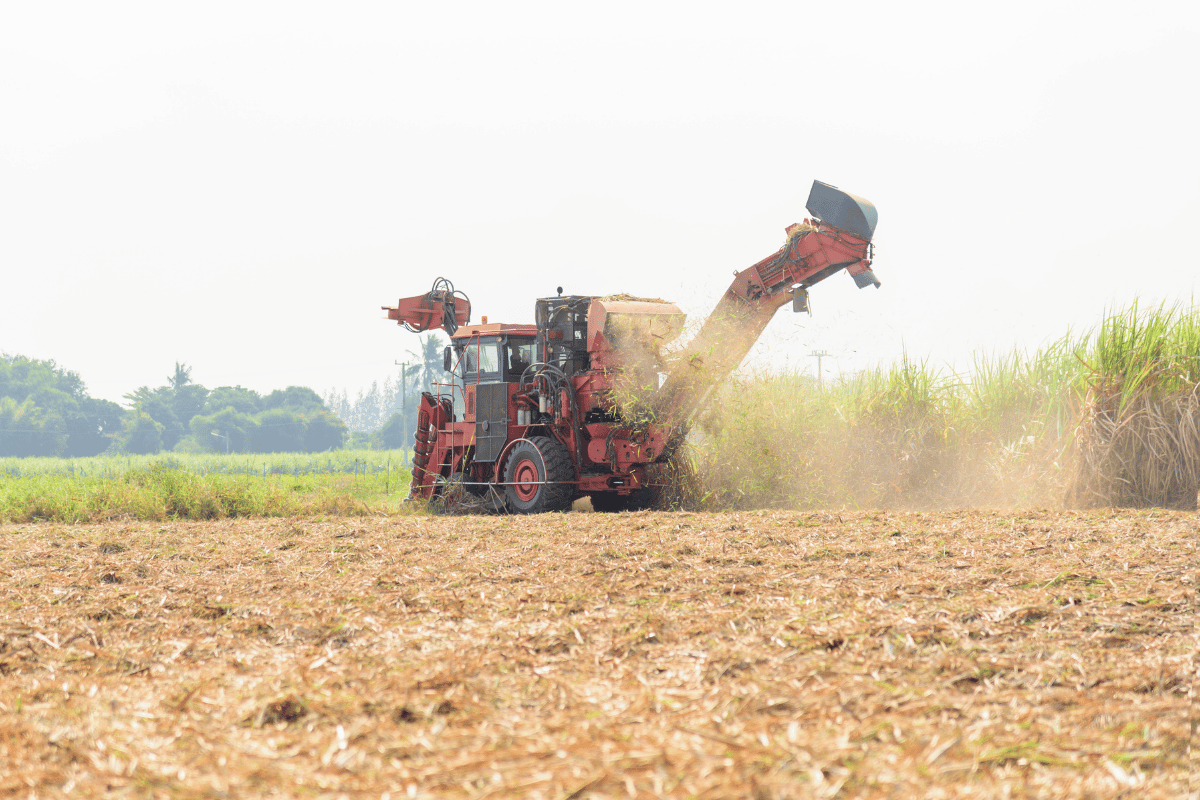
Auto-steering has become one of the most useful tools in modern sugarcane farming. By keeping a tractor on a fixed line pass after pass, it reduces overlaps, protects the crop, and lets operators work accurately even at night. Over the past four years I have installed and configured Trimble and John Deere auto-steering systems on more than 50 tractors, including New Holland, Case IH, and Valtra machines, mostly in Brazilian sugarcane operations. I have also worked with variable-rate application using Trimble Field-IQ, along with sugarcane planters, fertiliser applicators, and fertigation automation.
What that work taught me is that the receiver on the roof is the easy part. The systems that perform well are those backed by accurate field data, sound machinery, careful calibration, and operators who understand and trust the technology. The cases below are the ones that taught me each of those lessons.
When the guidance project sends the machine over the crop
Modern auto-steering with an RTK correction signal can hold a tractor on its line to within two or three centimetres, which is precisely why it matters so much in ratoon cane. The wheels need to run in the same traffic lanes every pass and stay off the stools, so the cane regrows undamaged. A few centimetres of error in the wrong place means driving over the crop instead of beside it.
That is exactly what happened on one job, where a tractor was running about 20 centimetres off the sugarcane row. Instead of protecting the ratoon, the machine was driving straight over it, the opposite of what the farmer expected after paying for an auto-steering system. Everyone suspected a GPS fault first. After going through the whole system, we found the real cause in the guidance project itself.
The guidance lines had been built from crop rows captured by a drone, and some of those lines were inaccurate, so the project the system was following was wrong from the start. The system was doing its job perfectly. It was simply tracking flawed lines. Once we rebuilt the guidance lines and corrected the project, the tractor dropped straight back onto the correct position. Precision agriculture begins with accurate data, and no amount of satellite accuracy will fix a field map that was wrong to begin with.
An auto-steering system is only as good as the tractor under it
A guidance system can only steer as well as the machine it is fitted to. On one tractor that kept drifting off the line, everything on the precision side checked out. The GPS signal was stable, the configuration was right, and the electronics all tested fine.
The fault turned out to be mechanical. A closer inspection showed the hydraulic steering valve was partially stuck. Many assisted-steering setups work by feeding corrections through a solenoid valve in the tractor's hydraulic system, so when that hydraulics cannot respond, the controller can call for a correction all it likes and the wheels will not follow. Once the valve was repaired, the system went back to steering normally. Maintaining the tractor and harvester is as much a part of precision farming as maintaining the guidance kit.
A configuration error that looked like a hardware failure
The most common problems I have seen came from setup, not broken parts. At Cerradão Mill, a tractor kept showing a steering sensor fault. I checked the wiring and tested the electrical components, and everything was sound. The display had simply been set to the wrong machine platform. Each tractor needs its own platform configuration, and that single incorrect setting was generating the fault. Selecting the correct platform cleared it at once, with no parts replaced. A setup detail that takes a minute to correct can imitate a serious hardware failure and send a technician chasing the wrong problem, which is why operator and technician training pays for itself quickly.
Getting operators to trust the system
The technical side is only half the job, because a system that operators avoid delivers nothing. While I was working at Tereos, auto-steering was being used on only about 40% of its potential. Many operators kept the systems switched off, convinced the technology would make their work more complicated, not easier.
So I spent less time on repairs and installations and more time alongside the operators, answering their questions, showing them what the system could do, and helping them get comfortable with it. After about a year and a half of steady training and support, use rose to roughly 80%. The clearest gains came at night. Visibility in cane fields after dark is poor, and operators soon found that auto-steering kept them exactly on the rows, sparing the ratoon and cutting their own fatigue. Watching that shift convinced me that the people running the machines matter as much as the machines.
Calibration, the step that ties it together
A correct signal still needs a correct calibration behind it. I have seen tractors weave in a zigzag with an excellent GPS signal, and the cause was nothing more than a poor steering calibration. Recalibrating to the manufacturer's specification returned the machine to smooth, accurate work.
The same holds for variable-rate application. Working with Trimble Field-IQ on fertiliser applicators and planting equipment, I learned that a prescription map on its own does not deliver the right rate. The hydraulic oil flow, the system settings, and the calibration all have to line up. On several occasions low hydraulic oil flow stopped the metering system from reaching its target, so the machine applied less fertiliser than the map prescribed and the whole operation lost some of its value. Precision agriculture runs on hydraulics and mechanics as much as on software.
What actually makes it work
After four years in the field, the pattern is consistent. Installing an auto-steering system is the start, not the finish. The installations that go on working are the ones built on an accurate field project, kept on a well-maintained machine, calibrated properly, and run by operators who understand and trust the technology. When those pieces come together, auto-steering does what the farmer paid for. It holds the line, protects the ratoon, trims fuel and input waste, and gives operators a tool they rely on through the longest night shift.