


Introduction
Genetically modified organisms (GMOs) and new genomic techniques (NGTs) are now more than ever a concern for the European Union, which for the past 20 years has maintained some of the strictest legislation regarding the cultivation, evaluation, and marketing of GMOs. The climate crisis, the need to reduce pesticide use, and the development of resistant varieties are bringing new genomic techniques and a new era for agrobiotechnology to the forefront. The European Union is now called upon to strike a balance between innovation, safety, and acceptance by developing a legislative framework that meets the needs of modern agriculture and addresses social concerns.
What are Genetically Modified Organisms (GMOs)?
A genetically modified organism (GMO) is a plant into which foreign genetic material (e.g., from another species) has been introduced through genetic engineering techniques. The aim is to acquire characteristics, such as stress resistance, which it would not acquire naturally in such a short period of time. Typical examples are corn and soybeans, which have been modified to be resistant to herbicides or insects. However, GMOs have not been fully embraced by society and are still the subject of debate and controversy.
Arguments in favor of GMOs
- Agronomic benefits: increased yield, resistance to disease and environmental stresses (e.g., drought, frost, etc.)
- Environmental benefits: reduced use of pesticides and fertilizers
- Nutritional benefits: new nutritionally enriched varieties (e.g., vitamin A-enriched rice, or "Golden Rice")
Arguments against GMOs
- Environmental risks: potential change in biodiversity through "gene flow" to conventional crops or wild relatives, development of herbicide-resistant weeds
- Economic concerns: uncertainty surrounding GMO patents and potential dependence of producers on large multinational seed companies
- Consumer mistrust: GMO labeling on food products creates a negative attitude among consumers towards these products
New genomic techniques (NGTs)
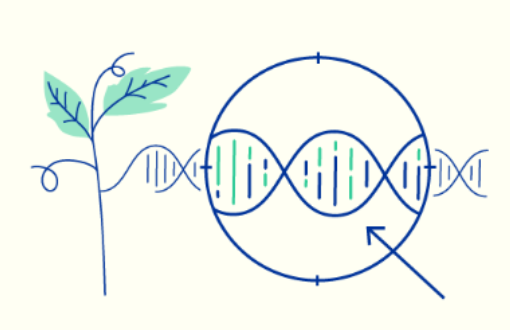
New genomic techniques, such as Crispr-Cas9, make small, precise changes to the plant's genome (like minor genetic corrections), to introduce desirable traits. The key difference with traditional GMOs is that in this case no foreign genetic material is introduced and these are "corrections" that could occur naturally or through conventional breeding. Because of this difference with GMOs, the above concerns are significantly reduced at the scientific level.
EU policies on GMOs and NGTs
As previously mentioned, the EU had one of the strictest legislative frameworks in the world regarding GMOs. A historical overview of EU policies was deemed useful and is shown below:
- 1990s: initial applications for approval of genetically modified maize and soybeans
- 2001: Directive 2001/18/EC: a strict authorization and risk assessment procedure introduced
- 2003: Regulations on the identification and labelling of GMOs
- 2010s: Suspension of GMOs approvals due to social reactions and member state concerns
- 2018: EU Court ruling: new gene editing techniques (e.g. CrispR-Cas9) were considered GMOs under current legislation
- 2020–2023: Initiation of consultation aimed at revising policy to distinguish between classic GMOs and organisms produced using NGTs.
Under the new framework proposed in 2023, plants are classified into two categories:
- Category 1: plants with modifications considered equivalent to those of conventional crops, and therefore not strictly subject to GMOs
- Category 2: plants with more complex genetic interventions, and therefore subject to strict GMO controls.
The European Parliament supported this classification in 2024, while the Council of the EU formulated a negotiating mandate for the finalization of the new regulation in March 2025.
Impact on producers and the food market
Observing the amendments to the EU legislative framework on GMOs, it is becoming clear that advancements in the field of agricultural biotechnology are here to stay. However, beyond the scientific implications, it is important to mention the economic and social consequences of these changes, which directly affect both producers and the food market.
For producers
Access to more efficient and resilient varieties is facilitated
Crops derived from NGTs offer farmers desirable agronomic traits which, in the current climate crisis, can secure their production and income.
•Risk of dependence on large seed companies
Intellectual property rights and patents protect Most GMOs and varieties derived from NGTs. This means that producers cannot save seeds for the next season and are forced to purchase them repeatedly from specific companies. This makes producers dependent on large seed corporations, which may put them under financial pressure and lead to a reduction in the cultivation of local non-GMO varieties.
Difficulty coexisting with organic crops
This challenge arises mainly from the risk of gene flow. If GMOs are grown in one field and organic crops are grown in a neighboring field, there is a high risk of genetic material being transferred from the GMO to the organic crop through cross-pollination. Even the smallest amount of genetically modified material in organic products can lead to the loss of ‘organic’ certification, with significant economic consequences.
For the food market
With the help of NGTs, the market can expand its supply of products with enhanced nutritional components, such as vegetables enriched with antioxidants or cereals with increased fiber content, thus meeting consumer demand for healthier options.
Reduced production costs and increased competitiveness
The availability of new NGT-enhanced varieties offers producers the opportunity to reduce production costs by reducing the use of pesticides or fertilizers or even water consumption. This can strengthen the global competitiveness of the European agricultural sector compared to countries that have already incorporated these techniques, such as the United States or Brazil.
Conclusion
The EU is entering a new era of agrobiotechnology while simultaneously being called upon to respond to the challenges of the climate crisis and food security. The policies it pursues will determine the future of the European agri-food sector. Traditional concerns regarding GMOs are addressed to some extent by NGTs, which offer a “middle ground” solution that could gain broader social acceptance.
Both agronomists and producers need to keep a close eye on ongoing developments in the legislative framework, as these changes will affect the crops available and the future modern agriculture as a whole.
References
(EFSA), E. F. S. A., Paraskevopoulos, K., & Federici, S. (2021). Overview of EFSA and European national authorities’ scientific opinions on the risk assessment of plants developed through New Genomic Techniques. EFSA Journal, 19(4), e06314.
Council of the European Union. (2025). New genomic techniques: Council agrees negotiating mandate.
European Commission. (2023). New techniques in biotechnology.
Menary, J., & Fuller, S. S. (2024). New genomic techniques, old divides: Stakeholder attitudes towards new biotechnology regulation in the EU and UK. PLOS ONE, 19(3), e0287276.
Mundorf, J., Simon, S., & Engelhard, M. (2025). The European Commission’s regulatory proposal on new genomic techniques in plants: a focus on equivalence, complexity, and artificial intelligence. Environmental Sciences Europe, 37(1), 143.