









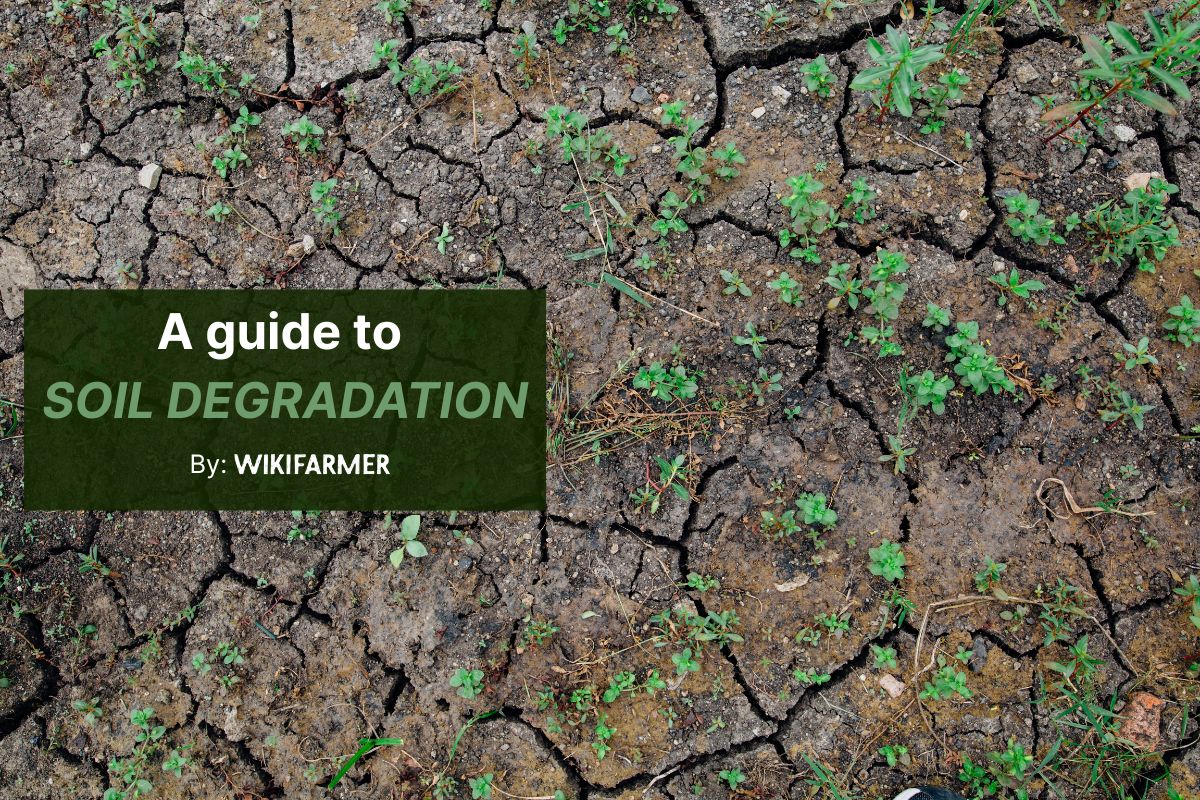
Soil is a complex, living biological engine. It is no longer a local farming concern, but a primary global threat affecting everything from agriculture and food security to renewable energy efficiency.
What is soil degradation?
Soil degradation is the physical, chemical, and biological decline in soil quality. It occurs when human activities—such as overharvesting, urbanisation, and industrial pollution—deplete the soil’s organic matter, destroy its structure, and reduce its ability to support life. According to the UN Food and Agriculture Organization (FAO), roughly 33% of global soils are already moderately to highly degraded, and over 90% could become degraded by 2050.
Solar panels and soiling
How does soil degradation affect solar panel energy production?
One of the most surprising impacts of soil degradation is its effect on renewable energy. When local soil is degraded and loses its vegetative cover, it becomes airborne dust. This dust settles on photovoltaic (PV) cells in a process known as soiling.
- The impact: Accumulation of dust on PV cells creates a light-blocking layer that can reduce efficiency by over 23%
- A vicious circle: Increased desertification leads to more frequent dust storms, which elevate maintenance costs and lower the return on investment for solar farms. In 2026, Agri-PV systems (combining solar with soil-stabilising crops) are becoming a standard solution to mitigate this loss.
Urbanisation and land use
Does urbanisation impact farm soil degradation?
Yes, primarily through soil sealing. When urban sprawl replaces farmland, fertile soil is covered with impermeable surfaces like concrete. This prevents water infiltration, leading to massive runoff that causes soil erosion on nearby farms and introduces heavy metal contaminants (such as lead and cadmium) into the food chain.
The cost of overharvesting
How does overharvesting lead to soil degradation?
Overharvesting occurs when crops are removed without allowing the soil to replenish its biomass.
- Environmental impact: It leads to a catastrophic loss of Mycorrhizal fungi, which facilitate nutrient sharing between plants. Without this, the soil ecosystem collapses.
What are the economic implications of soil degradation caused by overharvesting?
Degraded soil from overharvesting creates fewer returns. Farmers are forced to purchase increasing amounts of synthetic fertilisers to maintain baseline yields. A study by the Economics of Land Degradation (ELD) Initiative estimates the global cost of land degradation at roughly $6.3 trillion to $10.6 trillion USD annually
Ecosystems and wildlife
How does soil degradation affect ecosystems?
Soil is the foundation of the global food web. When it degrades, it disrupts eco-hydrological processes, increasing flood risks and water scarcity. Ecosystems become fragile, losing their ability to recover from extreme climate shocks and weather events like wildfires and floods.
Soil degradation in Canada
What is something surprising about soil degradation in Canada?
Despite its reputation as a land of endless wilderness, Canada faces a severe soil salinity crisis. In the Prairie provinces, the removal of deep-rooted native perennial grasses has caused the water table to rise, bringing salt to the surface. This salinisation costs Canadian agriculture over $3 billion annually in lost productivity. While the risk has declined since the 1980s due to better management, it remains a significant problem.
Potential solutions: How to improve soil health
To prevent agricultural system collapse, regenerative agriculture offers a solution.
- No-till farming: Minimises disturbance to protect the soil microbiome and structure.
- Cover cropping: Using clover or rye fixes nitrogen and keeps the soil from ever being bare, preventing wind erosion.
- Agroforestry: Integrating trees stabilises the water table and boosts biodiversity.
How to improve soil degradation on beef cattle farms?
The most effective method is Managed Rotational Grazing (or AMP grazing). By mimicking natural herd movements, cattle are moved frequently to allow grasses to rest.
- The Benefit: Their hooves naturally aerate the soil while waste serves as organic fertiliser. This increases carbon sequestration and promotes deep root growth, making pastures more drought-resilient.